by Laghe Andrews | Jul 11, 2025 | Uncategorized |
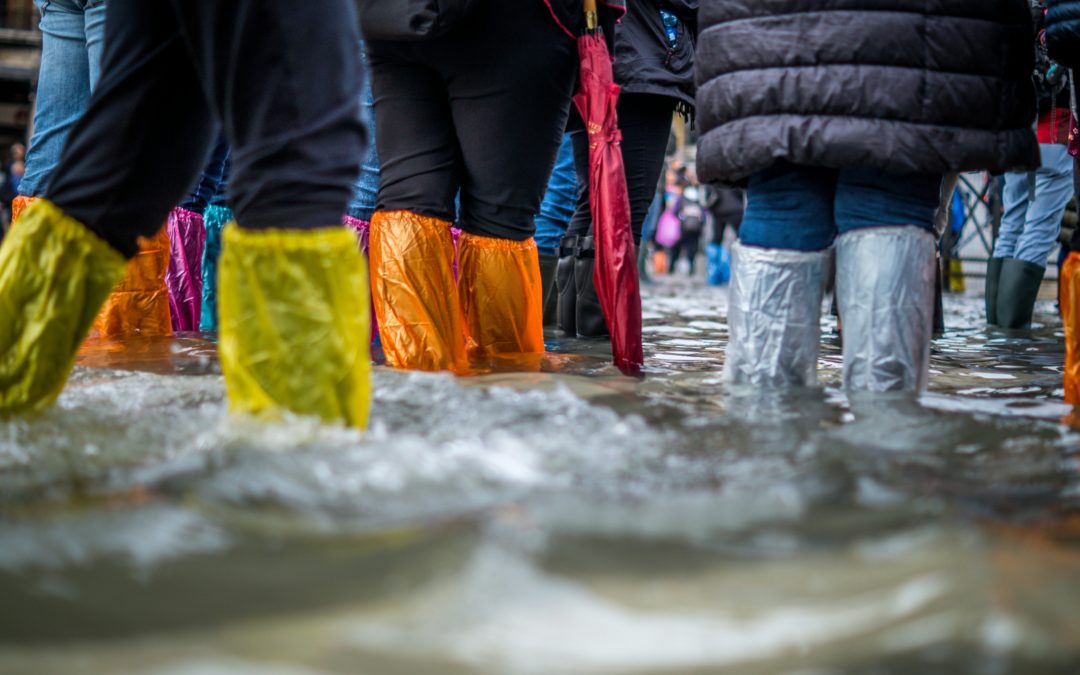
Photo by Jonathan Ford on Unsplash In what has become one of the most catastrophic natural disasters to strike Texas in recent memory, massive flash flooding across central regions of the state has resulted in at least 82 deaths. Torrential rainfall that began on Friday, July 4, triggered a series of devastating events—including a tragic incident at a girls’ summer camp that claimed dozens of young lives.
The widespread flooding, intensified by already saturated land and underdeveloped drainage infrastructure, has paralyzed entire communities. Towns are underwater, roads have collapsed, and power outages remain widespread.
Millions Still Under Flood Watch
According to CNN, nearly five million Texans are still under flood watch as the National Weather Service (NWS) warns of further rainfall. Some regions could receive up to 10 additional inches, worsening the already dire conditions.
Rescue teams report that entire families were trapped on rooftops, clutching one another as they waited for help to arrive. Rivers that were once tranquil turned into torrents, bursting their banks and engulfing everything in their path—homes, businesses, vehicles, and lives.
Camp Mystic: A Sanctuary Turned Into a Nightmare
Among the most heartbreaking events took place at Camp Mystic, a well-known Christian summer camp for girls in Hunt, Texas, situated along the picturesque—but deadly—Guadalupe River.
In a horrifying twist, the river swelled by over 20 feet in less than two hours, catching campers and staff completely off guard. Authorities later confirmed the deaths of 27 individuals—a mix of campers and counselors—while 11 others remain unaccounted for.
Parents, many of whom had sent their daughters to the camp for a summer of joy and faith-building, are now grieving. What was meant to be a place of growth and sisterhood has become the epicenter of loss.
Heroism Amid Horror
Despite the chaos, stories of selfless bravery have emerged. Richard “Dick” Eastland, Camp Mystic’s longtime director, died while trying to guide campers to safety. A familiar and comforting figure to hundreds of children over the years, Eastland is being remembered as a man who died protecting those in his care.
Counselor Emma Foltz was instrumental in evacuating 14 campers, guiding them up a steep trail to higher ground as the river crept closer. Louisiana Governor Jeff Landry publicly commended her, calling her “a beacon of calm in the storm.”
Night watchman Glenn Juenke stayed with frightened girls, helping them float to safety on mattresses when no boats were available. “They were soaked, freezing, and terrified,” he told CNN, “but somehow, they were still brave. I just wanted them to live.”
Failures in Emergency Alerts Raise Questions
The National Weather Service did issue flood alerts ahead of the disaster, but many are questioning why more localized warnings—like siren systems—weren’t activated in vulnerable areas like Kerr County.
Officials later admitted that they had considered installing community flood sirens in previous years but didn’t follow through. Some speculate budget constraints or low perceived risk as the reason for inaction.
For residents in more isolated parts of Texas, where cell coverage is inconsistent, this oversight may have proven fatal. Many claim they received no warning at all before the floodwaters came crashing through their homes.
An Enormous Rescue Operation
Over 400 emergency responders from more than 20 agencies have been deployed to the region. Teams are relying on K-9 units, military-grade drones, and National Guard helicopters to find and save stranded survivors.
The U.S. Coast Guard has rescued over 230 people, including 165 evacuees pulled to safety by rookie rescue swimmer Scott Ruskan. “You look into their eyes and realize—this is the worst moment of their life,” Ruskan shared. “That realization drove me to do more, push harder.”
Volunteer groups like the United Cajun Navy have also joined the efforts. Nick Sortor, a volunteer, warned of dangerous conditions: “Trees are falling into the water. Structures are collapsing. There’s debris everywhere. It’s chaos.”
Federal Response and FEMA’s Role Under Scrutiny
On Sunday, President Donald Trump signed a major disaster declaration, enabling additional federal aid for the state. When asked about his prior statements about dissolving the Federal Emergency Management Agency (FEMA), he deferred, saying: “FEMA is something we can talk about later. Right now, they’re busy saving lives.”
Still, the crisis has reignited debates about FEMA’s effectiveness and the need to modernize disaster response systems in America.
Homeland Security Secretary Kristi Noem defended FEMA and the NWS but admitted flaws in the system. “It’s an ancient network,” she said during a Fox & Friends interview. “The president recognized the need to upgrade it, but that modernization isn’t done yet.”
Noem added that the administration favors a future where states lead disaster management, and the federal government provides only supplementary support. “FEMA, as it currently exists, is bloated. It needs to evolve—or be replaced.”
Grief Reverberates Across Texas
Across the state, the emotional toll is becoming just as heavy as the physical one. Makeshift memorials of flowers, letters, and candles now dot the entrances of churches, schools, and homes.
In one town near Kerrville, a vigil was held for three sisters lost in the Camp Mystic tragedy. Hundreds attended, many unable to hold back tears.
“It’s the kind of grief that changes a community forever,” said local pastor Marissa Knowles. “You don’t bury children without also burying part of your own spirit.”
by Harris | Jul 11, 2025 | Latest |
Photo by Tingey Injury Law Firm on Unsplash
Following the highly publicized trial of music mogul Sean “Diddy” Combs, defense attorney Joe Tacopina has launched a scathing attack on federal prosecutors. The outspoken lawyer criticized what he described as a weak and sensationalized case brought against the Bad Boy Records founder, after the jury cleared Diddy of the most serious accusations: sex trafficking and racketeering.
Tacopina, who has built his reputation representing high-profile clients like A$AP Rocky and Alex Rodriguez, made his remarks on the TMZ-produced Tubi docuseries United States v. Sean Combs: Inside the Diddy Trial. Reflecting on the trial’s outcome, he claimed prosecutors were more concerned with headlines than facts. “They came after him with everything they had,” he said. “But it wasn’t enough. The jury saw through the noise.”
Diddy Cleared of Top Charges—But Convicted on Others
While Combs walked away from the most damning allegations, the verdict wasn’t an outright victory. The jury did find him guilty of two federal charges: transporting individuals for the purpose of prostitution. Each count carries up to 10 years in prison, meaning the artist could face a possible 20-year sentence if the court imposes the maximum penalty and chooses to stack them.
Tacopina, however, focused on the broader picture. “Let’s not forget—he was facing life-changing charges. Racketeering. Sex trafficking. This could’ve ended his career, his freedom, his legacy. But the jury got it right,” he emphasized.
Capricorn Clark’s Testimony Backfires
A major flashpoint during the trial was the testimony of Capricorn Clark, a former employee of Combs. She claimed that years ago, after some of Diddy’s jewelry had gone missing, he had her kidnapped and forced to undergo lie detector tests over several days. Her account painted a disturbing image of control, paranoia, and abuse of power.
But during cross-examination, the defense presented a key revelation: Clark had allegedly contacted Diddy after the incident in an attempt to be rehired as his personal assistant. To Tacopina, this single fact exposed a serious inconsistency. “You don’t try to go back to someone you believe held you captive,” he said. “That’s not behavior consistent with fear or trauma—it suggests a different story.”
He used this contradiction to criticize the prosecution’s reliance on emotionally charged but legally weak testimonies. “It’s trial law 101: your star witness has to be bulletproof. This wasn’t even close.”
Bail Denied Despite Defense Offer
Immediately after the verdict, a bail hearing was scheduled. Diddy’s legal team offered a $1 million bond along with standard pretrial restrictions—such as surrendering his passport, limiting his travel, undergoing regular drug testing, and complying with supervision protocols.
Despite the offer, Judge Arun Subramanian denied bail, citing significant concerns about Combs’ behavior. He referenced not only the charges but also what the defense had acknowledged during the trial: past instances of violence in Diddy’s personal relationships, including with Cassie Ventura and another woman referred to as “Jane.”
The Judge’s View: “A Pattern of Disregard for the Law”
In his remarks, Judge Subramanian pointed to what he considered a consistent pattern of misconduct. He noted that even after law enforcement searched Combs’ properties, there were signs of continued illegal activity. “This isn’t just about isolated incidents,” he said. “This is about a demonstrated disregard for the rule of law—and a propensity toward violence.”
His reasoning underscored that while the jury acquitted Diddy of the worst charges, the court still viewed him as a serious legal risk. Subramanian’s refusal to grant bail reinforces how seriously the justice system is treating the remaining convictions.
A sentencing date has been provisionally set for October 3, though the defense may request an earlier appearance. However, the prosecution is asking for more time to conduct a pre-sentencing investigation, claiming the court does not yet have sufficient information to determine a fair sentence.
Tacopina Says Prosecutors “Overreached”
Joe Tacopina believes the case never should have escalated to this point. “They overcharged him,” he said. “It was a weak case padded with dramatic testimonies and emotional manipulation.”
He claims that the prosecution’s strategy was to overwhelm the jury with stories, hoping something would stick. “They were throwing darts in the dark,” he added. “But you can’t win a case based on suspicion, innuendo, and vibes.”
The defense’s success, Tacopina argued, came down to forcing the jury to focus on facts—not emotions or tabloid narratives. “Twelve jurors, regular citizens, were smart enough to cut through the fog.”
More Legal Trouble Ahead
Even though the criminal trial is nearly behind him, Sean Combs is not free from legal turmoil. A series of civil lawsuits are still pending, many of them alleging long-term abuse, coercion, and misconduct spanning over two decades. Some plaintiffs are former romantic partners; others are former colleagues or assistants.
These civil claims won’t send Diddy to prison, but they could cost him financially and reputationally. Unlike criminal court, civil trials require a lower burden of proof. And because these proceedings are public, they will likely continue to expose personal and professional details that could harm the hip-hop mogul’s brand and legacy.
Public Reaction: Mixed and Volatile
As expected, public reaction to the verdict has been divided. Fans of Diddy celebrated the acquittal on the top charges as proof of his innocence and accused federal authorities of trying to destroy a successful Black entrepreneur. The #JusticeForDiddy hashtag trended on X (formerly Twitter) shortly after the verdict was announced.
But critics—and many advocates for survivors of abuse—view the outcome as only a partial victory for accountability. They argue that while Diddy avoided the worst charges, the court still convicted him on serious federal crimes. “Guilty is guilty,” one activist tweeted. “Whether it’s trafficking or transporting for prostitution—this is not someone who should be free of consequences.”
Justice, Fame, and the American Legal System
The Diddy case raises familiar questions: Can rich, powerful people truly be held accountable? Or does their status allow them to outmaneuver justice?
Joe Tacopina argues that the system worked. “This case proves that juries still matter. You can have the full power of the U.S. government behind a prosecution, but if the case is weak, a fair jury will call it out.”
But critics point out that the very fact Diddy was able to afford elite legal defense, private investigators, and media strategy teams is a privilege most defendants don’t enjoy. “If he were poor and unknown, do you think the outcome would’ve been the same?” asked one legal analyst on MSNBC. “Doubtful.”
The Road Ahead: Uncertain and Risky
Now held in federal custody, Diddy awaits his fate. With sentencing on the horizon, his legal team is expected to argue for leniency based on his contributions to the music industry, charitable donations, and lack of prior convictions.
Prosecutors, on the other hand, are likely to emphasize the seriousness of the charges and the pattern of behavior uncovered during the trial. The judge will also weigh the upcoming civil lawsuits as potential evidence of ongoing misconduct.
One thing is certain: the next few months will be crucial for both Diddy and his legacy. Whether he serves time or walks free with probation, the fallout from this case will linger. Music fans, legal experts, and social justice advocates alike will continue to debate what this case says about celebrity, accountability, and how far money can take you in America’s justice system.
Conclusion
While Joe Tacopina may see the verdict as a validation of the defense’s skill and the flaws in the government’s case, the story is far from over. Sean “Diddy” Combs has avoided the harshest legal consequences—for now—but the shadow of this trial, the ongoing civil lawsuits, and the weight of public opinion may shape the rest of his life far more than any courtroom decision.

by Harris | Jul 11, 2025 | Latest |
Photo by Michael Förtsch on Unsplash
More than two years have passed since Tyre Nichols was fatally assaulted by Memphis police officers, yet the pain surrounding his death feels as raw as ever—especially after the shocking verdict that acquitted three of the men involved. What many saw as an opportunity for justice instead became a painful reminder of how rarely accountability follows police brutality in the United States.
The acquittals of officers Tadarrius Bean, Demetrius Haley, and Justin Smith stunned the nation. Despite extensive and disturbing video evidence, a state jury found all three not guilty on charges of second-degree murder, aggravated assault, and official misconduct. The decision once again cast a glaring spotlight on the systemic challenges of prosecuting police violence—and the emotional toll it continues to inflict on victims’ families and communities.
The Night That Changed Everything
On January 7, 2023, Tyre Nichols—a 29-year-old Black man, father, photographer, and FedEx worker—was pulled over during what police claimed was a routine traffic stop in Memphis, Tennessee. That stop quickly spiraled into something far more sinister.
Officers from the Memphis Police Department’s now-disbanded SCORPION unit dragged Nichols from his car. He was pepper-sprayed, hit with a stun gun, and chased on foot when he tried to escape. When they caught him, five officers took turns beating him, even as he was restrained. Punches rained down. A baton struck him multiple times. He was kicked in the head while defenseless and screaming for his mother.
This horrific encounter—captured in detail by body-worn cameras and surveillance footage from a nearby pole—would ultimately lead to Nichols’ death three days later, from blunt force trauma and internal injuries.
Graphic Evidence, No Conviction
For many, the most haunting aspect of this tragedy is that the public watched it happen—after the fact, yes, but without ambiguity. The video footage, which sparked nationwide protests when it was released, shows not only the beating but also the callous aftermath. Nichols is left slumped against a car, clearly in distress. The officers laugh, exchange fist bumps, and offer no medical aid.
Yet, during the trial, defense attorneys successfully argued that their clients were simply following police procedures or attempting to subdue a suspect they claimed was resisting arrest. Much of the blame was directed at another officer, Emmitt Martin, who had taken a plea deal and was not on trial.
Among the most damning revelations was that Officer Demetrius Haley had taken a photo of Nichols after the beating—bruised, unconscious, bloodied—and shared that image with multiple people, including acquaintances. That act of casual cruelty symbolized the dehumanization at the heart of this tragedy.
But even this, along with the 20-minute delay in providing medical attention, was not enough to persuade the jury.
Public Reaction and Family Grief
The reaction to the verdict was swift and furious. Shelby County District Attorney Steve Mulroy voiced the frustration felt by many: “We all saw the videos. We know what happened. It’s hard to understand how a jury could find no guilt at all.”
Outside the National Civil Rights Museum, Nichols’ mother and stepfather gave heart-wrenching speeches. His mother said the verdict felt like she had lost her son all over again. His stepfather called it a “travesty of justice,” urging Americans not to grow numb to these failures.
The Congressional Black Caucus issued a powerful statement condemning the verdicts as “a shock to our collective conscience,” while activist Bernice King called for federal authorities to step in, stating that the acquittals reflect a system that was never built to protect Black lives.
A Pattern That Refuses to Break
The Tyre Nichols case is not an isolated incident—it joins a growing, painful list of cases where police officers walk free despite public outrage and overwhelming video evidence. Names like Rodney King, Eric Garner, Breonna Taylor, George Floyd, and Elijah McClain remain seared in public memory for similar reasons.
What unites these cases is not only the violence itself, but the consistent failure of institutions to deliver justice afterward. Legal protections like qualified immunity, strong police union influence, and culturally ingrained biases all make convictions incredibly difficult. Even in the face of bodycam footage and independent autopsies, juries often hesitate to convict officers—especially when the defense leans on split-second decision narratives and “resisting arrest” arguments.
Systemic Failures Go Beyond Individual Officers
Many people noted that all five officers involved in Nichols’ death were Black—prompting some to question if race played the same role it has in other cases of police violence. But experts and activists argue that focusing solely on the race of the officers misses the larger point: policing as a system disproportionately harms Black Americans regardless of who is enforcing it.
This is not about individual bigotry; it’s about a policing structure rooted in control, aggression, and systemic disregard for Black bodies. Training often emphasizes dominance and “compliance” over de-escalation and empathy. Oversight mechanisms are often weak, internal reviews biased, and punishment rare.
Even the SCORPION unit itself—a now-disbanded elite squad meant to tackle violent crime—was criticized from the start for its aggressive tactics and lack of transparency. Critics had warned that such units often go rogue, operating like paramilitary squads within city neighborhoods already over-policed and under-resourced.
Federal Charges Offer a Slim Hope
While the state trial ended in acquittals, federal charges still stand against all five former officers. These include civil rights violations and obstruction of justice—crimes that carry serious penalties. Sentencing is expected later this year.
Additionally, Nichols’ family has filed a $550 million civil lawsuit against the City of Memphis, the Memphis Police Department, and key officials, including the former police chief. The lawsuit claims that the SCORPION unit’s creation, leadership, and oversight failures directly contributed to Nichols’ death.
Some activists see this legal action as a potential tool to force reform. While no amount of money can bring back a life, large settlements often pressure cities to change hiring practices, restructure police units, and implement oversight reforms.
A National Crisis Demands National Reform
The broader crisis is undeniable. Reform advocates have been pushing for:
- Ending qualified immunity, which shields officers from personal liability.
- Independent prosecutors in all police-involved deaths to prevent conflict of interest.
- Stronger federal legislation, such as the stalled George Floyd Justice in Policing Act.
- Community review boards with real power—not just advisory roles.
Yet progress has been frustratingly slow. The political will fades with each news cycle. Police unions lobby hard against reforms. And without sustained public pressure, the status quo remains intact.
But families like the Nichols’, and a new generation of activists, refuse to let the conversation die. They continue to push—not only for accountability in this case but for transformation of the very system that made it possible.
Humanizing Tyre Nichols
Amid the legal arguments and political debates, it’s crucial to remember who Tyre Nichols was. He wasn’t just a symbol—he was a person.
He loved skateboarding and photography. He worked hard and was described by those who knew him as gentle, creative, and thoughtful. He often took photos of sunsets and landscapes around Memphis. He had plans, dreams, and relationships. That night, he was just trying to make it home.
His life was not taken by fate or error—it was taken by a system that chooses force over humanity and silence over accountability.
Conclusion: A Reckoning Still Needed
The acquittals in the Tyre Nichols case illustrate how far we still have to go. Even in an era where body cameras and cell phone footage expose the truth, the institutions responsible for justice too often fall short.
But public memory is long, and the push for reform has not disappeared. It has simply entered a new chapter—one driven by renewed urgency, growing awareness, and the voices of those who refuse to accept injustice as inevitable.
Tyre Nichols’ name now lives among others we remember not just for how they died, but for how they’ve inspired a movement that will not rest until the system changes.



RECENT COMMENTS