
by Jonathan P-Wright | Apr 16, 2026 | Business News, Latest |
The Move That Looks Small—but Changes the System
Some decisions don’t reveal their full impact right away. McDonald’s integrating Red Bull into its beverage strategy is one of those plays that reads differently once you zoom out.
On the surface, it’s a menu addition. Underneath, it’s a shift in how the brand positions itself in everyday life.
McDonald’s has always been about accessibility. Red Bull has always been about activation. Together, they create something that speaks directly to how people live now.
Energy Is No Longer Optional—It’s Expected
We’re in a time where people are constantly balancing multiple lanes—work, creativity, movement, digital life. That creates a steady demand for energy that doesn’t wait for scheduled meals.
Energy drinks have become part of that rhythm. They’re tied to performance, focus, and endurance.
When McDonald’s steps into this space, it’s not experimenting—it’s acknowledging a reality that already exists.
From Occasions to Everyday Access
McDonald’s has traditionally been tied to specific moments—morning runs, lunch breaks, late-night stops.
Energy changes that completely. It introduces new entry points across the entire day. Moments that were never monetized before now become natural reasons to engage.
And when a brand creates more moments without forcing behavior, it builds relevance in a way that feels organic.
Scale Meets Culture—and That Changes Everything
Red Bull brings cultural credibility. McDonald’s brings global reach. That combination moves differently than anything smaller players can offer.
This isn’t just about making something appealing—it’s about making it accessible everywhere, instantly, and at scale.
That’s where disruption actually happens—not in the idea, but in how far and how fast it can travel.
by Jonathan P-Wright | Apr 16, 2026 | Business News, Latest, Tech News |
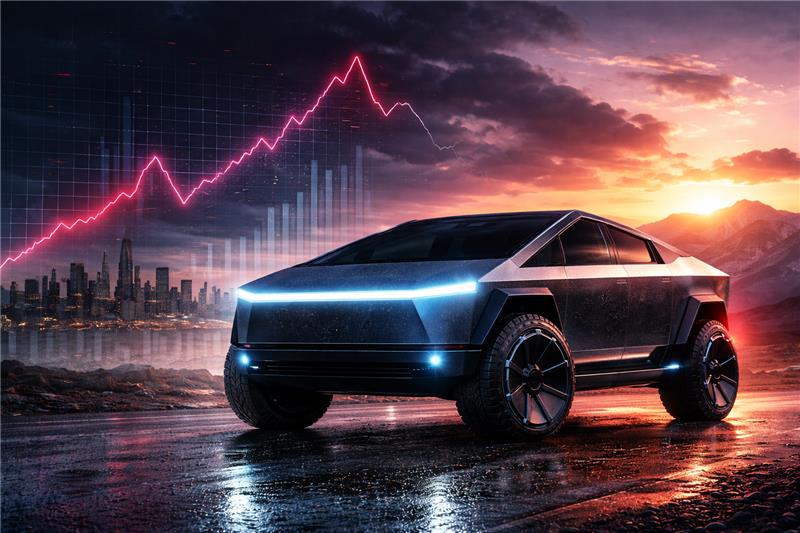
It dominated the conversation. Now it has to dominate decisions.
The Power of Being Everywhere at Once
There are few product launches in recent memory that captured attention the way the Cybertruck did. It wasn’t just talked about—it was everywhere. Social media, news cycles, conversations, debates.
It became part of culture before it became part of driveways.
And that kind of visibility creates a powerful assumption—that demand is inevitable.
But markets don’t operate on visibility. They operate on behavior.
And behavior is where the real story begins.
The Gap Between Curiosity and Commitment
Interest is easy. Ownership is different.
When consumers move from watching a product to considering purchasing it, new variables enter the equation—price, usability, infrastructure, long-term practicality.
The Cybertruck sits at the intersection of all those variables.
And while the curiosity around it remains strong, the conversion into sustained demand has been more measured than expected.
“Attention can be instant. Adoption takes time—and sometimes resistance.”
That resistance doesn’t mean rejection. It means the product is now being tested in real-world conditions.
Internal Stability vs. External Demand
The presence of internal purchasing adds another layer to the narrative. It reflects a strategic effort to maintain momentum, stabilize output, and prevent sharp shifts in perception.
But it also creates a distinction between two types of demand:
- demand that comes from the market
- demand that is supported internally
And while both serve a purpose, only one determines long-term viability.
With a broader ecosystem that includes high-impact ventures like Starlink, the interconnected nature of these decisions becomes more visible.
“You can sustain momentum internally, but the market always decides what lasts.”
That’s the line every product eventually has to cross.
A Category Still Finding Its Identity
The Cybertruck’s challenge isn’t isolated—it reflects a broader hesitation within the electric pickup category.
The adoption curve for electric trucks hasn’t mirrored the rapid growth seen in other EV segments. Consumers are still adjusting to the idea. Infrastructure is still evolving. Expectations are still forming.
That means Tesla isn’t just leading a product—it’s navigating an unfinished category.
And unfinished categories don’t always move at the speed of innovation.
The Transition From Moment to Model
Every major product goes through phases. The Cybertruck is now leaving the “moment” phase and entering the “model” phase.
This is where performance matters more than perception.
This is where consistency matters more than curiosity.
“The Cybertruck was introduced like a revolution. Now it has to operate like a business.”
And operating requires alignment between vision and reality.



RECENT COMMENTS