by Derrick T Lewis | Sep 17, 2025 | Business News, Latest, Music News |
Watch the interview here. The Breakfast Club’s latest sit-down with Dame Dash is more than a viral moment—it’s a syllabus, office hours, and a wake-up call rolled into one. In a candid, high-energy conversation, Dash rejects shallow internet narratives and lays out a mission: build a TV series that teaches financial literacy to Gen Z and emerging founders, demystifying everything from equity to bankruptcy as a strategic reset—not a scarlet letter. (YouTube)
The Courage to Host Hard Conversations
Put respect on The Breakfast Club. In an era of clickbait and culture-war bait, the show uses its platform to tackle uncomfortable but necessary money talk—credit, restructuring, and the math behind long-term ownership. Giving Dash a mic for this specific dialogue isn’t controversy; it’s public service—proof that hip-hop media can move beyond gossip to real-world game. (New York’s Power 105.1 FM)
Bankruptcy as a Business Tool, Not a Brand Killer
Dash reframes bankruptcy as part of the entrepreneur’s toolkit: a lawful, structured process to reorganize debt, protect core assets, and stabilize future growth. He’s not romanticizing struggle; he’s normalizing what major corporations do all the time—restructure, reset, and re-scale with better terms. That’s the energy he wants to beam into classrooms and living rooms via his planned TV series, with case studies that Gen Z can actually apply—budgeting, compounding, order-of-operations for debt, and the psychology of staying the course when the internet is loud. (TMZ)
From Viral Labels to Verifiable Balance Sheets
The interview cuts through “broke” labels by focusing on balance-sheet reality: assets, IP, royalties, and recurring revenue. Dash argues that valuation lives in leverage—owning your catalog, your audience data, and your distribution—not in flash-in-the-feed stunts. The future series promises teachable playbooks: negotiating from leverage, using first-party data, and building multiple revenue lanes so creators aren’t hostage to one algorithm. (YouTube)
Generational Wealth for the TikTok Generation
Dash’s north star is generational wealth: not just “getting a bag,” but keeping one—through literacy, legal structure, and discipline. He talks runway, reinvestment, and how to protect creative IP—language young founders rarely hear in school. The goal is a bingeable curriculum: engaging, street-level, and rooted in case-study clarity.
The Takeaway
This conversation isn’t about celebrity redemption arcs. It’s about equipping young builders to convert hustle into durable equity. Salute to The Breakfast Club for putting real game on the timeline—and salute to Dame Dash for turning a headline into homework that can change families.
by April Harley | Aug 29, 2025 | Latest, Music News, New Music Alert |
In a world overflowing with content, standing out isn’t easy. Yet hip-hop veterans Fat Joe and Jadakiss have managed to launch one of the most impactful new shows in podcasting. Their collaboration, “Joe & Jada,” is already a chart-topper, a viral sensation, and a cultural talking point.
A Powerful Launch
When the podcast premiered earlier this year, skeptics wondered whether the rap legends could hold attention outside of music. The numbers answered quickly: millions of streams within weeks, thousands of five-star reviews, and near-constant chatter on social media.
Clips spread daily across TikTok, Instagram, and X (formerly Twitter). Fans shared moments of unfiltered honesty, like Joe’s reflections on losing friends in the industry or Jadakiss laughing about a childhood story in Yonkers.
Recognition Beyond Music
Industry recognition followed fast. Complex named “Joe & Jada” one of the Top 10 Hip-Hop Podcasts of the year and highlighted it among the Top 15 Cultural Podcasts overall. Such rankings elevated the show from “celebrity side project” to “must-listen media property.”
“This is about honesty,” Fat Joe said in a recent interview. “People know the hits, but here we share what happens outside the booth.”
Jadakiss echoed the sentiment: “We wanted to give the culture something uncut. No scripts. Just the real.”
Authentic Conversations at the Core
What separates “Joe & Jada” is that it doesn’t feel like a promotional platform. Many celebrity podcasts exist primarily to push products or brands. Here, the conversation takes center stage.
Listeners have praised the mix of humor and depth. One episode may be full of belly laughs, while the next might feature sobering discussions about violence, loyalty, or perseverance in an unforgiving industry. That duality — the ability to laugh and reflect in the same breath — resonates widely.
Breaking Out Across Platforms
Spotify streams. Apple Podcasts reviews. YouTube comments. Everywhere you look, “Joe & Jada” is sparking dialogue. The show has already landed in the trending section multiple times and sits near the top of entertainment podcast charts.
Celebrity guests have added to the momentum. Surprise appearances from athletes and fellow rappers give episodes extra energy. But fans consistently say the real draw is the dynamic between Joe and Jada themselves.
The Road Ahead
The success of season one is fueling bigger plans. According to industry insiders, live tapings are being developed in major cities, where fans can experience the banter in person. Branded partnerships with fashion and beverage companies are also in the works.
But Jadakiss insists the heart won’t change: “We can do live shows, we can do deals, but the vibe stays the same. No filter. No fluff.”
A Legacy Reinforced
For Fat Joe and Jadakiss, this is more than a podcast — it’s another chapter in legacies already written in platinum. Both men are regarded as pillars of hip-hop’s history, and with “Joe & Jada,” they’re proving they’re just as relevant in 2025 as they were in 2005.
by Jonathan P-Wright | Aug 29, 2025 | Latest, Music News, New Music Alert |
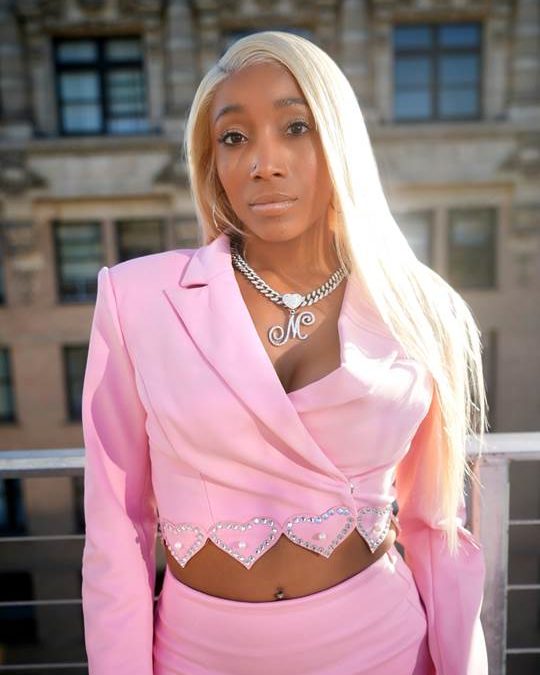
In today’s cultural landscape, the lines between music, fashion, media, and entrepreneurship are blurring. At the center of this intersection stands Monet Anaïs, a bold new visionary whose empire is built on resilience, authenticity, and unrelenting ambition. She is an independent recording artist, CEO & Founder of Boujie Empire Ent., Co-Editor-in-Chief of Black Vine News, Senior Writer for RNH Magazine, and a dealmaker in multimedia production.
But behind the titles and accolades lies a story of transformation—a story of how one woman turned her pain into promise, carving out a future that belongs not only to her but to every creative she empowers along the way.
Building an Entrepreneurial Legacy
Monet Anaïs is not a one-dimensional creative. She has positioned herself as a serial entrepreneur, building enterprises that stretch across multiple industries. Her vision is clear: create an ecosystem that allows women, minorities, and independent voices to thrive.
At the center of her growing empire is Boujie Empire Ent., her clothing and lifestyle brand. What began as an idea rooted in self-expression has evolved into a fashion movement, blending luxury streetwear with high-fashion aesthetics. Boujie Empire Ent. is not simply about apparel—it represents confidence, ownership, and cultural power. For women especially, it is a declaration: you can be bold, ambitious, and unapologetically yourself.
But Anaïs doesn’t stop at fashion. Her multimedia company encompasses:
- – Podcasting: Through her podcast division, she fosters unfiltered conversations on entrepreneurship, identity, and empowerment.
- – Television & Film Production: Monet is currently in pre-production for her first documentary, which will be distributed via Lookhu TV (https://www.lookhu.tv). This highly anticipated docuseries will explore the myths, dynamics, and ideology behind her creative genius, offering an intimate look into her world as an entrepreneur and artist.
- – Record Label: Her label nurtures emerging talent, providing artists with tools and strategies to build sustainable careers outside of traditional music industry systems.
Recently, Anaïs also inked a podcast distribution deal with MUSICHYPEBEAST, a powerful multi-faceted broadcast platform that houses 34+ podcasts, a Muck Rack (https://www.muckrack.com) verified media outlet, and a music distribution pipeline via EMPIRE. This partnership ensures her voice and the voices of her collaborators will be amplified on a global digital stage, while connecting her brand with an established powerhouse in independent music.
Journalism as Cultural Power
Monet Anaïs is also redefining media. As Co-Editor-in-Chief of Black Vine News and Artist Uncut, she curates narratives that highlight cultural disruptors, industry game-changers, and emerging female leaders. For Anaïs, journalism is not just storytelling—it’s an act of empowerment. She uses her editorial influence to celebrate diversity, truth, and progress in an industry often driven by sensationalism.
Her journalistic reach expanded even further when she became a Senior Writer for RNH Magazine (RESULTSANDNOHYPE) (https://www.resultsandnohype.com). In this role, she focuses on spotlighting surging female entrepreneurs, as well as HBCU students excelling in business, pharmacy, sports medicine, and journalism. By shining a light on these communities, Monet continues her mission to bridge opportunity gaps and showcase the brilliance of young leaders who are too often overlooked.
Her dual roles in media demonstrate her versatility. She is equally at home conducting in-depth interviews with innovators as she is crafting cultural essays that challenge traditional narratives. Through Artist Uncut and RNH Magazine, Anaïs has established herself as a media powerhouse committed to truth and cultural impact.
The Artist: Music as a Sanctuary
Though Anaïs thrives in business and media, her identity as a recording artist remains central to her legacy. Music is her most intimate expression, a mirror reflecting her triumphs and struggles.
Her catalog, available on Spotify, is a sonic journal of resilience, ambition, and survival.
Spotify: https://open.spotify.com/artist/3E1tWjq49IxBu7MZfXrz67?si=fdhTQgNrQ06OCIyMkhShNg
Her standout single ‘Down’ captures the essence of her artistry. The track is raw yet empowering, fusing emotional vulnerability with lyrical strength. In her words and melodies, Anaïs converts heartbreak into healing, turning her pain into a shared promise of hope for her listeners.
Her artistry is not just about sound—it’s about connection. Each performance, each song, is a bridge between her personal story and the universal experiences of her fans. In an industry dominated by fleeting trends, Monet Anaïs’s music stands out for its substance, depth, and authenticity.
Forging the Future: From Pain to Promise
As 2026 approaches, Monet Anaïs is not slowing down—she is accelerating. Her journey illustrates the blueprint of a modern mogul: one who seamlessly blends artistry with entrepreneurship, fashion with storytelling, and journalism with empowerment.
Her mission is grounded in a powerful mantra: convert pain into promise. Every obstacle she has faced has become a stepping stone, every setback an opportunity for reinvention. Whether through Boujie Empire Ent., her Spotify catalog, her Lookhu TV docuseries, her MUSICHYPEBEAST podcast partnership, or her journalism with Black Vine News and Artist Uncut, Anaïs is creating a multi-industry legacy rooted in empowerment, innovation, and cultural leadership.
Most importantly, Monet Anaïs is building a legacy beyond herself. For her, success is measured not only by business growth or chart performance but by the doors she opens for others—for women in business, for creatives of color, for young students at HBCUs, and for independent artists navigating an unforgiving industry.
A Legacy in the Making
Monet Anaïs represents the future of entertainment and entrepreneurship. She is a visionary CEO, fearless journalist, and unapologetic artist, carving out her own path and inspiring others to do the same. By 2026, her name will not only be attached to music, fashion, and media—it will symbolize a movement of empowerment, creativity, and cultural elevation.
Her journey proves that pain does not have to be permanent. With vision, resilience, and relentless drive, it can be transformed into a promise—one powerful enough to change industries, rewrite narratives, and inspire generations.

by Derrick T Lewis | Aug 15, 2025 | Latest, Social Justice, Trending |
Photo by Tingey Injury Law Firm on Unsplash
The death of Sonya Massey in July 2024 has become the driving force behind a landmark police reform bill in Illinois. What started as a routine 911 call for help ended with a fatal shooting in Massey’s own home, igniting public outrage, grief, and a call for stronger accountability in law enforcement hiring practices.
That call for change has now taken legislative form. The Sonya Massey Bill, formally known as Senate Bill 1953, has successfully passed the Illinois General Assembly and now sits on Governor JB Pritzker’s desk awaiting his signature. Supporters say it will close dangerous gaps in police hiring standards, ensuring that officers with serious misconduct histories can no longer move between departments without scrutiny.
From Tragedy to Legislation
The bill was introduced by State Senator Doris Turner and State Representative Kam Buckner in collaboration with the Illinois Association of Chiefs of Police and the Illinois Sheriff’s Association. It cleared the Senate unanimously before gaining approval in the House — a rare display of bipartisan agreement on criminal justice reform.
High-profile civil rights attorneys Ben Crump and Antonio Romanucci, representing the Massey family, called the bill “a powerful and overdue step forward.” They emphasized that Sonya’s killing revealed “deep flaws in the law enforcement hiring process” — flaws that allowed an officer with a troubling history to remain in uniform and armed.
A Personal Loss for a Legislator
For Senator Turner, the legislation is not just political — it’s personal. She has spoken publicly about her close friendship with Sonya and her family, describing how Massey was a frequent visitor to her home.
“This is not just another tragedy in my district. This is one that’s very close to me,” Turner said. “When we call for law enforcement, it’s never a good day, but the expectation is that the responding officer will live up to the motto ‘protect and serve.’ With the passage of Senate Bill 1953, I believe we can start to rebuild the trust between our communities and the police.”
The Night Everything Changed
On July 6, 2024, Sonya Massey dialed 911 from her residence outside Springfield, reporting a possible intruder. Responding to the call were former Sangamon County Sheriff’s Deputy Sean Patrick Grayson and another officer.
According to investigators, a tense exchange occurred in the kitchen, where Massey stood near a pot of heated water. Reports allege that Grayson threatened to shoot her in the face, and moments later, his firearm discharged. Massey was fatally wounded.
An investigation by the Illinois State Police determined that Grayson’s use of deadly force was not justified. He was fired from the department soon afterward.
A Troubling Career Path
In the days following the shooting, more details emerged about Grayson’s background — details that shocked the public and enraged reform advocates. Between 2020 and 2023, he had worked for six different police departments. His record included two DUI arrests, disciplinary actions for behavioral issues, and incidents of falsifying reports. Despite these red flags, he was still hired by the Sangamon County Sheriff’s Office.
This hiring pattern is part of a well-known issue in policing referred to as the “wandering officer” phenomenon — when officers with a history of misconduct are able to find new jobs in law enforcement because past infractions are poorly documented or shared between agencies.
Criminal Charges and Legal Statu
In July 2024, prosecutors charged Grayson with first-degree murder, aggravated battery with a firearm, and official misconduct. He is currently held in the Macon County Jail awaiting trial. His legal team has requested that he be released before trial, but the Illinois Supreme Court has not yet ruled on the matter.
Key Provisions of Senate Bill 1953
While the bill’s exact rollout will be finalized after the governor’s signature, summaries of SB 1953 highlight several major reforms:
- Statewide Misconduct Database: All law enforcement agencies in Illinois must report disciplinary actions, terminations, and other serious concerns into a centralized system accessible to hiring departments statewide.
- Expanded Background Checks: Departments will be required to conduct comprehensive background reviews, including past employment history, criminal charges, and sustained complaints.
- Certification Oversight: The Illinois Law Enforcement Training and Standards Board will have greater authority to revoke officer certification for serious misconduct, effectively preventing them from being rehired in the state.
- Transparency in Personnel Records: Agencies will no longer be able to hide negative performance or misconduct reports when contacted by other departments during the hiring process.
Supporters argue these measures will help eliminate the ability of officers with a checkered past to quietly transfer to a new department and continue serving without accountability.
A Model for Other States
Illinois joins a growing number of states taking steps to track police misconduct more effectively. States such as Colorado, California, and New Jersey have implemented similar systems, though the scope and enforcement of those laws vary widely.
Advocates say the Sonya Massey Bill could serve as a national example, particularly for states that still lack any formal statewide misconduct registry. Civil rights attorney Ben Crump stressed, “If we cannot trust the process that decides who wears a badge and carries a gun, then we cannot trust the system as a whole.”
The Bigger Picture on Police Hiring Reform
The push for stronger hiring oversight comes amid a national reckoning on police accountability. Research shows that officers who are fired for misconduct are more likely than their peers to be rehired elsewhere — and those re-hired officers have a higher chance of engaging in further misconduct.
A 2020 study in The Yale Law Journal found that “wandering officers” are a persistent problem in U.S. law enforcement. Without strong interagency communication, officers with troubled pasts can slip through the cracks — a gap SB 1953 aims to close.
Community Reaction and Demands for More Change
Since the shooting, Springfield residents have held multiple vigils, rallies, and marches in Massey’s memory. While many community members welcome the bill as progress, activists caution that it addresses only part of the broader need for reform.
Local advocacy groups are pushing for additional measures, including:
- Mandatory de-escalation training for all officers.
- Civilian oversight boards with investigative authority.
- Increased use of mental health crisis teams to handle certain emergency calls instead of armed police.
These groups argue that while SB 1953 will improve hiring standards, true accountability will also require cultural and operational changes within law enforcement.
Governor’s Next Step
Governor JB Pritzker has not set a public date for signing the bill but has expressed support for stronger accountability in policing. Once signed, the law will be phased in over time to give departments the opportunity to adapt to the new requirements.
A Legacy in Legislation
For the Massey family and supporters, the bill represents a form of justice — not through the courts, but through systemic change. It ensures that Sonya’s death is not just remembered as a tragedy, but as the catalyst for laws that could prevent similar incidents in the future.
Senator Turner captured that sentiment: “We can’t bring Sonya back, but we can honor her by making sure her story changes the system for the better.
by Jonathan P-Wright | Jul 4, 2025 | Latest, Tech News |
Photo by Christian Wiediger on Unsplash
In an era dominated by vertical videos, short-form content, and mobile-first behavior, the numbers speak louder than ever: YouTube Shorts is not only winning — it’s dominating. During a major announcement this week, YouTube CEO Neal Mohan unveiled a staggering new milestone that redefines the playing field. YouTube Shorts is now drawing in 200 billion views every single day. This isn’t a monthly number, nor annual—it’s daily.
To put this into perspective, in March 2024, just over a year ago, YouTube Shorts was getting around 70 billion daily views. The platform has since seen a phenomenal growth of 186%, almost tripling its viewership in just 15 months. These numbers push YouTube far beyond competition, cementing its place as the undisputed powerhouse in both short-form and long-form video ecosystems.
YouTube Shorts: The Quiet Giant That Surged Ahead
This explosive growth highlights YouTube’s strategic success in tapping into the short-form content trend that has reshaped how billions consume media. Once seen as a response to TikTok’s meteoric rise, YouTube Shorts has grown from an experiment into a juggernaut.
Interestingly, while YouTube continues to release its metrics publicly, TikTok has remained relatively silent, withholding daily viewership stats for quite some time now. The absence of comparative data from TikTok could indicate that it’s facing challenges keeping up with YouTube’s explosive pace, especially as YouTube continues to scale its ecosystem globally across multiple devices and demographics.
Although TikTok remains hugely influential in pop culture, music discovery, and trend creation, the sheer scale YouTube has achieved is in another league. And it’s not just about views—it’s about infrastructure, longevity, and monetization power.
YouTube Is Now the Future of Television, Too
Beyond the mobile screen, YouTube is now conquering living rooms at an unprecedented scale. Mohan also shared that users now spend over 1 billion hours watching YouTube on TVs every single day. This isn’t just a statistic—it’s a powerful reflection of how video consumption habits have evolved in the last few years.
According to Nielsen’s Gauge report, YouTube accounted for 12.5% of total U.S. TV viewership in May 2025, surpassing all other streaming platforms, including Netflix, Hulu, and even traditional cable channels. For the fourth consecutive month, YouTube has held this leading position, solidifying its status not only as a video-sharing platform but as a next-gen television network.
More telling is that for over half of the 100 most-watched YouTube channels, TVs are now the most-viewed screen. This flips the historical narrative that YouTube is just for phones and desktops. Now, it’s a platform that commands attention on the largest screen in the home.
This shift is crucial because it brings legitimacy and permanence to YouTube in the traditional content space. No longer just a digital alternative, YouTube is becoming the primary destination for both entertainment and information across every screen.
What Makes YouTube’s Ecosystem So Powerful?
A large part of YouTube’s success lies in its multi-format ecosystem. Unlike platforms that limit creators to a single type of content—be it short videos, live streams, or long-form content—YouTube is designed to allow all of it to coexist. This format-flexibility creates a seamless viewer experience and gives creators multiple ways to grow their presence, reach diverse audiences, and monetize their work.
Whether it’s a 15-second skit, a 10-minute tutorial, or a 3-hour podcast, YouTube supports it all within a single platform. It’s also heavily optimized for various devices, from phones to tablets, laptops to smart TVs. This means that creators don’t need to rebuild their audience across platforms—YouTube is their one-stop shop for creative expression and financial sustainability.
This comprehensive approach has allowed YouTube to create something no other platform has: an all-in-one video infrastructure that supports both creator freedom and audience diversity.
YouTube’s AI Push: Enter Veo 3 and Dream Screen
Not one to rest on its laurels, YouTube is already preparing to launch its next big leap in content creation. Mohan teased the upcoming release of Veo 3, a cutting-edge AI video generation model developed by DeepMind, Google’s AI research arm.
This new technology will be integrated into YouTube Shorts later this summer under a feature called Dream Screen. The promise? Better visuals, smoother transitions, sharper animations, and—most notably—AI-generated sound and motion that elevate the quality of short-form video to near-professional standards.
Imagine this: a creator types a prompt like “a futuristic Tokyo street at night with neon rain,” and within seconds, Dream Screen generates that background in high resolution, complete with ambient sound and movement. This level of creative freedom could eliminate the need for expensive tools, filming gear, or visual effects software.
By baking such advanced AI into its core platform, YouTube is empowering creators to push the boundaries of what’s possible, even within a 60-second video. In doing so, it continues to attract creative talent and set a higher bar for what mobile-first content can look like.
Streaming Is No Longer the Future—It’s the Present
YouTube’s rise is part of a larger transformation happening across the entire media landscape. For the first time in history, streaming has overtaken cable and broadcast combined as the primary source of TV consumption in the United States.
Nielsen’s latest figures show that streaming now represents 44.8% of total TV usage, a dramatic rise from just 26% four years ago. Meanwhile, cable has dropped to 24.1% and traditional broadcast sits at 20.1%.
In other words, the old media models are rapidly being replaced by digital platforms that offer on-demand, algorithmically personalized experiences. And YouTube, unlike most others, has successfully captured both the mass appeal and the personalization edge.
As Nielsen CEO Karthik Rao noted, this shift is a pivotal moment in the media industry—a “perfectly timed inflection point,” coinciding with the four-year anniversary of Nielsen’s Gauge report. In this new world, YouTube isn’t just part of the trend—it’s leading it.
Creators Are Flocking to YouTube for One Key Reason: Money
While TikTok may be where trends start, YouTube is increasingly where creators go to build careers. And the numbers back it up.
YouTube offers monetization avenues that other platforms are still trying to figure out. Whether it’s ad revenue sharing, channel memberships, Super Chats, affiliate tools, or the YouTube Partner Program, creators now have more options than ever to turn views into income.
Even with Shorts, YouTube is rolling out performance-based monetization tools that allow creators to earn directly from short-form content—something TikTok’s widely criticized Creator Fund has struggled with.
The platform is also expanding its e-commerce and live shopping features, helping creators turn their videos into virtual storefronts. With real-time product links, affiliate commissions, and audience segmentation tools, YouTube is shortening the creator-to-customer journey drastically.
In contrast, TikTok creators often rely heavily on external sponsorships and brand deals, which aren’t scalable for smaller or mid-tier creators. YouTube, meanwhile, continues to invest in tools that benefit creators at every stage of their journey.
YouTube Is Now More Than a Platform—It’s the New Media Standard
If there’s one takeaway from all these numbers and announcements, it’s this: YouTube has transformed itself from a platform into a media empire.
It’s redefining what it means to be a “TV channel.” It’s building tools for the next generation of creators. It’s expanding reach across mobile and TV screens alike. And with advanced AI like Veo 3 on the horizon, it’s setting the pace for the entire industry to follow.
What started as a site for cat videos and bedroom vloggers is now a technology-driven global network, attracting billions of users daily, empowering creators at every level, and delivering more hours of content to more screens than any other platform in history.
What This Means for the Industry (and the Viewer)
For creators, YouTube represents the most complete toolkit to build a sustainable and scalable video business.
For brands and advertisers, it’s an unrivaled distribution channel that combines reach, targeting, and conversion power.
For consumers, it’s a content universe tailored to personal preferences, discoverable across every screen in the house.
And for everyone else—whether competitor or casual observer—YouTube’s trajectory is a clear signal: the future of media is not just digital. It’s YouTube-shaped.

RECENT COMMENTS