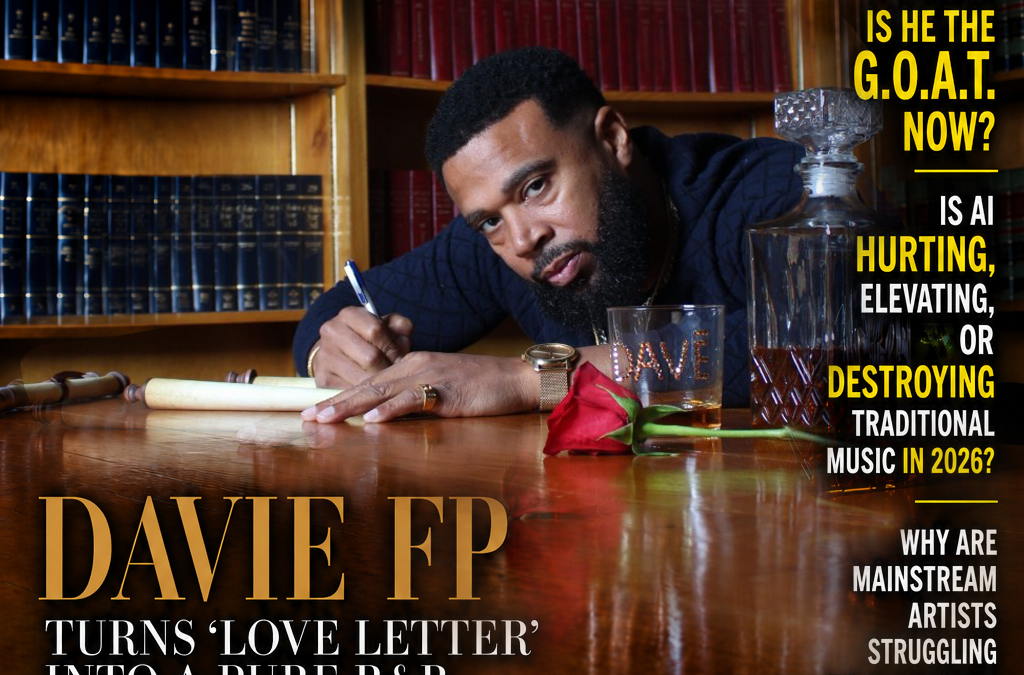
by Jonathan P-Wright | Jun 5, 2026 | Latest, Music News, New Music Alert |
Written by Jonathan P. Wright on behalf of RESULTSANDNOHYPE Magazine
Cleveland, Ohio does not raise empty voices. Cleveland raises artists who know how to turn pressure into purpose, pain into melody, and hometown pride into something the world can feel. DAVIE FP carries that Cleveland spirit inside “Love Letter,” a record built like a confession, sung like a prayer, and delivered like a man who finally found the language to honor a woman beyond the surface.
“Love Letter” moves with summertime warmth, but its heartbeat lives in real emotion. DAVIE FP paints the record with handwritten truth, slow motion drives, soft lighting, clean confidence, and romance that makes a woman feel seen beyond beauty. Every note feels personal because every emotion sounds lived in. Every lyric carries the weight of a man who understands gratitude is not weakness. Gratitude is love with discipline.
Young women today want romance without confusion, vulnerability without manipulation, loyalty without embarrassment, and emotional safety without begging for it. “Love Letter” gives that audience something pure to hold on to, especially going into the summertime, when music becomes memory and every real anthem needs to feel like skin, sunlight, and soul.
Cleveland Raised The Soul, DAVIE FP Turned It Into Melody
Cleveland, Ohio lives inside DAVIE FP’s music like a skyline at dusk. You can hear the city in the patience of his delivery, the weight behind his gratitude, the pride inside his tone, and the way “Love Letter” turns real-life emotion into something smooth enough for summer but deep enough to survive every season.
Cleveland gives his music grit, texture, emotional temperature, and a foundation that cannot be copied. Every city leaves fingerprints on its artists, and Cleveland placed resilience inside DAVIE FP’s voice. His hometown pride does not have to scream. Sometimes, true city representation sings.
A city like Cleveland, Ohio teaches artists how to stand tall before the spotlight arrives. DAVIE FP carries that lesson inside “Love Letter.” Nothing about the record feels manufactured. His voice moves like somebody who understands softness becomes more powerful when it comes from a real place.
Cleveland stands behind “Love Letter” because hometown support recognizes sincerity before the rest of the world catches up. DAVIE FP gives the city a polished R&B moment rooted in romance, respect, emotional accountability, and pure musical intention.
The Song Structure Feels Like A Love Letter Opening Page By Page
“Love Letter” unfolds like a private message being opened slowly, one emotion at a time. DAVIE FP begins with vulnerability, moves into gratitude, rises through emotional recognition, and closes with healing. Nothing about the structure feels mechanical because every section carries a purpose.
His opening line, “If I wrote you a letter, how many pages would it take you to see?” becomes the doorway into the record. From there, the verse explains why this woman matters, the gratitude passage honors her consistency, and the “psychic” line speaks directly to her intuition.
As the song lifts, love becomes shelter. DAVIE FP sings about receiving love when he needs it, hope when he feels defeated, and strength when life pulls him down. The hook, “Everything is new,” turns that emotion into renewal, giving the record enough bounce for summer while keeping the feeling intimate.
By the closing emotion, the letter no longer feels like words on a page. It feels like healing being delivered. Intro becomes invitation. Verse becomes confession. Gratitude becomes intimacy. Intuition becomes praise. Hook becomes renewal. Closing emotion becomes peace. DAVIE FP builds “Love Letter” like R&B with a heartbeat, not a formula.
A Handwritten Opening Places The Listener Inside The Letter
“Love Letter” begins with a lyric that immediately creates a room inside the listener’s mind.
“If I wrote you a letter, how many pages would it take you to see?”
A line like that does not simply open a song. It opens a private world. Text messages can disappear inside noise. DMs can get buried. Captions can be deleted. A love letter carries permanence because a man had to sit still long enough to turn emotion into language.
DAVIE FP uses that opening as a doorway. Vulnerability enters first. Before the rhythm fully breathes, he places the listener inside a quiet moment between a man and the woman who changed something inside him. Real R&B should never rush the heart. DAVIE FP allows the first words to sit in the air like perfume.
Gratitude Becomes The First Verse And The Emotional Spine
As the first verse unfolds, DAVIE FP begins explaining why the letter exists. Beauty alone did not inspire this confession. Presence did. Loyalty did. Emotional support did. A woman made a difference, and DAVIE FP understands that kind of impact deserves to be honored out loud.
“I love you and I appreciate what you’re doing, what a difference you made, baby.”
“And I wanna say thank you and I’m so thankful, and you’ve been there for me so many times. You’re like a psychic, baby.”
Those lines give the record its heartbeat. Appreciation becomes the foundation. Gratitude becomes the rhythm underneath the rhythm. DAVIE FP is not speaking from surface-level romance. He is speaking from the place where a man finally recognizes the woman who stayed present through moments nobody else could see.
That “thank you” matters. Gratitude can become one of the most powerful forms of intimacy inside R&B when delivered with honesty. DAVIE FP thanks her, acknowledges her timing, recognizes how she showed up again and again, and honors the consistency behind her love.
The “psychic” line speaks directly to a woman’s intuition. DAVIE FP is describing someone who can read pain before pain becomes a sentence. She knows when his spirit is heavy. She knows when silence means pressure. She knows when love is needed without being asked for it.
Women often become the safe place, the quiet strength, the prayer partner, the secret keeper, and the emotional mirror inside relationships. Too many songs celebrate the body and ignore the spirit. DAVIE FP chooses a higher road. His writing looks past the surface and sings directly to the woman’s value.
May 22, 2026 Becomes The Moment “Love Letter” Expands Beyond The Record
May 22, 2026 becomes a defining date inside the DAVIE FP rollout because the livestream interview, the official release of “Love Letter,” and the “Love Letter” lyric video all move together under one larger cultural frame. DAVIE FP is not walking into this moment with one isolated song. He is stepping into a full multimedia experience built around the music, the message, and the visuals.
The livestream interview and “Love Letter” lyric video will exclusively air on LOOKHU TV, giving the campaign a premium television platform powered by Samsung TV, Apple TV, Roku, and Amazon Fire TV. A song with this much emotion deserves more than a quiet digital drop. “Love Letter” deserves a stage where listeners can hear the heart behind the record and experience DAVIE FP as an artist building something bigger than one release.
The official record “Love Letter” will be distributed across all major DSPs, including Spotify, Apple Music, Pandora, iHeartRadio, TIDAL, Peloton, and more. “Love Letter” will also be available through JPAY, placing DAVIE FP’s music inside a deeper human context where emotion, memory, hope, and connection carry a different kind of weight.
DAVIE FP Is Writing More Than A Letter, He Is Writing Legacy
DAVIE FP’s “Love Letter” feels like a Cleveland-born R&B confession with summer in its rhythm and forever in its intention. Women who still believe in being loved correctly have a record to hold. Men learning how to speak with gratitude have a blueprint to study. R&B fans who miss sincerity have a song that brings feeling back to the center.
Cleveland is standing behind him. LOOKHU TV gives the livestream interview and lyric video a premium television platform powered by Samsung TV, Apple TV, Roku, and Amazon Fire TV for the May 22, 2026 rollout.
DAVIE FP is not only releasing music. He is building a language. A language for women who want to feel safe in love. A language for men learning how to speak with appreciation. A language for R&B fans who still believe the genre should touch the soul before it touches the charts. A language for Cleveland to stand behind with pride.
Welcome to the universal language of love, curated by none other than DAVIE FP.
by April Harley | Aug 29, 2025 | Latest, Music News, New Music Alert |
In a world overflowing with content, standing out isn’t easy. Yet hip-hop veterans Fat Joe and Jadakiss have managed to launch one of the most impactful new shows in podcasting. Their collaboration, “Joe & Jada,” is already a chart-topper, a viral sensation, and a cultural talking point.
A Powerful Launch
When the podcast premiered earlier this year, skeptics wondered whether the rap legends could hold attention outside of music. The numbers answered quickly: millions of streams within weeks, thousands of five-star reviews, and near-constant chatter on social media.
Clips spread daily across TikTok, Instagram, and X (formerly Twitter). Fans shared moments of unfiltered honesty, like Joe’s reflections on losing friends in the industry or Jadakiss laughing about a childhood story in Yonkers.
Recognition Beyond Music
Industry recognition followed fast. Complex named “Joe & Jada” one of the Top 10 Hip-Hop Podcasts of the year and highlighted it among the Top 15 Cultural Podcasts overall. Such rankings elevated the show from “celebrity side project” to “must-listen media property.”
“This is about honesty,” Fat Joe said in a recent interview. “People know the hits, but here we share what happens outside the booth.”
Jadakiss echoed the sentiment: “We wanted to give the culture something uncut. No scripts. Just the real.”
Authentic Conversations at the Core
What separates “Joe & Jada” is that it doesn’t feel like a promotional platform. Many celebrity podcasts exist primarily to push products or brands. Here, the conversation takes center stage.
Listeners have praised the mix of humor and depth. One episode may be full of belly laughs, while the next might feature sobering discussions about violence, loyalty, or perseverance in an unforgiving industry. That duality — the ability to laugh and reflect in the same breath — resonates widely.
Breaking Out Across Platforms
Spotify streams. Apple Podcasts reviews. YouTube comments. Everywhere you look, “Joe & Jada” is sparking dialogue. The show has already landed in the trending section multiple times and sits near the top of entertainment podcast charts.
Celebrity guests have added to the momentum. Surprise appearances from athletes and fellow rappers give episodes extra energy. But fans consistently say the real draw is the dynamic between Joe and Jada themselves.
The Road Ahead
The success of season one is fueling bigger plans. According to industry insiders, live tapings are being developed in major cities, where fans can experience the banter in person. Branded partnerships with fashion and beverage companies are also in the works.
But Jadakiss insists the heart won’t change: “We can do live shows, we can do deals, but the vibe stays the same. No filter. No fluff.”
A Legacy Reinforced
For Fat Joe and Jadakiss, this is more than a podcast — it’s another chapter in legacies already written in platinum. Both men are regarded as pillars of hip-hop’s history, and with “Joe & Jada,” they’re proving they’re just as relevant in 2025 as they were in 2005.
by Jonathan P-Wright | Aug 29, 2025 | Latest, Music News, New Music Alert |
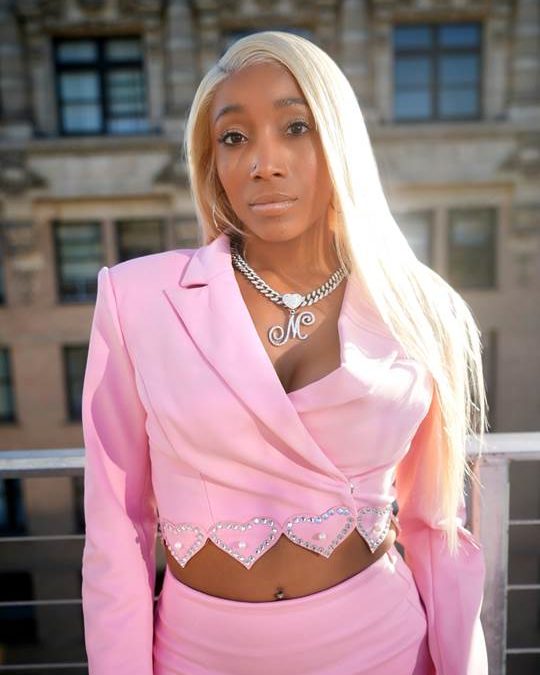
In today’s cultural landscape, the lines between music, fashion, media, and entrepreneurship are blurring. At the center of this intersection stands Monet Anaïs, a bold new visionary whose empire is built on resilience, authenticity, and unrelenting ambition. She is an independent recording artist, CEO & Founder of Boujie Empire Ent., Co-Editor-in-Chief of Black Vine News, Senior Writer for RNH Magazine, and a dealmaker in multimedia production.
But behind the titles and accolades lies a story of transformation—a story of how one woman turned her pain into promise, carving out a future that belongs not only to her but to every creative she empowers along the way.
Building an Entrepreneurial Legacy
Monet Anaïs is not a one-dimensional creative. She has positioned herself as a serial entrepreneur, building enterprises that stretch across multiple industries. Her vision is clear: create an ecosystem that allows women, minorities, and independent voices to thrive.
At the center of her growing empire is Boujie Empire Ent., her clothing and lifestyle brand. What began as an idea rooted in self-expression has evolved into a fashion movement, blending luxury streetwear with high-fashion aesthetics. Boujie Empire Ent. is not simply about apparel—it represents confidence, ownership, and cultural power. For women especially, it is a declaration: you can be bold, ambitious, and unapologetically yourself.
But Anaïs doesn’t stop at fashion. Her multimedia company encompasses:
- – Podcasting: Through her podcast division, she fosters unfiltered conversations on entrepreneurship, identity, and empowerment.
- – Television & Film Production: Monet is currently in pre-production for her first documentary, which will be distributed via Lookhu TV (https://www.lookhu.tv). This highly anticipated docuseries will explore the myths, dynamics, and ideology behind her creative genius, offering an intimate look into her world as an entrepreneur and artist.
- – Record Label: Her label nurtures emerging talent, providing artists with tools and strategies to build sustainable careers outside of traditional music industry systems.
Recently, Anaïs also inked a podcast distribution deal with MUSICHYPEBEAST, a powerful multi-faceted broadcast platform that houses 34+ podcasts, a Muck Rack (https://www.muckrack.com) verified media outlet, and a music distribution pipeline via EMPIRE. This partnership ensures her voice and the voices of her collaborators will be amplified on a global digital stage, while connecting her brand with an established powerhouse in independent music.
Journalism as Cultural Power
Monet Anaïs is also redefining media. As Co-Editor-in-Chief of Black Vine News and Artist Uncut, she curates narratives that highlight cultural disruptors, industry game-changers, and emerging female leaders. For Anaïs, journalism is not just storytelling—it’s an act of empowerment. She uses her editorial influence to celebrate diversity, truth, and progress in an industry often driven by sensationalism.
Her journalistic reach expanded even further when she became a Senior Writer for RNH Magazine (RESULTSANDNOHYPE) (https://www.resultsandnohype.com). In this role, she focuses on spotlighting surging female entrepreneurs, as well as HBCU students excelling in business, pharmacy, sports medicine, and journalism. By shining a light on these communities, Monet continues her mission to bridge opportunity gaps and showcase the brilliance of young leaders who are too often overlooked.
Her dual roles in media demonstrate her versatility. She is equally at home conducting in-depth interviews with innovators as she is crafting cultural essays that challenge traditional narratives. Through Artist Uncut and RNH Magazine, Anaïs has established herself as a media powerhouse committed to truth and cultural impact.
The Artist: Music as a Sanctuary
Though Anaïs thrives in business and media, her identity as a recording artist remains central to her legacy. Music is her most intimate expression, a mirror reflecting her triumphs and struggles.
Her catalog, available on Spotify, is a sonic journal of resilience, ambition, and survival.
Spotify: https://open.spotify.com/artist/3E1tWjq49IxBu7MZfXrz67?si=fdhTQgNrQ06OCIyMkhShNg
Her standout single ‘Down’ captures the essence of her artistry. The track is raw yet empowering, fusing emotional vulnerability with lyrical strength. In her words and melodies, Anaïs converts heartbreak into healing, turning her pain into a shared promise of hope for her listeners.
Her artistry is not just about sound—it’s about connection. Each performance, each song, is a bridge between her personal story and the universal experiences of her fans. In an industry dominated by fleeting trends, Monet Anaïs’s music stands out for its substance, depth, and authenticity.
Forging the Future: From Pain to Promise
As 2026 approaches, Monet Anaïs is not slowing down—she is accelerating. Her journey illustrates the blueprint of a modern mogul: one who seamlessly blends artistry with entrepreneurship, fashion with storytelling, and journalism with empowerment.
Her mission is grounded in a powerful mantra: convert pain into promise. Every obstacle she has faced has become a stepping stone, every setback an opportunity for reinvention. Whether through Boujie Empire Ent., her Spotify catalog, her Lookhu TV docuseries, her MUSICHYPEBEAST podcast partnership, or her journalism with Black Vine News and Artist Uncut, Anaïs is creating a multi-industry legacy rooted in empowerment, innovation, and cultural leadership.
Most importantly, Monet Anaïs is building a legacy beyond herself. For her, success is measured not only by business growth or chart performance but by the doors she opens for others—for women in business, for creatives of color, for young students at HBCUs, and for independent artists navigating an unforgiving industry.
A Legacy in the Making
Monet Anaïs represents the future of entertainment and entrepreneurship. She is a visionary CEO, fearless journalist, and unapologetic artist, carving out her own path and inspiring others to do the same. By 2026, her name will not only be attached to music, fashion, and media—it will symbolize a movement of empowerment, creativity, and cultural elevation.
Her journey proves that pain does not have to be permanent. With vision, resilience, and relentless drive, it can be transformed into a promise—one powerful enough to change industries, rewrite narratives, and inspire generations.
by Pharron Fields | Aug 21, 2025 | Business News, Latest, Music News |
Photo by Frankie Cordoba on Unsplash
For over a decade, digital streaming platforms have dominated the way people discover and consume music. They’ve revolutionized access, given listeners millions of songs at their fingertips, and provided artists—particularly independent ones—with the promise of a level playing field. But over the last couple of years, that promise has started to fade. A new movement is emerging among indie musicians: one that favors direct-to-consumer models over mainstream streaming platforms. This isn’t rebellion—it’s a response to economics, ownership, and a desire for long-term sustainability.
The Harsh Reality of Streaming Revenue
At first glance, streaming seems like a great way for artists to reach global audiences. A song can travel across countries overnight, algorithmic playlists can spike visibility, and listeners can easily find new artists. But for all its reach, streaming delivers little reward for most artists financially. Many musicians have realized that their play counts look impressive, but their income doesn’t match. That’s because the underlying payment structure doesn’t favor small-scale creators.
Streaming services operate on a revenue-sharing system. Each month, the platform calculates the total number of streams across all songs and divides the subscription revenue based on what percentage of plays each song received. This means artists are not paid per play in any fixed or reliable sense. Instead, they earn a slice of the monthly pie that gets smaller the more the platform grows and the more competitive the streamshare becomes.
This structure overwhelmingly favors major label artists and viral chart-toppers. For independent artists, it often translates to a payout of just a few dollars for thousands of streams. Spotify, one of the biggest platforms, typically pays between $0.003 and $0.005 per stream. At that rate, an artist would need roughly 333,000 streams to earn just $1,000. Meanwhile, even Apple Music and Amazon, which pay slightly better, still require over 100,000 streams to hit the same mark. With no flat rate, the income is not only low but also unpredictable.
Streaming Thresholds and the New Gatekeeping
In 2024, Spotify introduced a new policy that added insult to injury for small artists. Under this update, any song that fails to accumulate 1,000 streams in a 12-month window is excluded from royalty payments. The company positioned this move as a way to reduce low-quality uploads and fraudulent activity. But it had a side effect that hit legitimate indie artists the hardest—especially those with niche fanbases or smaller catalogs.
This policy pushed many artists to reassess their reliance on streaming. If your music isn’t hitting a certain level of volume, it’s now simply not worth anything to the platform, no matter how much effort went into it or how meaningful it is to fans. This effectively introduced a new form of gatekeeping. Not based on talent, but on numbers.
Rethinking Value: Why Artists Are Selling Direct
In light of these challenges, a wave of musicians is finding new hope in older models—with a modern twist. Selling music, merch, and experiences directly to fans has emerged as a powerful alternative to the streaming economy. When artists go direct, they not only get paid more per transaction, but they also regain a sense of control and connection that streaming cannot offer.
Let’s break down the math. If an artist sells 200 digital albums at $10 each through their own site or a DTC platform, and keeps 80% of the revenue, they take home $1,600. That’s more than what they’d earn from hundreds of thousands of Spotify streams—and they get paid faster, often within a couple of days. This model puts the artist back in charge. They set their own price, keep the data, and engage their audience on their terms.
Owning the Fan Relationship Is the Game-Changer
Perhaps the biggest advantage of the direct model is access to fans. Streaming platforms are designed to keep users inside the app. They don’t share listener data with artists, which means the musician never truly knows who their fans are. They can’t reach out directly, promote shows, or sell merchandise easily. They just have to hope the algorithm favors them again.
Going direct changes this dynamic completely. When someone buys music from an artist’s store or a DTC platform, the artist gets their contact information. They can now build an email list, send SMS updates, and keep fans informed about new projects or tour dates. This turns passive listeners into loyal supporters—and those relationships last far longer than a playlist add.
Some platforms even include built-in CRM (customer relationship management) tools that make it easy to segment fan lists and create custom campaigns. Artists can reward top fans, run promotions, or offer exclusive content. This isn’t just marketing—it’s community-building. And that’s something no streaming platform can replicate.
Scarcity and Exclusivity as Revenue Multipliers
One of the most effective strategies in the direct-to-consumer model is using scarcity to drive action. Artists are now releasing music as limited-time digital “drops” or exclusive early-access bundles before ever touching streaming platforms. Fans who want to be the first to hear new songs are encouraged to buy rather than wait. This urgency turns first-week hype into real money and helps fund future releases.
Artists can also experiment with tiered pricing. For example, they might offer a basic album for $10, a deluxe edition for $25 with bonus tracks, and a $50 VIP package that includes a video call or signed item. Fans love the chance to support artists in meaningful ways—and artists earn far more per fan compared to what streaming provides.
Ethics and Brand Alignment Matter Too
For some musicians, this shift is not just about revenue but about values. Large streaming platforms make business decisions that may clash with an artist’s beliefs—whether it’s partnerships with controversial companies, investment in industries like defense tech, or failure to support marginalized communities. Selling direct gives artists the freedom to run their business in a way that aligns with their personal ethics.
When artists own the entire sales process, they’re no longer beholden to corporate policies or opaque algorithms. They get to decide what they release, how they price it, and who they serve. This creative and ethical freedom is invaluable for many.
The Rise of Artist-Centric Platforms
New tools are making it easier than ever for artists to make the shift. EVEN and Nebula are two standout platforms helping lead the way. EVEN allows musicians to sell digital releases, merch, and bundled experiences directly to fans. Artists can customize pricing, capture fan data, and use built-in marketing features to manage ongoing campaigns.
Nebula takes a different angle. It uses blockchain technology to let fans buy fractional ownership of songs. In return, they earn a share of the royalties generated by the music. This turns listeners into stakeholders and allows artists to raise funding without signing away rights to labels. It’s a bold new model for community-funded creativity.
Both platforms prioritize independence. They’re designed not to replace streaming, but to give artists more tools to succeed outside it. And the best part? They let artists decide how much or how little they want to use traditional DSPs in their strategy.
A Smarter Strategy for a Changing Industry
Many indie artists are adopting a hybrid approach. Instead of abandoning streaming altogether, they’re reframing it. Streaming becomes a discovery tool, not the primary monetization method. New music is released first through a paid drop on the artist’s own site or platform, where the core audience can buy it and support the artist directly. Afterward, it’s released to streaming for visibility and algorithmic traction.
This strategy allows artists to earn upfront from their biggest supporters and still reach wider audiences later. It’s not about rejecting the mainstream—it’s about making it work for you, on your own terms.
Direct Sales Aren’t Just for Albums
The beauty of the DTC model is that it extends far beyond just selling music. Artists can bundle their releases with behind-the-scenes content, virtual meet-and-greets, concert tickets, merch, or even fan-only community access. These experiences increase the value of each transaction and deepen the fan connection.
At live shows, artists can sell limited edition merch or use QR codes to drive traffic to their digital storefronts. The same principle applies online: every post, livestream, or tweet becomes an opportunity to guide fans to a space the artist owns.
Where Things Are Headed
As the music landscape continues to evolve, more independent artists are realizing they don’t have to play by the rules set by streaming giants. The tools for independence are finally here. And while streaming platforms will continue to dominate mass consumption, they no longer have to dominate the business of being an artist.
The DTC movement isn’t just a trend—it’s a fundamental shift in how artists think about their careers. It’s about turning fans into partners, attention into income, and data into long-term opportunity. In a world where streams rarely pay the bills, selling direct might just be the future of music for those who want to stay creative, stay independent, and stay in business.
by Pharron Fields | Apr 25, 2025 | Music News |
Image credit: Sterling Munksgard / Shutterstock.com
In a world where hip-hop trends come and go faster than ever, Too Short has returned to remind everyone that longevity and authenticity still matter. The 58-year-old rap veteran recently released a new single titled “Still Mackin,” and it’s more than just a track—it’s a powerful statement that he’s still here, still sharp, and still doing it his way.
Dropped earlier this week, “Still Mackin” feels like a reintroduction, a reaffirmation of the Bay Area rapper’s place in hip-hop history and his continued relevance today. Over a bass-heavy, synth-laced beat, Too Short delivers his verses with the same unapologetic confidence that made him famous decades ago. With lyrics like “I thought you knew, I’m still rappin / Bitch, I’m still mackin,” he lets listeners know that despite the passage of time, he hasn’t lost a step.
Available on all major streaming platforms including Spotify, Apple Music, and more, the track signals the beginning of a new chapter in Too Short’s legendary career. And fans won’t have to wait long to see where it leads—his upcoming album Sir Too Short, Vol. 1 (Freaky Tales) is just around the corner.
A New Era for a Seasoned Icon
Too Short has been a mainstay in the hip-hop world since the 1980s, and while many artists from that era have either faded into obscurity or stopped releasing new music altogether, he continues to push forward. Known for his laid-back delivery, explicit lyrics, and Bay Area slang, he’s never strayed far from the formula that brought him fame—but that’s exactly why people still listen.
“Still Mackin” doesn’t try to cater to younger generations with auto-tune or viral dance hooks. Instead, it embraces the timeless grit and groove that fans have come to associate with Too Short. It’s a track soaked in swagger, and every bar sounds like a message from a man who’s earned his place in the game through decades of hustle and real-life experience.
Too Short has always stood out not just for his music, but for his refusal to change for the sake of popularity. His confidence doesn’t come from ego—it comes from having lived through it all, from cassette tapes and boomboxes to the streaming age. His continued presence serves as a bridge between the past and present of hip-hop, and this new release is a perfect example of that balance.
An Album on the Horizon: Sir Too Short, Vol. 1
The single is also building anticipation for a much larger project: Sir Too Short, Vol. 1 (Freaky Tales), which is set to release on April 18. This marks the rapper’s first full-length studio album in five years and promises to bring together classic sounds and fresh collaborations.
Longtime fans will be thrilled to know that the album is produced by Ant Banks, a fellow Bay Area heavyweight and frequent collaborator. Ant Banks and Too Short have a history of crafting smooth, funk-infused bangers that helped define West Coast hip-hop in the 90s. Their reunion is a major highlight, signaling that this album will stay true to the core sound that fans have always loved.
The album is also expected to feature appearances from some high-profile artists. Snoop Dogg, Larry June, and King George are all on board, bringing together multiple generations and regions of hip-hop. Snoop brings his signature California cool, Larry June adds a modern Bay Area vibe, and King George introduces a Southern flair that’s grounded in soul and storytelling. It’s a diverse mix that shows Too Short isn’t just looking backward—he’s building something that celebrates the full scope of hip-hop culture.
A Hollywood Moment: From Music to Movies
Interestingly, the release of “Still Mackin” and the upcoming album follows close on the heels of Too Short’s recent dive into Hollywood. Earlier this month, the rapper added another title to his name—film producer. His project Freaky Tales, inspired by his iconic 1987 song, recently hit theaters. Set in Oakland during the late ’80s, the movie blends gritty nostalgia with action-packed storytelling.
The film stars a heavyweight cast that includes Pedro Pascal, Ben Mendelsohn, and Jay Ellis, with singer Normani making her debut as an actress. Too Short not only produced the film but also narrates it, offering a firsthand voice to the world he helped define through music.
The connection between the film and the upcoming album is more than coincidental. They share a name and a spirit. Both are rooted in Too Short’s history—his neighborhood, his upbringing, his early career—and both aim to preserve that history while sharing it with new audiences.
A Career Defined by Consistency and Self-Belief
Too Short’s message has never really changed over the years. He raps about street life, women, money, and power—but always from a perspective that’s uniquely his. He never pretends to be someone he’s not. That sense of identity has been his strongest asset.
He’s seen hip-hop grow from underground parties to global superstardom, and through it all, he’s stayed consistent. He’s collaborated with legends like Tupac, The Notorious B.I.G., E-40, and more recently, with newer artists who grew up listening to his work.
In an age when many artists reinvent themselves with every album drop, Too Short’s refusal to change isn’t stubbornness—it’s strategy. He knows his lane, and he dominates it. “Still Mackin” is both a celebration of that legacy and a continuation of it.
What Comes Next for Too Short?
With the single out and the album release date fast approaching, there’s plenty of speculation about what Too Short has planned next. Will he go on tour? Will there be more film projects? Maybe more collaborations with current rap stars? While nothing has been officially confirmed, it’s clear that the artist isn’t slowing down anytime soon.
If anything, “Still Mackin” feels like the beginning of a new era—one where Too Short is not only respected as a rap legend but also embraced as a cultural storyteller, bridging music and film to bring his truth to life in new and exciting ways.
Final Thoughts: A Legend Who’s Still in the Game
Too Short’s latest release isn’t just another track to add to your playlist—it’s a reminder of what real longevity looks like. At a time when attention spans are short and trends are fleeting, he stands tall as someone who has not only survived but thrived by sticking to what he knows best.
Whether you’ve been listening to Too Short since the ’80s or you’re just discovering his music for the first time, “Still Mackin” is worth a listen. It’s not trying to be trendy. It’s not chasing a TikTok moment. It’s real, raw, and unmistakably authentic—just like the man behind the mic.
And with Sir Too Short, Vol. 1 on the way, fans have a lot more to look forward to. The legend continues.

RECENT COMMENTS