
by Jonathan P-Wright | Sep 13, 2023 | Latest, POLITICS, Social Justice |
Image Credit: lev radin / Shutterstock.com
In a shocking revelation, five former officers of the British police force have publicly admitted to circulating racist messages about Prince Harry and Meghan Markle, the Duke and Duchess of Sussex. This unsettling news has once again brought to the forefront the issue of racism that has been a longstanding concern within the British establishment.
The Guilty Officers and Their Charges
The five officers – Robert Lewis, Peter Booth, Anthony Elsom, Alan Hall, and Trevor Lewton – confessed their guilt at London’s Westminster Magistrates’ Court. Their charges included sending grossly offensive racist messages via public communication.
A sixth officer, Michael Chadwell, declined the identical charge and is expected to return to court on November 6. The rest are scheduled for sentencing on the same day.
These officers were previously part of London’s Metropolitan Police Force, serving in the Parliamentary and Diplomatic Protection branch, responsible for safeguarding politicians and diplomats.
The Incriminating Messages
The officers were arrested and charged following a BBC investigation last year that uncovered their clandestine activities. These included the circulation of offensive and racist messages in a closed WhatsApp group. Their derogatory comments targeted not only the Duke and Duchess of Sussex but also other members of the royal family, such as Prince William, Kate, the late Queen Elizabeth II, and her late husband, Prince Philip. High-profile political figures like U.K. Prime Minister Rishi Sunak, former interior minister Priti Patel, and former Health Secretary Sajid Javid were also victims of their contemptuous remarks.
The messages were circulated between 2020 and 2022, a period during which none of the accused were serving as officers. According to Newsweek, their conversations also included discussions about the U.K. government’s plans to deport asylum seekers to Rwanda and the floods in Pakistan.
A Not-So-Isolated Incident
This incident is not an isolated one. In 2022, two active officers were discharged from service when their racist conversations on WhatsApp were revealed publicly. Shockingly, one of these messages was even circulated during the royal wedding of Prince Harry and Meghan Markle in 2018.
The Impact of Racism on the Royal Couple
These racist incidents significantly contributed to the decision of the royal couple to relocate to America in 2020. They stepped away from the monarchy, citing the high tension between members of the royal family, the royal institution, and the British tabloid press.
In the 2021 documentary series, The Me You Can’t See, Prince Harry revealed to Oprah Winfrey that the media played a significant role in fostering racial hatred against his wife. He expressed regret over not taking a firm stand against racism earlier in his relationship with Meghan.

by Laghe Andrews | Sep 13, 2023 | Latest, POLITICS |
Image Credit: Photo by Scott Graham on Unsplash
The latest POLL from Economist/YouGov reveals a surprising insight into the American public’s view concerning mental competency tests for senior politicians. A significant 76% of Americans have expressed strong or partial support for implementing mandatory mental competency tests for politicians aged 75 and above. This POLL not only highlights the shared concern among Americans about the mental fitness of their leaders but also underscores a growing demand for policy reforms in the political landscape.
Uncovering the Poll Results
According to the POLL conducted by The Economist/YouGov, only 13% of Americans oppose the notion of a compulsory mental capacity test for politicians over 75, while 11% expressed uncertainty. The POLL revealed a bipartisan consensus, with 80% of Republicans and 70% of Democrats advocating for the competency test.
These numbers undoubtedly reflect a shared concern among Americans over the mental acuity of their leaders, especially those of advanced age. This finding is particularly significant considering the high average age of politicians holding office in the current Congress.
Age Differential: The Politicians Vs. The Public
Data from Quorum shows a stark age difference between the average American and their representatives. The average age of Americans is 38, while the average age of the current Congress is 58. This substantial age gap has triggered concerns about the ability of older politicians to understand and address the issues that younger Americans face.
The Age Factor in the 2024 Presidential Election
The age of politicians becomes an even more prominent issue when looking at potential candidates for the 2024 Presidential Election. Both frontrunners, President Joe Biden, 80, and former President Donald Trump, 77, significantly exceed the 75-year age benchmark.
Despite the presence of younger Republican candidates, such as former South Carolina Gov. Nikki Haley, 51, and Florida Gov. Ron Desantis, 44, they lag considerably behind Trump in the POLLS.
In contrast, the Democratic candidates for the 2028 election comprise younger potentials. Maryland Gov. Wes Moore, Michigan Gov. Gretchen Whitmer, and Pennsylvania Gov. Josh Shapiro are all below 55.
Health Concerns Among Senior Politicians
Health issues among senior politicians have been in the headlines lately. Senate Minority Leader Mitch McConnell, 81, appeared to freeze for the second time while responding to questions during a live press conference last week.
California Sen. Dianne Feinstein, 90, is reportedly struggling with encephalitis and Ramsey Hunt Syndrome. She has given her daughter power of attorney and relies on several aides to perform her duties.
These incidents have amplified the public’s concern over the ability of older politicians to serve effectively. According to the POLL, a majority of Democrats and Republicans believe that health and age have significantly hampered these politicians’ capacity to serve in the Senate.
The Age Problem in American Politics
The age of American politicians has become a contentious issue, with many Americans believing that the country’s politicians are too old. The argument is that their age is hindering the country from progressing and embracing innovative ideas, such as a universal basic income for low-income Americans and alternative energy sources like solar and wind power to combat climate change.
Proposal to Amend the Constitution
In response to these concerns, House Republican Rep. John James of Michigan has proposed an amendment to the US Constitution that would effectively bar anyone over 75 from serving in Congress or as the President of the United States.
Age and the 2024 Election
The issue of age will likely continue to dominate political discussions and presidential debates as the 2024 election draws nearer. The rising support for mental competency tests among Americans, as indicated by the POLL, suggests that this debate will not be silenced anytime soon.
The Poll’s Methodology
The POLL was conducted from Sept. 2-5 by The Economist/YouGov, with a sample size of 1,329 registered voters. The diversity of the respondents effectively captured a broad spectrum of American opinions, making the POLL results highly representative of the national sentiment.
The Takeaway
The POLL results reveal a substantial consensus among Americans on the need for mandatory mental competency tests for politicians over 75. This consensus spans across party lines, indicating a widespread concern about the role of age and health in political leadership.

by Laghe Andrews | Sep 12, 2023 | Business News, Latest, Tech News |
Image Credit: Photo by julien Tromeur on Unsplash
Artificial Intelligence (AI) has been instrumental in transforming various sectors of industry and society. However, with great power comes great responsibility, and AI is no exception. There’s a peculiar phenomenon associated with AI, particularly Large Language Models (LLMs) like OpenAI’s ChatGPT, that has been causing quite a stir in the tech and business spheres. This phenomenon is often referred to as ‘hallucination’.
The Hallucination Phenomenon
Despite the enormous capabilities of AI, it has a peculiar tendency to generate information that doesn’t exist, or in simple words, to ‘hallucinate’. These hallucinations range from benignly odd to seriously problematic. For instance, ChatGPT once erroneously asserted that the Golden Gate Bridge was transported across Egypt in 2016. This is a simple mistake, and while it may be humorous, it’s indicative of an issue at the core of these models.
In a more serious instance, an Australian mayor threatened legal action against OpenAI when ChatGPT falsely claimed he had pleaded guilty in a high-profile bribery scandal. This misinformation not only has the potential to tarnish reputations but also raises legal and ethical concerns.
Researchers have also discovered that these AI-induced hallucinations can be exploited maliciously. Hackers can manipulate LLMs to disseminate harmful code packages to unknowing software developers. Furthermore, these models have been found to provide incorrect medical and mental health advice, such as falsely suggesting that wine consumption can prevent cancer.
Understanding the Training Process of Models
To comprehend why hallucinations occur, we must delve into how AI models are developed and trained. Generative AI models, including LLMs, essentially function as complex statistical systems that predict data, be it words, images, music, or speech. They lack genuine intelligence, learning from countless examples typically sourced from the public web.
For instance, if an AI model is presented with the phrase “Looking forward…” from an email, the AI might complete it with “… to hearing back” based on the pattern it has learned from countless similar emails. However, it’s important to remember that the AI doesn’t truly understand the sentiment of ‘looking forward’ to something.
Sebastian Berns, a PhD researcher at Queen Mary University of London, explains that the current LLM training framework involves ‘masking’ previous words for context and then predicting which words should replace the concealed ones. This concept is similar to predictive text in iOS, where we continually press one of the suggested next words.
While this probability-based approach generally works well, it’s not flawless. Due to the vast range of words and their probabilities, LLMs can generate grammatically correct but nonsensical text. They can spread inaccuracies present in their training data or mix different information sources, even those that contradict each other.
The Inherent Challenges with AI Models
The issue with hallucination in AI models is not borne from malicious intent. These models don’t possess the capability for malice, and concepts of truth and falsehood are meaningless to them. They’ve learned to associate certain words or phrases with certain concepts, even if those associations aren’t accurate.
“Hallucinations are tied to an LLM’s inability to estimate the uncertainty of its own prediction,” Berns explains. “An LLM is typically trained to always produce an output, even when the input significantly deviates from the training data. A standard LLM doesn’t have a method to determine if it’s capable of reliably answering a query or making a prediction.”
The Quest to Tackle Hallucinations
The challenge that lies ahead is whether hallucinations in AI models can be ‘solved’, and the answer to this is dependent on our understanding of ‘solved’.
Vu Ha, an applied researcher and engineer at the Allen Institute for Artificial Intelligence, maintains that LLMs “do and will always hallucinate”. However, he also believes that there are tangible ways to reduce hallucinations, depending on how an LLM is trained and deployed.
For instance, a question-answering system can be engineered to have high accuracy by curating a high-quality knowledge base of questions and answers, and connecting this knowledge base with an LLM to provide accurate answers via a retrieval-like process.
Ha uses the example of running the question “Who are the authors of the Toolformer paper?” (Toolformer is an AI model trained by Meta) through Microsoft’s LLM-powered Bing Chat and Google’s Bard. Bing Chat correctly listed all eight Meta co-authors, while Bard incorrectly attributed the paper to researchers at Google and Hugging Face.
“Any deployed LLM-based system will hallucinate. The real question is if the benefits outweigh the negative outcome caused by hallucination,” Ha said. In other words, if there’s no obvious harm done by a model that occasionally gets a date or name wrong but is generally useful, it might be worth the trade-off.
Berns highlights another technique that has been used to reduce hallucinations in LLMs: reinforcement learning from human feedback (RLHF). Introduced by OpenAI in 2017, RLHF involves training an LLM, gathering additional information to train a “reward” model, and fine-tuning the LLM with the reward model via reinforcement learning.
Despite the effectiveness of RLHF, it has its limitations. “I believe the space of possibilities is too large to fully ‘align’ LLMs with RLHF,” warns Berns.
Exploring Alternate Philosophies
If hallucination in AI models can’t be fully solved with current technologies, is it necessarily a bad thing? Berns doesn’t think so. In fact, he suggests that hallucinating models could act as a “co-creative partner”, providing outputs that may not be entirely factual but contain useful threads to explore.
“Hallucinations are a problem if generated statements are factually incorrect or violate any general human, social or specific cultural values,” Berns explains. “But in creative or artistic tasks, the ability to come up with unexpected outputs can be valuable.”
Ha argues that we are holding LLMs to an unreasonable standard. After all, humans also “hallucinate” when we misremember or misrepresent the truth. However, with LLMs, we experience cognitive dissonance because the models produce outputs that look good on the surface but contain errors upon further inspection.

by Diontae Bussey | Sep 12, 2023 | Business News, Latest, Tech News |
The opioid crisis has been a perplexing issue, baffling scientists for nearly two decades as they have strived to comprehend the ever-changing societal and systemic reasons that induce people to misuse opioids and to pinpoint prospective overdose danger zones.
These painstaking and frequently imperfect endeavors unfold as healthcare providers endeavor to deliver secure, efficient therapy, and other resources to those grappling with addiction.
As both scientists and healthcare providers scrutinize the expansive and enduring influence of the opioid crisis, they are now inquisitively investigating AI (Artificial Intelligence) and pondering, Could AI be the key to ending the opioid crisis?
Tech Adoption in Healthcare: A Slow Process
Healthcare is not a sector known for swiftly adopting new trends; it’s notoriously slow in testing and incorporating novel technology. This hesitance has its repercussions. One study implies that the industry forfeits over $8.3 billion annually because of its reluctance or failure to adopt technology such as sophisticated electronic health records.
Public health scientists and biomedical engineers have been discreetly fostering an AI-driven revolution in medicine, with addiction prevention and treatment being the latest beneficiaries.
However, the costs of the opioid crisis extend beyond financial losses. Since 1999, over 1 million people have perished due to drug-related overdoses. In 2021, 106,699 drug overdose deaths were recorded in America, marking one of the highest per capita volumes in the nation’s history. Approximately 75% of all these overdoses were linked to opioid use, which includes prescribed analgesics such as Vicodin and Percocet, along with illicit drugs like heroin.
Despite the Centers for Disease Control and Prevention and the National Institutes of Health investing billions of dollars into outreach, education, and prescription monitoring programs, the crisis has stubbornly persisted.
The Opioid Crisis: The Human Cost
For the past decade, I have been conducting research on the opioid crisis in rural and urban communities across America, including New York City and rural southern Illinois.
Most of my peers concur, albeit reluctantly, that there’s a considerable amount of speculation involved in pinpointing the complex risks faced by drug users. Which drugs will they acquire? Will they inject, snort, or smoke them? Who, if anyone, will they use around, in case they overdose and require assistance?
But that’s not all. Practitioners also regularly grapple with inconsistent federal and state guidelines on effective treatments for opioid use disorder, like suboxone. They also find themselves playing catch-up with increasingly unpredictable drug supplies contaminated with affordable, synthetic opioids like fentanyl, which is largely responsible for recent surges in opioid-related overdose deaths.
While AI advancements like ChatGPT have captured most of the public’s imagination, public health researchers and biomedical engineers have been quietly brewing an AI-infused revolution in medicine, with addiction prevention and treatment being the newest recipients.
AI Innovations in Opioid Crisis Management
Innovations in this space primarily utilize machine learning to identify individuals who may be at risk of developing opioid use disorder, disengaging from treatment, and relapse. For instance, researchers from the Georgia Institute of Technology recently developed machine-learning techniques to effectively identify individuals on Reddit who were at risk of fentanyl misuse, while other researchers developed a tool for locating misinformation about treatments for opioid use disorder, both of which could allow peers and advocates to intervene with education.
Other AI-powered programs, such as Sobergrid, are developing the capacity to detect when individuals are at risk of relapsing — for example, based on their proximity to bars — then connecting them to a recovery counselor.
The most impactful advancements relate to the reduction of overdoses, often triggered by drug mixing. At Purdue University, researchers have developed and piloted a wearable device that can detect signs of overdose and automatically inject an individual with naloxone, an overdose-reversing agent. Another significant development has been the creation of tools to detect hazardous contaminants in drug supplies, which could drastically reduce fentanyl-driven overdoses.
The Potential Pitfalls of AI in Opioid Crisis Management
Despite the immense potential, there are concerns — could facial recognition technology be used to locate people who appear intoxicated, leading to discrimination and abuse? Uber has already taken a step in developing this kind of capacity in 2008, attempting to patent a technology that would detect a drunk passenger.
And what about dis/misinformation, a problem already plaguing chatbots? Might malicious parties embed incorrect information into chatbots to mislead drug users about risks?
The Fine Balance
Since Fritz Lang’s seminal silent film “Metropolis” in 1927, the public has been fascinated by the idea of new, humanlike technology making lives easier and richer. From Stanley Kubrick’s “2001: A Space Odyssey” in 1968 to films like “I, Robot” and “Minority Report” in the early 2000s, though, these hopeful visions have slowly morphed into a kind of existential dread.
It will be up to not just researchers and clinicians, but also patients and the broader public to keep AI honest and prevent humanity’s biggest challenges, like the opioid crisis, from becoming insurmountable ones.
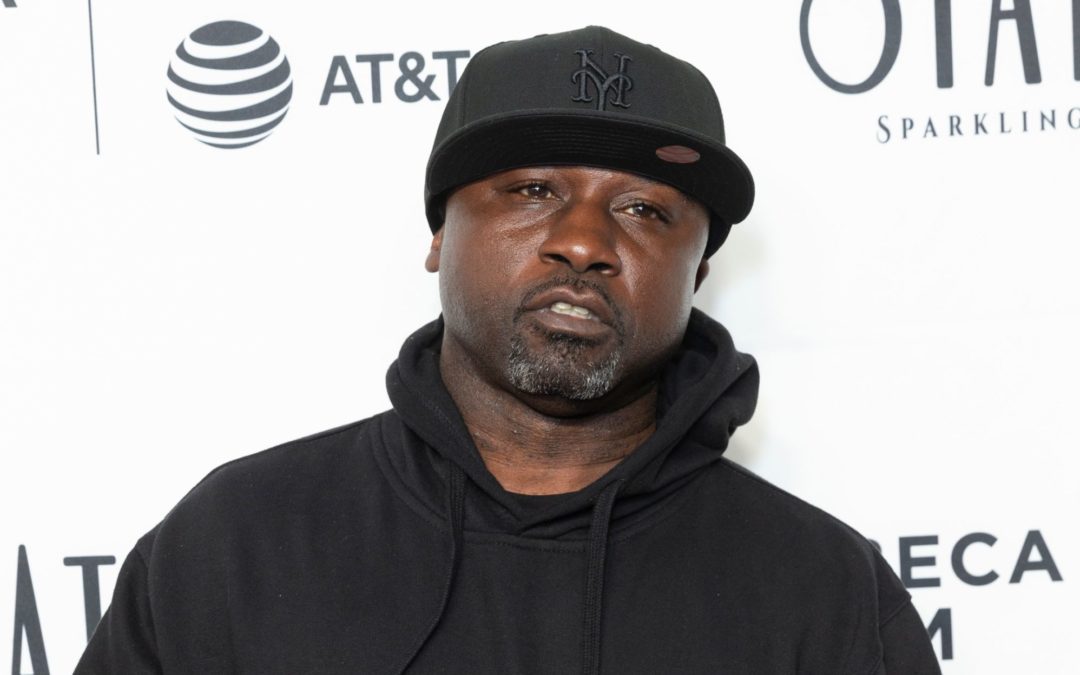
by Waqar | Aug 25, 2023 | Latest, Music News, New Music Alert |
Rapper Prodigy from the group Mobb Deep made an appearance at MTV studios for a taping of MTV 2 Presents Sucker Free Week on April 6, 2006, in New York City.
Introduction
Havoc, one-half of the iconic hip-hop duo Mobb Deep, has recently announced that a new album is in the works. This highly anticipated project will feature unreleased verses from their late groupmate, Prodigy. The news has sent shockwaves through the music industry and has fans eagerly awaiting the release of this album. In a recent interview on the People’s Party podcast, Havoc shared his plans for the future, including his work on the Mobb Deep album and other exciting collaborations.
A New Chapter for Mobb Deep
During his appearance on the People’s Party podcast, Havoc revealed that he is actively working on a Mobb Deep album. This announcement has brought hope and excitement to fans who have been longing for new music from the iconic duo. Havoc expressed his dedication to the project, stating that he has been blessed with a collection of unreleased vocals by Prodigy. These vocals will undoubtedly add a unique and powerful element to the album, allowing fans to once again experience the raw talent and lyrical genius of Prodigy.
Continuing the Legacy
The passing of Prodigy in June 2017 was a devastating loss for the music industry and for Mobb Deep fans worldwide. Prodigy was known for his distinctive voice, thought-provoking lyrics, and his ability to captivate listeners with his storytelling abilities. Despite his untimely death, his legacy continues to live on through his music. The upcoming Mobb Deep album will serve as a testament to Prodigy’s enduring influence and will allow fans to cherish his artistry once again.
Unreleased Verses from Prodigy
One of the most exciting aspects of the upcoming Mobb Deep album is the inclusion of unreleased verses from Prodigy. These previously unheard lyrics will provide a glimpse into the creative process of one of hip-hop’s most talented artists. Fans can expect a mix of nostalgia and fresh material as they listen to Prodigy’s powerful words and storytelling abilities. It is a rare opportunity to witness the evolution of an artist even after their passing, and this album will undoubtedly be a cherished addition to Prodigy’s discography.
Collaborations and Future Projects
In addition to the Mobb Deep album, Havoc has also been working on other exciting collaborations. During his interview on the People’s Party podcast, he revealed that he is working on a joint album with Wu-Tang Clan member Method Man. This collaboration between two legendary hip-hop artists is highly anticipated and is sure to be a standout project. Havoc is also collaborating with RJ PAYNE and Ras Kass on a separate project, further showcasing his versatility and dedication to creating innovative music.
Mobb Deep’s Legacy and Discography
Mobb Deep has left an indelible mark on the hip-hop landscape with their unique sound and gritty storytelling. Throughout their career, they released eight studio albums, including the critically acclaimed “The Infamous,” “Hell on Earth,” “Murda Muzik,” and “Infamy.” These albums showcased the duo’s ability to paint vivid pictures of their experiences growing up in Queens, New York, and resonated with audiences worldwide. Their most recent album, “The Infamous Mobb Deep,” was released in 2014, three years prior to Prodigy’s passing. The upcoming album will serve as a continuation of their legacy and a testament to their enduring impact on the genre.
Seeking Justice for Prodigy
In 2018, Prodigy’s family filed a wrongful death lawsuit against the Spring Valley Medical Center and one of its physicians. The lawsuit alleges that the hospital failed to provide adequate care to Prodigy, leading to his untimely death. The family’s pursuit of justice highlights the importance of proper medical care and the need for accountability within the healthcare system. While the lawsuit is ongoing, it serves as a reminder of the tragic
circumstances surrounding Prodigy’s passing and the need to prevent similar incidents from occurring in the future.
Anticipation and Excitement
The announcement of a new Mobb Deep album with unreleased Prodigy verses has sparked anticipation and excitement among fans and the music community. The album will undoubtedly be a celebration of Mobb Deep’s legacy and a testament to their enduring impact on hip-hop. With Havoc at the helm, fans can rest assured that the project will be a labor of love, honoring Prodigy’s memory and showcasing the timeless talent of Mobb Deep. As the release date approaches, fans eagerly await the opportunity to immerse themselves in the powerful lyrics and captivating storytelling that Mobb Deep is known for.
Conclusion
Havoc’s announcement of a new Mobb Deep album with unreleased Prodigy verses has reignited the flame of excitement among fans. This highly anticipated project promises to be a celebration of Mobb Deep’s legacy and a testament to the enduring impact of Prodigy’s artistry. As fans eagerly await the release of the album, they can take solace in the fact that Havoc is dedicated to preserving the authenticity and raw talent that made Mobb Deep legendary. The upcoming album will undoubtedly solidify Mobb Deep’s place in hip-hop history, ensuring that their music continues to inspire and resonate with audiences for years to come.



RECENT COMMENTS