
by Derrick T Lewis | Aug 15, 2025 | Latest, Social Justice, Trending |
Photo by Tingey Injury Law Firm on Unsplash
The death of Sonya Massey in July 2024 has become the driving force behind a landmark police reform bill in Illinois. What started as a routine 911 call for help ended with a fatal shooting in Massey’s own home, igniting public outrage, grief, and a call for stronger accountability in law enforcement hiring practices.
That call for change has now taken legislative form. The Sonya Massey Bill, formally known as Senate Bill 1953, has successfully passed the Illinois General Assembly and now sits on Governor JB Pritzker’s desk awaiting his signature. Supporters say it will close dangerous gaps in police hiring standards, ensuring that officers with serious misconduct histories can no longer move between departments without scrutiny.
From Tragedy to Legislation
The bill was introduced by State Senator Doris Turner and State Representative Kam Buckner in collaboration with the Illinois Association of Chiefs of Police and the Illinois Sheriff’s Association. It cleared the Senate unanimously before gaining approval in the House — a rare display of bipartisan agreement on criminal justice reform.
High-profile civil rights attorneys Ben Crump and Antonio Romanucci, representing the Massey family, called the bill “a powerful and overdue step forward.” They emphasized that Sonya’s killing revealed “deep flaws in the law enforcement hiring process” — flaws that allowed an officer with a troubling history to remain in uniform and armed.
A Personal Loss for a Legislator
For Senator Turner, the legislation is not just political — it’s personal. She has spoken publicly about her close friendship with Sonya and her family, describing how Massey was a frequent visitor to her home.
“This is not just another tragedy in my district. This is one that’s very close to me,” Turner said. “When we call for law enforcement, it’s never a good day, but the expectation is that the responding officer will live up to the motto ‘protect and serve.’ With the passage of Senate Bill 1953, I believe we can start to rebuild the trust between our communities and the police.”
The Night Everything Changed
On July 6, 2024, Sonya Massey dialed 911 from her residence outside Springfield, reporting a possible intruder. Responding to the call were former Sangamon County Sheriff’s Deputy Sean Patrick Grayson and another officer.
According to investigators, a tense exchange occurred in the kitchen, where Massey stood near a pot of heated water. Reports allege that Grayson threatened to shoot her in the face, and moments later, his firearm discharged. Massey was fatally wounded.
An investigation by the Illinois State Police determined that Grayson’s use of deadly force was not justified. He was fired from the department soon afterward.
A Troubling Career Path
In the days following the shooting, more details emerged about Grayson’s background — details that shocked the public and enraged reform advocates. Between 2020 and 2023, he had worked for six different police departments. His record included two DUI arrests, disciplinary actions for behavioral issues, and incidents of falsifying reports. Despite these red flags, he was still hired by the Sangamon County Sheriff’s Office.
This hiring pattern is part of a well-known issue in policing referred to as the “wandering officer” phenomenon — when officers with a history of misconduct are able to find new jobs in law enforcement because past infractions are poorly documented or shared between agencies.
Criminal Charges and Legal Statu
In July 2024, prosecutors charged Grayson with first-degree murder, aggravated battery with a firearm, and official misconduct. He is currently held in the Macon County Jail awaiting trial. His legal team has requested that he be released before trial, but the Illinois Supreme Court has not yet ruled on the matter.
Key Provisions of Senate Bill 1953
While the bill’s exact rollout will be finalized after the governor’s signature, summaries of SB 1953 highlight several major reforms:
- Statewide Misconduct Database: All law enforcement agencies in Illinois must report disciplinary actions, terminations, and other serious concerns into a centralized system accessible to hiring departments statewide.
- Expanded Background Checks: Departments will be required to conduct comprehensive background reviews, including past employment history, criminal charges, and sustained complaints.
- Certification Oversight: The Illinois Law Enforcement Training and Standards Board will have greater authority to revoke officer certification for serious misconduct, effectively preventing them from being rehired in the state.
- Transparency in Personnel Records: Agencies will no longer be able to hide negative performance or misconduct reports when contacted by other departments during the hiring process.
Supporters argue these measures will help eliminate the ability of officers with a checkered past to quietly transfer to a new department and continue serving without accountability.
A Model for Other States
Illinois joins a growing number of states taking steps to track police misconduct more effectively. States such as Colorado, California, and New Jersey have implemented similar systems, though the scope and enforcement of those laws vary widely.
Advocates say the Sonya Massey Bill could serve as a national example, particularly for states that still lack any formal statewide misconduct registry. Civil rights attorney Ben Crump stressed, “If we cannot trust the process that decides who wears a badge and carries a gun, then we cannot trust the system as a whole.”
The Bigger Picture on Police Hiring Reform
The push for stronger hiring oversight comes amid a national reckoning on police accountability. Research shows that officers who are fired for misconduct are more likely than their peers to be rehired elsewhere — and those re-hired officers have a higher chance of engaging in further misconduct.
A 2020 study in The Yale Law Journal found that “wandering officers” are a persistent problem in U.S. law enforcement. Without strong interagency communication, officers with troubled pasts can slip through the cracks — a gap SB 1953 aims to close.
Community Reaction and Demands for More Change
Since the shooting, Springfield residents have held multiple vigils, rallies, and marches in Massey’s memory. While many community members welcome the bill as progress, activists caution that it addresses only part of the broader need for reform.
Local advocacy groups are pushing for additional measures, including:
- Mandatory de-escalation training for all officers.
- Civilian oversight boards with investigative authority.
- Increased use of mental health crisis teams to handle certain emergency calls instead of armed police.
These groups argue that while SB 1953 will improve hiring standards, true accountability will also require cultural and operational changes within law enforcement.
Governor’s Next Step
Governor JB Pritzker has not set a public date for signing the bill but has expressed support for stronger accountability in policing. Once signed, the law will be phased in over time to give departments the opportunity to adapt to the new requirements.
A Legacy in Legislation
For the Massey family and supporters, the bill represents a form of justice — not through the courts, but through systemic change. It ensures that Sonya’s death is not just remembered as a tragedy, but as the catalyst for laws that could prevent similar incidents in the future.
Senator Turner captured that sentiment: “We can’t bring Sonya back, but we can honor her by making sure her story changes the system for the better.

by Laghe Andrews | Jul 18, 2025 | Business News, Latest |
Photo credit: Photo by Oberon Copeland @veryinformed.com on Unsplash
Roblox, the massively popular online gaming and creation platform, has taken a significant step in boosting safety and privacy for its teenage users. As of this week, the company has announced a new age verification system targeting users between the ages of 13 and 17 who wish to access a specialized communication feature known as Trusted Connections.
This move comes as part of a larger initiative aimed at strengthening security, protecting minors, and addressing growing concerns about online safety and inappropriate interactions on digital platforms frequented by children and teenagers.
What Is Roblox and Why Is It Popular Among Teens?
For those unfamiliar, Roblox is not a single game but rather a sprawling digital universe where users can create, play, and socialize across millions of user-generated experiences. With its blocky graphics and sandbox-style interaction, Roblox allows users to build their own games, explore others’ creations, and form social connections in the process.
The platform boasts over 70 million daily active users, many of whom are under the age of 18. It serves as both a game and a social hub — where young users can hang out, play together, and even chat using voice and text. While this interactivity is part of Roblox’s charm, it also introduces considerable safety risks.
Introducing “Trusted Connections”: Communication Without Filters — But With Limitations
To enhance the platform’s social features, Roblox has introduced a new system called Trusted Connections. This feature allows verified teen users to connect with one another and communicate via unfiltered voice and chat, which means conversations will not pass through Roblox’s default moderation system that typically censors profanity, sensitive data, or inappropriate content.
However, this level of open communication comes with guardrails.
- Age verification is now required to access Trusted Connections.
- Teen users must submit a video selfie, which is analyzed using AI-based technology developed by a company called Persona.
- This AI system estimates the user’s age and assigns them to an appropriate age bracket on the platform.
- If the system is unable to determine the user’s age or if it gets the estimate wrong, users will have the option to manually verify their identity with official identification documents.
Once a teen’s age is verified, they can invite other similarly verified users to become Trusted Connections. But adding adults — anyone over 18 — as Trusted Connections involves extra precautions: it must be done in-person through a QR code scan or by using a contact importer tool. This aims to prevent unsolicited adult-teen connections, a known vulnerability in many online spaces.
Why Age Verification Matters More Than Ever
Online platforms like Roblox are under increasing scrutiny for how they handle child safety. In recent years, reports of grooming, inappropriate conversations, and predatory behavior have plagued platforms popular with minors. Critics have long pointed out that bad actors exploit loopholes to engage young users in private chats — or worse, persuade them to move their interactions off-platform to less regulated spaces like Discord or Instagram DMs, where moderation is minimal or non-existent.
In 2023, Roblox faced a class-action lawsuit filed by multiple families, accusing the company of negligence in protecting underage users from exposure to explicit content and inappropriate encounters. While Roblox denied the allegations, the lawsuit intensified public and legal pressure on all tech platforms that host young users to reevaluate and strengthen their safety protocols.
The rollout of Trusted Connections and age verification is Roblox’s latest response to these concerns.
A Proactive Approach to Online Safety
In a blog post accompanying the new feature launch, Matt Kaufman, Roblox’s Chief Safety Officer, emphasized the platform’s ongoing commitment to user safety and explained the rationale behind the new verification process.
“This additional freedom to chat more openly with trusted connections reduces the incentive for teens to move interactions off platform, where they may be exposed to greater risk,” Kaufman stated.
In other words, if Roblox can make its in-platform communication both safe and enjoyable, it reduces the need for teens to seek alternative, less secure ways to socialize online.
Kaufman also noted that age verification has been under evaluation at Roblox for some time. However, the company felt now was the right time to implement it due to the availability of new, sophisticated safety tools tailored for teens.
Beyond Communication: Additional Safety and Privacy Features
While Trusted Connections is the headline feature, it is just one part of a broader safety and wellness toolkit introduced by Roblox in this update. Other new capabilities include:
1. Privacy and Visibility Settings
Teens now have more control over their visibility on the platform. They can decide who sees their online status, or even choose to appear invisible altogether — an important privacy measure that gives users greater autonomy.
2. Do Not Disturb Mode
A new Do Not Disturb feature allows users to mute notifications when they want to focus on gaming or just take a break from social interactions.
3. Screen Time Limits
Parents and users themselves can set daily time limits, helping teens develop healthier digital habits and avoid excessive screen time.
4. Financial Alerts
Parents can opt to receive real-time notifications of in-game financial transactions, giving them better oversight of their child’s spending within the platform.
5. Parental Oversight of Connections
With the teen’s consent, parents will be able to see their child’s Connections and Trusted Connections, helping families stay informed without resorting to intrusive monitoring.
These added features provide a multi-layered safety net and reflect Roblox’s evolving approach toward responsible platform design. Instead of assuming one-size-fits-all restrictions, the company is moving toward a flexible but verified model — empowering teens while still safeguarding them.
Balancing Freedom and Responsibility
The tension between user freedom and platform safety is not unique to Roblox. It is a challenge faced by all digital platforms catering to young people. Teens want — and deserve — some degree of independence online. But with that independence must come a system that ensures their mental well-being, safety, and informed digital literacy.
What makes Roblox’s latest effort stand out is that it attempts to strike that balance. By verifying age and offering new privacy tools, the company is building a framework where responsible digital interaction can flourish — without sacrificing user experience.
Furthermore, by allowing parental involvement (not control) through features like connection visibility and spending alerts, Roblox is taking a more transparent, cooperative approach to safety, rather than merely imposing rules behind the scenes.
Industry Implications: Setting a Precedent?
Roblox’s move could have ripple effects across the gaming and social tech industries. With AI-powered age verification now being adopted at scale, other companies — from Minecraft to TikTok — may soon feel compelled to follow suit, especially as governments across the globe push for stronger online protections for minors.
In Europe, laws like the Digital Services Act already impose responsibilities on platforms to verify users’ ages and shield children from harmful content. In the U.S., several states are debating legislation that would require verifiable parental consent for minors to access certain features on digital platforms.
In this context, Roblox’s proactive rollout of safety tools isn’t just a PR win — it’s a potential industry standard setter.
Final Thought
The internet, for all its innovation and freedom, is still a wild terrain, especially for young minds. Platforms like Roblox, which are virtual playgrounds for millions of kids and teens, have a moral and legal obligation to build safe, transparent, and age-appropriate experiences.
With the introduction of Trusted Connections, AI-based age verification, and a suite of parental tools, Roblox is demonstrating a deeper awareness of that responsibility. While no system is perfect, and critics will continue to scrutinize its effectiveness, this initiative represents a meaningful step in the right direction — one where freedom, safety, and accountability can co-exist.

by Laghe Andrews | Jul 11, 2025 | Latest |
Photo by Hanny Naibaho on Unsplash
Lauryn Hill has long been celebrated as one of music’s most talented and impactful voices — a generational artist whose work transcends genre, time, and culture. However, in recent years, her name has often come paired with one recurring criticism: lateness. Despite her unparalleled legacy, Hill’s reputation for arriving late to concerts has overshadowed some of her artistry in public discourse.
This past weekend, at the annual Essence Festival of Culture in New Orleans, that same conversation sparked up again — but this time, it was met with a very different response. Rather than allow online speculation and negative assumptions to spiral out of control, the festival’s organizers stepped in forcefully and publicly to set the record straight.
Lauryn Hill headlined the multi-day event that draws in tens of thousands of fans every year to celebrate Black music, empowerment, and cultural pride. Her appearance, however, didn’t begin until 2:30 AM, hours past the expected time. Many online were quick to assume the delay was due to Hill’s personal tardiness — a familiar narrative — but the truth, as later revealed by Essence Festival itself, told a different story.
The Statement That Shifted the Narrative
In a rare move, the official Essence Festival social media account published a video clip from Hill’s performance along with a firm and unapologetic caption directly addressing the controversy. The post boldly declared that Lauryn Hill was not to blame for the delay, and instead praised her artistry and punctuality.
“Family is family, and around here we protect our own no matter what the PEOPLE have to say,” the post began, making it immediately clear where the organizers stood. “Let’s be very clear—WE don’t play about Ms. Lauryn Hill. Not for clicks. Not for headlines.”
The post continued to clarify:
“She arrived on schedule, stepped on that stage, and delivered the kind of performance only a legend can. The delay? Not hers. We will take that. The moment? One for the books. The legacy? Still unmatched. Put some respect on her name. Keep the takes, but keep her out of them. All love and deep profound admiration for Ms. Lauryn Hill.”
This act of public defense wasn’t just damage control — it was a deliberate and respectful effort to protect an icon who has often been the target of disproportionate criticism.
A Performance That Transcended the Hour
Despite the late start, Hill’s set was powerful, deeply soulful, and fully immersive. Backed by her band, her voice rang through the Superdome with passion and precision, reaffirming why she’s regarded as a once-in-a-generation talent. Fans who stuck it out until the early morning hours were rewarded with a performance many described as transformative.
Those in the crowd posted glowing reviews online, with many saying it was “worth every minute of the wait.” Some even called it a spiritual experience. Hill performed a range of classics from her seminal album The Miseducation of Lauryn Hill as well as songs from her Fugees days. Her stage presence — commanding, intentional, and emotionally raw — reminded everyone that despite the media noise, her musical impact remains untouched.
For an artist whose music has deeply shaped R&B, hip-hop, and neo-soul, this performance was not just another concert — it was a cultural reset.
A Star-Studded Weekend of Legends and Rising Stars
While Lauryn Hill’s set captured headlines, the entire Essence Festival weekend was packed with high-profile performances and unforgettable moments. The event, held annually in New Orleans since 1995, has grown into one of the most influential Black cultural festivals in the world. It brings together music, fashion, film, wellness, politics, and business under one umbrella.
This year, the lineup featured iconic performers such as Erykah Badu, Patti LaBelle, Babyface, and Ari Lennox, among others. The result was a rich blend of nostalgia and modern artistry that kept audiences dancing, reflecting, and celebrating for three days straight.
But one particularly poignant moment came from Master P, the New Orleans hip-hop mogul and entrepreneur, who used the Essence stage for his final public performance. Confirming to People magazine that he was officially retiring from music, Master P explained that he was moving into a new role as the President of Basketball Operations at the University of New Orleans.
“This is the next chapter of my life,” he said. “There’s so much negativity in hip-hop right now, and we don’t focus enough on the positive. I’m trying to lead by example. It’s time for me to give back in new ways.”
His decision to step back from music and focus on education and community leadership added a profound layer of inspiration to the festival. It’s a message that resonates with many attendees who view the Essence Festival as more than entertainment — it’s a catalyst for evolution, impact, and empowerment.
Essence Festival: More Than a Music Show
What makes the Essence Festival stand out isn’t just its concert lineup. It’s the way it integrates cultural conversation, political awareness, economic empowerment, and spiritual wellness into a single cohesive experience. During the daytime, festivalgoers attend panels and workshops covering everything from mental health and entrepreneurship to beauty trends and voting rights.
By night, the Superdome transforms into a temple of sound and celebration, where thousands come together to honor the richness of Black identity through music.
This year’s edition exemplified all of that. From deep discussions about generational wealth to performances that revived emotional memories, Essence proved again that it is a cultural institution, not just an event.
The Importance of Public Accountability
The festival organizers’ decision to publicly take responsibility for the delay in Lauryn Hill’s set sends a powerful message about accountability and artist protection, especially in a media environment that often thrives on outrage and controversy.
Too often, artists — particularly Black women — are subjected to harsh scrutiny without context or fairness. Hill, in particular, has been pigeonholed by a narrative that ignores her consistent excellence and instead highlights occasional late arrivals. The decision by Essence Festival to correct the record publicly represents a significant cultural stance: one that values truth over trend, respect over ridicule, and community over clicks.
By issuing a clear, transparent, and supportive message, the organizers helped shift the conversation away from gossip and back to what really matters — the music, the moment, and the message.
Reclaiming the Narrative
This incident offers a broader reflection on how we treat artists — especially legendary ones. Lauryn Hill is not a meme. She is not a headline. She is a cultural treasure who helped shape the sonic identity of a generation. Her album The Miseducation of Lauryn Hill remains a masterclass in lyrical depth, vocal brilliance, and emotional authenticity. It earned her five Grammy Awards and set a standard for artistry that few have matched since.
And yet, when delays happen, it’s often easier for audiences and media outlets to revert to past tropes rather than investigate the facts. The Essence Festival’s post served as a reminder that context matters — and that public figures deserve fairness.
A Weekend of Music, Legacy, and Transformation
In the end, the 2025 Essence Festival will be remembered not just for its big names or dazzling performances but for how it handled controversy with dignity and clarity. Lauryn Hill’s performance will be etched in the memories of those who stayed until nearly 3:00 AM to witness a true master at work. Master P’s retirement reminded fans of the power of reinvention. And the festival itself proved, once again, why it’s one of the most vital celebrations of Black culture in the world.
Essence didn’t just entertain — it defended, empowered, and celebrated. And in doing so, it delivered one of the most memorable weekends of the year.

by Jonathan P-Wright | Jul 4, 2025 | Latest, Tech News |
Image credit: WD Stock Photos / Shutterstock.com
Microsoft, one of the most influential players in the global tech landscape, has announced it will be laying off approximately 9,000 employees, a figure that represents less than four percent of its global workforce. This decision, first reported by CNBC, comes at a time when the company is continuing to post strong financial results. In its most recent quarterly earnings report, Microsoft reported an 18 percent year-over-year increase in net income, which brought the total to $25.8 billion. Despite this financial strength, the company is proceeding with a strategic reduction in its employee count—a move that has raised both concern and curiosity across the tech industry.
The decision to reduce headcount is not an isolated action, nor is it the first time the company has done so in 2025. Microsoft has already undergone several rounds of layoffs earlier in the year, signaling that this is part of a larger, deliberate restructuring effort. According to company insiders and industry analysts, these changes are being driven by a need to simplify the organizational hierarchy, reduce unnecessary layers of management, and reallocate resources toward areas with higher growth potential and future impact.
While the news of layoffs is always difficult for the individuals affected, the reasoning behind Microsoft’s decision appears to be rooted in a long-term strategic vision rather than any immediate financial strain. In fact, Microsoft’s continued profitability makes this move all the more noteworthy. It suggests that the company is not reacting to crisis but rather proactively adapting to new operational demands and economic realities. It reflects a broader trend within the tech sector: even thriving giants are now rethinking how they are structured, how they manage talent, and how they sustain innovation in a more volatile global economy.
The early years of the 2020s, particularly during the COVID-19 pandemic, saw explosive growth in the tech sector. Companies rapidly expanded their teams to keep up with the surge in digital transformation, remote work, and cloud adoption. But as the world gradually emerged from the pandemic and macroeconomic conditions became more unpredictable, the industry’s mindset began to shift. The focus moved from aggressive hiring and expansion to efficiency, consolidation, and strategic clarity. For Microsoft, this change in mindset meant critically evaluating how the company operates, communicates, and delivers value across its vast and diverse business units.
Like many of its counterparts—Amazon, Meta, Google, and Salesforce among them—Microsoft is responding to these changing times by taking a hard look at its organizational model. The reduction in staff, while painful for those directly impacted, is aimed at trimming internal complexity. The company believes that too many layers of management can slow down decision-making, create bottlenecks in execution, and ultimately dilute the speed and agility needed to innovate. Streamlining operations, in Microsoft’s view, is essential not just to remain competitive, but to lead the next wave of technological advancement.
CEO Satya Nadella has been a strong advocate for fostering a “growth mindset” within the company—one that embraces change, learns quickly, and adapts rapidly to shifting market demands. Under his leadership, Microsoft has not only revitalized its brand but has also become more aggressive in seizing new opportunities. The layoffs, when viewed through this lens, are not about downsizing for the sake of cost-cutting, but rather about refining the internal engine that drives Microsoft’s innovation and market leadership.
At the same time as it reduces its workforce in certain areas, Microsoft is doubling down on key strategic priorities that it believes will define the next era of technology. One of the most prominent among these is artificial intelligence. Through its high-profile partnership with OpenAI, Microsoft is embedding AI across its product ecosystem—from integrating AI features in Microsoft Office to transforming how developers use the Azure cloud platform. The company sees AI not as a trend, but as a fundamental shift in how software is created, delivered, and consumed.
Cloud computing is another area where Microsoft continues to invest heavily. Azure, its flagship cloud platform, remains a cornerstone of the company’s growth strategy. With businesses increasingly moving their operations to the cloud, demand for Azure’s services—spanning AI, security, storage, and analytics—remains high. Microsoft’s ability to serve these enterprises at scale is a competitive advantage, and the company is committed to enhancing that edge.
Microsoft is also pushing forward in the gaming and entertainment space. The company’s acquisition of Activision Blizzard, though still subject to regulatory approval in some regions, is a bold move that reflects its ambitions to shape the future of interactive media. If completed, this acquisition would mark one of the largest in tech history and position Microsoft as a dominant force not just in consoles, but in mobile gaming, streaming, and virtual experiences.
Taken together, these moves show that Microsoft is not retreating from the future—it is repositioning itself for it. The layoffs, while significant in number, represent a reallocation of energy, capital, and talent. The company is shedding what it sees as excess baggage in order to become more focused, more agile, and more strategically aligned with its future goals.
Still, the impact on employees cannot be ignored. Job loss is more than a statistic—it is a deeply personal event that affects individuals, families, and communities. Microsoft has stated that it will provide support for those affected, including severance pay, job placement services, and continued health benefits for a limited period. Yet, the emotional and psychological toll of such disruptions often lingers beyond the logistics of transition. For employees who had been a part of Microsoft’s journey—some for years, others perhaps just beginning their careers—the experience is undeniably difficult.
Inside the company, morale and internal communication will play a crucial role in the coming months. Even those who remain may feel a sense of uncertainty or survivor’s guilt. Leadership must work hard to reinforce a sense of purpose, stability, and direction. Clarity around the company’s vision, transparency about why these changes are being made, and active efforts to engage and motivate remaining employees will be key to maintaining a healthy and productive culture.
From an investor’s perspective, Microsoft’s move may be interpreted as a responsible and forward-thinking adjustment. The company is clearly not in financial distress, which makes its decision all the more calculated. The stock market often rewards companies that demonstrate operational discipline and a willingness to evolve before problems emerge. In that sense, Microsoft may be reinforcing its reputation as a company that doesn’t just react to trends—it shapes them.
The broader message here is that we are witnessing a fundamental transformation in how large tech companies think about growth. No longer is success measured by how many people you employ or how many departments you can build. Today, success is increasingly defined by focus, clarity, speed, and strategic vision. Microsoft’s layoffs are a reflection of this new reality.
In the coming years, the ability to adapt will likely determine which companies thrive and which fall behind. Microsoft seems to understand this. It is shedding layers, tightening its focus, and aligning its resources around the technologies and markets that will matter most in the next decade.
While painful in the short term, this realignment could ultimately strengthen Microsoft’s ability to compete, innovate, and lead in a world where the pace of change shows no sign of slowing. And for others in the tech world, the message is clear: evolution is no longer optional—it is essential.
by Jonathan P-Wright | Apr 25, 2025 | Music News |
Image credit: A. Jamal / Shutterstock.com
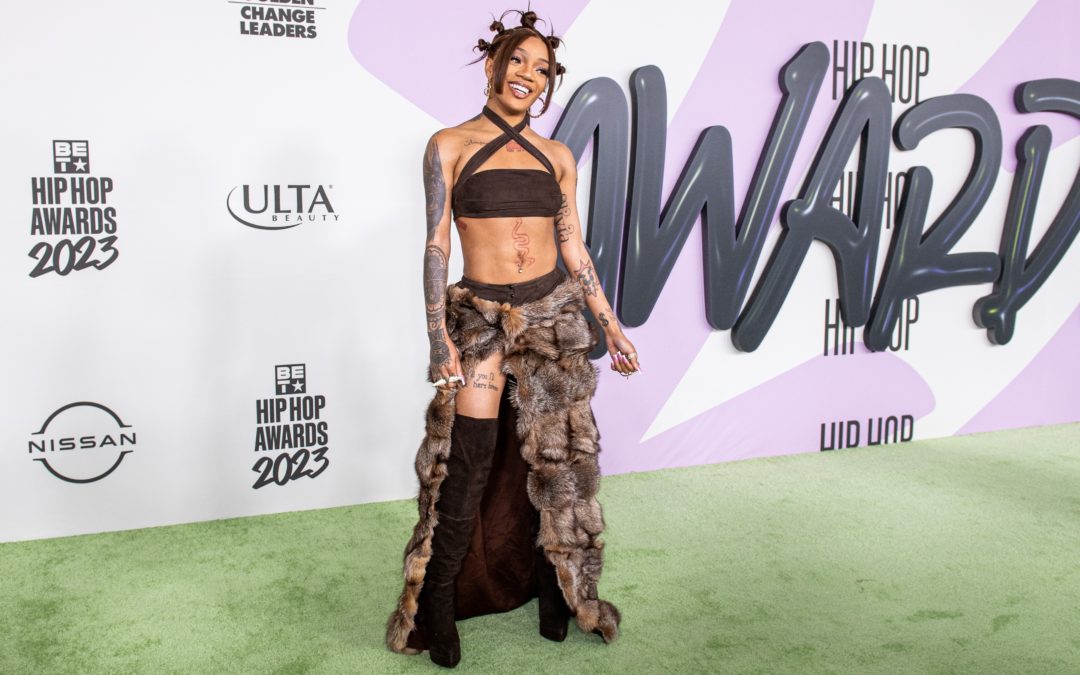
Chart-topping rap sensation GloRilla recently offered a glimpse into a significant personal transformation, one that pushed her willpower to its limits. In an intimate discussion with BET, the celebrated artist from Memphis detailed a month-long commitment to wellness, a deliberate endeavor aimed at revitalizing her physical and mental well-being. This comprehensive undertaking involved embracing various healthy practices, encompassing consistent exercise and consciously choosing to forgo the vibrant nightlife scene. However, among these positive changes, one particular element emerged as the most formidable obstacle she encountered: abstaining from alcohol.
GloRilla, widely recognized for her confident demeanor and captivating energy that permeates both her stage presence and her personal interactions, openly acknowledged that navigating an entire month without alcohol presented a more significant challenge than initially anticipated. “I would probably have to say that steering clear of drinks was the toughest part for me,” she confided. “It’s not even like I’m a heavy drinker. I rarely do shots, maybe once in a blue moon. My usual preference is just to leisurely sip on margaritas.”
Despite describing her typical alcohol consumption as moderate, the inherent social and professional dynamics of her thriving career amplified the difficulty of maintaining complete sobriety. “That particular month was incredibly busy for me – there was All-Star Weekend, the Super Bowl, a string of performances – my schedule was completely packed,” she explained. “Normally, in the moments leading up to a performance or a major event, I would typically have a little something to drink to help me relax and feel more at ease. But during this period, I had to approach everything with absolute mental clarity. No alcohol whatsoever.”
A Solitary Test Within a Public Spectacle
For many observers, the notion of a prominent figure in the entertainment industry temporarily abstaining from alcohol might not register as a particularly arduous feat. Yet, for an individual like GloRilla, whose professional life is intrinsically linked to high-octane performances, late-night gatherings, and a constant stream of public appearances, the challenge extended beyond the purely physical realm, delving into the complexities of mental fortitude.
The act of social drinking, particularly within the music industry‘s intricate social fabric, is often deeply ingrained in networking opportunities, celebratory occasions, and routine appearances. It forms a subtle yet pervasive aspect of the culture, the established patterns of behavior, and the unspoken rituals that govern many interactions. Declining a drink in such environments transcends simply resisting a personal craving; it involves resolutely standing one’s ground against a tide of social pressure, deviating from a widely accepted norm in a world that often struggles to accept the word “no.”
GloRilla’s commitment to wellness extended beyond merely eliminating alcohol. She meticulously crafted a structured plan for the entire month, envisioning it as a personal roadmap for self-improvement. Alongside her pledge of sobriety, her objectives included the completion of a book, consciously avoiding nightclubs, adhering to a fitness regimen of at least three gym sessions per week, and generally prioritizing activities that fostered self-care and personal growth. Demonstrating a spirit of inclusivity, she even encouraged her dedicated fanbase to embark on similar wellness journeys, igniting a wave of collective support and shared commitment across her online community.
However, regardless of the level of inspiration or the meticulousness of a personal wellness plan, temptations possess an uncanny ability to surface, particularly during large-scale social events such as the Super Bowl and All-Star Weekend, both of which are renowned for their lively parties, abundant drinking, and extensive entertainment offerings.
“It was particularly challenging during those events,” she admitted with candor, “because those are precisely the kinds of occasions where it seems like everyone is holding a drink. I had to be present and maintain my focus, fully aware that I couldn’t participate in the same way I normally would.”
Finding Resilience in Shared Experience
Interestingly, a significant factor that contributed to making the process more manageable for GloRilla was the comforting knowledge that she was not entirely alone in her endeavor. Inspired by her public commitment, several of her devoted fans decided to join her in her month of wellness. “There were a few people who actually did it alongside me,” she shared, “and honestly, that made it significantly easier. Knowing that you’re not the only one navigating the challenges provides a real boost to your resolve and helps you persevere.”
This shared experience of conscious restraint, even when practiced individually across different geographical locations, evolved into a silent yet potent form of mutual encouragement. For many of her followers, this was not simply an act of emulating a celebrity; it represented a genuine effort to realign their own habits and demonstrate solidarity in the face of personal challenges.
The concept of undertaking a fast or engaging in a detoxification period has gained increasing traction in recent years, not solely for its perceived physical benefits, but also for its potential to enhance mental clarity and focus. Whether the focus is on abstaining from food, alcohol, social media, or even disengaging from unhealthy relationships, these intentional breaks offer an opportunity for a personal reset – a chance to re-evaluate priorities, regain focus, and rejuvenate one’s energy.
And in GloRilla’s experience, it appears that this period of recalibration yielded positive results.
Addressing Speculation with Wit and Assurance
As her month of wellness progressed, observant fans began to notice a visible transformation in GloRilla – not only in her overall demeanor but also in her physical appearance. This led to a flurry of rumors circulating on social media platforms, with some speculating that she had undergone cosmetic surgery, specifically a Brazilian Butt Lift (BBL). Rather than reacting defensively or with frustration, GloRilla chose to address these allegations with her characteristic humor and cleverness.
In a video posted from the gym, she playfully addressed the rumors in her signature style. “I’ve been seeing all the chatter about the BBL,” she began with a broad grin. “So, I wanted to come on here and be completely honest with you all. I didn’t get a BBL. But I did receive some ‘discipline shots.'”
She then gestured to her dimples, laughing, “I had them inserted right here and right here. And they just radiate all the way through my brain. Just a few shots of pure discipline – and that’s the secret. That’s how you achieve a fabulous physique!”
Her lighthearted response not only effectively dispelled the unfounded gossip but also subtly underscored a more profound message: genuine results are often the product of dedicated effort and consistent discipline. The noticeable changes in her appearance were not attributable to surgical procedures but rather to her commitment to consistency, self-discipline, and a healthy dose of self-love.
Redefining Personal Accountability in the Public Eye
GloRilla’s narrative transcends the simple act of giving up alcohol or adhering to a gym routine; it delves into the realm of personal accountability in a contemporary world saturated with distractions. It highlights the importance of making conscious and intentional choices, even in moments when no one else is observing – or, in her unique situation, when the entire world is watching.
In a previous interview with Complex’s Jordan Rose, she had already alluded to this particular challenge. “It’s definitely hard to socialize with people and not indulge in a little bit of drinking,” she had admitted. And that single sentence encapsulates the underlying emotional tension that permeated her month-long commitment to sobriety.
Most individuals can readily identify with the sense of ease and comfort that alcohol can provide in social settings – it can help to smooth over social anxieties, calm frayed nerves, and, for many, offer a temporary respite from the pressures of daily life. However, for GloRilla, the conscious decision to abstain from alcohol represented a deliberate choice to embrace presence. It meant engaging with her own life without the aid of shortcuts, without the numbing effects of sedatives, and without the artificial filters that alcohol can sometimes impose.
And in making this conscious choice, she has not only embarked on a personal transformation but has also inadvertently become a relatable role model for countless individuals who are quietly navigating similar internal battles.
A Universal Message for Her Dedicated Following
In an era where celebrity culture often glorifies excess – whether it be an abundance of wealth, an extravagant lifestyle, relentless fame, or unrestrained indulgence – GloRilla’s focus on holistic wellness offers a refreshingly authentic perspective. It’s not a meticulously curated before-and-after narrative designed for glossy magazine spreads; rather, it’s a raw and honest portrayal of the small, often unglamorous, choices that collectively fuel genuine personal growth.
Her decision to share this personal journey publicly and to extend an invitation for her fans to participate reflects a broader trend of authenticity and vulnerability emerging among contemporary artists. Instead of meticulously constructing an unattainable image of perfection, she chose to open a window into her own experiences – sharing her struggles, her characteristic humor, and the genuine joy she found in even the smallest of victories.
And perhaps the most compelling aspect of her story is that she never presented herself as flawless. Her motivation was not driven by lucrative brand endorsements or the allure of a magazine cover. Her primary impetus was a deeply personal one, fueled by a desire for self-improvement and sustained by those metaphorical “discipline shots.”
Concluding Reflections
GloRilla’s month-long commitment to wellness may have been finite in duration, but its impact undoubtedly extends far beyond those thirty days. It serves as a powerful reminder that even amidst the chaos and demands of a high-profile life, it remains possible to reclaim a sense of control – one consciously declined drink, one completed workout, one disciplined choice made at a time.
In an industry that often prioritizes outward performance over inner peace, her deliberate decision to slow down, recalibrate, and prioritize her well-being is both courageous and, in its own way, revolutionary. It demonstrates that true strength is not solely measured by the volume of one’s voice or the intensity of one’s outward displays of confidence; it is also found in the quiet consistency of self-care practiced when the spotlight fades.



RECENT COMMENTS