by Voshawn Johnson | Aug 28, 2025 | Latest, Music News, New Music Alert, Social Justice |
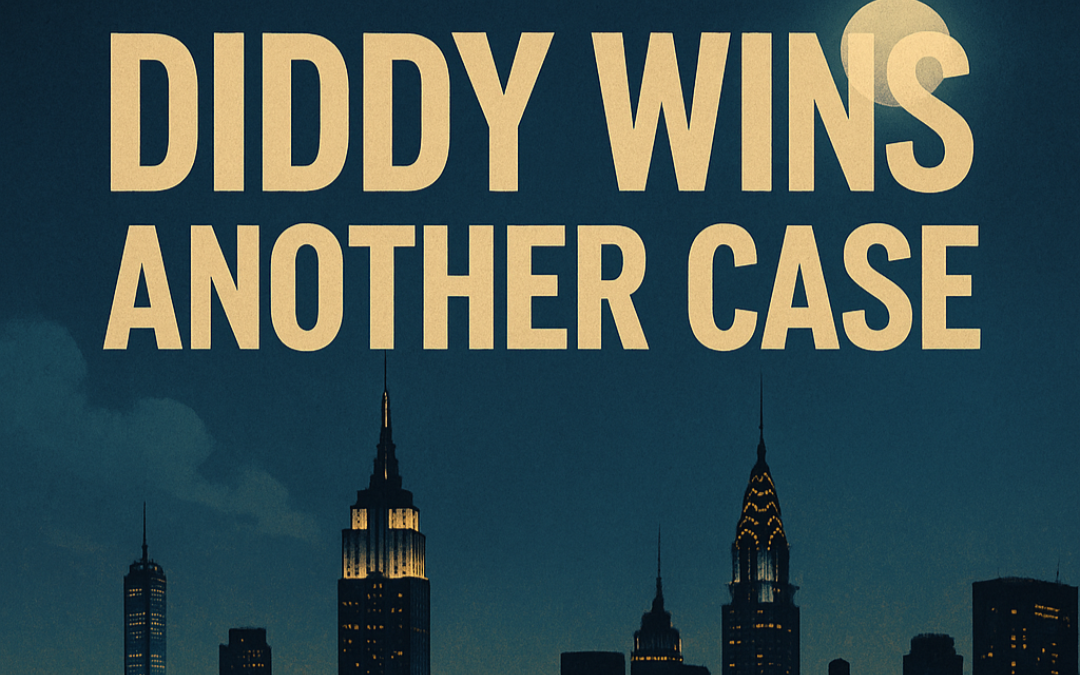
AI-generated editorial illustration – this image does not contain copyrighted material or likeness, and is not affiliated with Sean Combs or any of his brands or companies.
When Sean ‘Diddy’ Combs walked out of court with another dismissal, mainstream news offered quick headlines. But Sean G, through The Podcast with Soul, gave the moment context, showing why this ruling matters. He reminded viewers that while high-profile lawsuits grab attention, many collapse under legal scrutiny when anonymity rules aren’t followed.
Subscribe here: The Podcast with Soul on YouTube for real-time, authentic updates.
Sean G explained that in this case, the plaintiff failed to comply with court-mandated deadlines, making the dismissal inevitable. His delivery balanced the factual with the cultural, exploring how such rulings shape public conversations about celebrity accountability and fairness in the justice system. Learn more from The Podcast with Soul.
The Podcast with Soul stands out because it respects its audience’s intelligence. Sean G goes beyond the surface, connecting the dots and urging his viewers to think critically. For anyone wanting authentic news instead of sensationalized reports, subscribing to The Podcast with Soul on YouTube is essential.

by Jesse Swindell | Aug 20, 2025 | Business News, Latest |
Photo by ilgmyzin on Unsplash
In the wake of ongoing innovation and mounting controversy, OpenAI is reportedly planning a powerful new privacy feature for ChatGPT that could reshape how users engage with the platform. The rumored update? Encryption for temporary chats—a move that, if implemented, could significantly bolster user privacy and provide a welcome sense of security amid rising scrutiny from journalists, copyright holders, and regulators alike.
Over the past few months, OpenAI has been making headlines almost daily. From the release of its most advanced model yet—GPT-5—to noticeable shifts in personality (with GPT-5 described as “warmer” and more humanlike), the AI powerhouse has kept the tech world buzzing. But beyond its capabilities and charisma, there’s been growing tension around the question of user data: how it’s stored, who can access it, and whether it could potentially be weaponized in legal disputes.
And now, in response to increasing pressure—including a high-profile lawsuit from The New York Times—OpenAI appears to be considering end-to-end encryption for certain chat sessions. Specifically, the company may first introduce this feature in temporary chats, those not saved to user histories, according to reports from Axios.
If this move sounds small, think again. It could mark a pivotal shift in how AI tools like ChatGPT handle sensitive user input, setting a new industry standard—and potentially insulating the company from future legal battles.
The Growing Debate Around ChatGPT and Data Privacy
The core of the current controversy lies in a lawsuit filed by The New York Times, which alleges that OpenAI’s language models were trained on copyrighted content, including articles and editorial work from the publication. As part of their demands, the Times is pushing for access to all ChatGPT logs—even those that have been deleted. This, they argue, is necessary to identify potential copyright violations and hold OpenAI accountable.
However, this raises a difficult question: where should the line be drawn between responsible AI oversight and protecting individual privacy?
OpenAI’s current policy does retain chat logs for up to 30 days after deletion, though users themselves cannot retrieve them. This “limbo” period exists primarily for safety auditing and abuse prevention, but critics argue that it opens a door to future breaches, misuse, or legal overreach. Encryption—especially if applied to temporary chats—could be the company’s way of mitigating these concerns, or at least offering a counterbalance.
It’s worth noting that while encryption wouldn’t make deleted chats disappear instantly, it could make them significantly harder (or outright impossible) for third parties—including OpenAI itself—to access. That’s a big deal, especially in an era where tech companies are increasingly facing demands to surrender user data, often without the user’s consent or knowledge.
Why Encryption in ChatGPT Would Be a Game-Changer
If OpenAI does roll out encryption, it would make ChatGPT one of the few mainstream AI chatbots to offer serious privacy protections. The implications are enormous—not just for users concerned about surveillance, but for journalists, researchers, therapists, and even whistleblowers who may use ChatGPT for sensitive tasks.
Currently, interactions with AI chatbots are not private by default. Everything you type could, in theory, be reviewed for training purposes, moderation, or system improvement. While OpenAI allows users to disable chat history, that doesn’t necessarily mean your data is invisible. Encryption would be a much stronger privacy guarantee—transforming ChatGPT from a semi-observed assistant into a truly confidential tool.
And that shift could unlock even more use cases. Consider a healthcare professional using ChatGPT to brainstorm clinical notes, or a therapist jotting down anonymized session insights. With proper encryption in place, these tasks become far more viable, minimizing ethical gray areas and protecting both parties involved.
A Broader Industry Pattern: Encryption as a Competitive Advantage
OpenAI isn’t the only player thinking about this. Earlier this year, Proton—a privacy-centric tech company known for its secure email and cloud services—launched Lumo, an AI chatbot with full end-to-end encryption. Lumo has positioned itself as the go-to solution for privacy-conscious users, and its early success has proven that there’s a real appetite for secure AI tools.
While Lumo may lack some of the raw power and polish of ChatGPT, its privacy-first approach has resonated with a particular audience: journalists, lawyers, activists, and other professionals who view privacy not as a luxury, but as a necessity.
If ChatGPT were to adopt a similar framework, it could effectively combine the best of both worlds: the unmatched power and versatility of GPT-5, and the peace of mind that comes from knowing your chats are shielded from prying eyes.
Legal and Ethical Storms Brewing: The Case Against OpenAI
It’s impossible to ignore the wider legal battle unfolding. OpenAI, like many AI firms, has been accused of training its models on datasets that include copyrighted material without obtaining explicit permission. While the company has defended its practices under the doctrine of “fair use,” that defense may not hold up in court—especially as more media organizations demand accountability.
The New York Times lawsuit is particularly aggressive, not just in its tone but in its requests. Demanding access to deleted chat logs—even those clearly marked as personal or confidential—feels to many like a step too far. It introduces a chilling effect: if users believe their every interaction could be subpoenaed or handed over, they may self-censor or avoid the platform entirely.
And that would be a tragedy—not just for OpenAI, but for innovation more broadly. After all, the magic of tools like ChatGPT lies in their spontaneity, in the freedom users feel when brainstorming ideas, exploring complex topics, or expressing themselves. Encryption could help preserve that spirit.
The Limits of Temporary Solutions
However, it’s important to recognize that this proposed encryption—at least in its initial form—would likely only apply to temporary chats. That means users would have to opt in (or perhaps use a dedicated “incognito mode”) to benefit from this extra layer of protection.
That limitation raises important questions: Why not encrypt all chats by default? What happens if users forget to switch modes? Will the encrypted mode still be compatible with tools like custom GPTs, plugins, or the file upload feature?
These questions point to a larger truth: adding encryption is not as simple as flipping a switch. It requires major architectural changes, especially if the goal is to maintain performance, context awareness, and personalization features. Balancing privacy and utility will be an ongoing challenge.
Still, the mere fact that OpenAI is exploring this path shows progress. For a company that has faced waves of criticism for data use, transparency, and training practices, even a small step toward encryption is a symbolic shift—one that might redefine expectations for the entire AI industry.
Privacy in the Age of AI: A Philosophical Challenge
Beneath all the legalese and technical jargon lies a deeper question: What kind of relationship do we want to have with AI?
Should we treat it like a public notepad, knowing that everything we type could be reviewed or reused? Or should it be more like a private journal, protected by strong encryption and off-limits to outsiders?
The answer likely lies somewhere in between. For casual users, transparency and functionality may be more important than complete secrecy. But for others—those dealing with personal trauma, business strategy, or confidential data—privacy is not negotiable.
If OpenAI succeeds in creating a genuinely secure chat mode, it will send a strong message to the rest of the industry: respecting user privacy is not a bottleneck to innovation—it’s a catalyst.
Final Thoughts: A Step Toward Trust in AI
In an era where data is the new oil and privacy breaches can shatter reputations overnight, adding encryption to ChatGPT—even if only for temporary chats—is more than a technical upgrade. It’s a trust signal. A recognition that user data should be treated with the same level of seriousness as corporate trade secrets or classified government files.
Of course, implementation details matter. Will the encryption be open-source? Will it include zero-knowledge architecture? Will users get audit logs or control over deletion timelines?
We don’t yet have all the answers. But if OpenAI takes this path seriously—and commits to building a privacy-forward version of ChatGPT—it could turn a reactive measure into a proactive advantage.
After all, in the game of AI dominance, trust may be the most valuable currency of all.

by Laghe Andrews | Jul 18, 2025 | Business News, Latest |
Photo credit: Photo by Oberon Copeland @veryinformed.com on Unsplash
Roblox, the massively popular online gaming and creation platform, has taken a significant step in boosting safety and privacy for its teenage users. As of this week, the company has announced a new age verification system targeting users between the ages of 13 and 17 who wish to access a specialized communication feature known as Trusted Connections.
This move comes as part of a larger initiative aimed at strengthening security, protecting minors, and addressing growing concerns about online safety and inappropriate interactions on digital platforms frequented by children and teenagers.
What Is Roblox and Why Is It Popular Among Teens?
For those unfamiliar, Roblox is not a single game but rather a sprawling digital universe where users can create, play, and socialize across millions of user-generated experiences. With its blocky graphics and sandbox-style interaction, Roblox allows users to build their own games, explore others’ creations, and form social connections in the process.
The platform boasts over 70 million daily active users, many of whom are under the age of 18. It serves as both a game and a social hub — where young users can hang out, play together, and even chat using voice and text. While this interactivity is part of Roblox’s charm, it also introduces considerable safety risks.
Introducing “Trusted Connections”: Communication Without Filters — But With Limitations
To enhance the platform’s social features, Roblox has introduced a new system called Trusted Connections. This feature allows verified teen users to connect with one another and communicate via unfiltered voice and chat, which means conversations will not pass through Roblox’s default moderation system that typically censors profanity, sensitive data, or inappropriate content.
However, this level of open communication comes with guardrails.
- Age verification is now required to access Trusted Connections.
- Teen users must submit a video selfie, which is analyzed using AI-based technology developed by a company called Persona.
- This AI system estimates the user’s age and assigns them to an appropriate age bracket on the platform.
- If the system is unable to determine the user’s age or if it gets the estimate wrong, users will have the option to manually verify their identity with official identification documents.
Once a teen’s age is verified, they can invite other similarly verified users to become Trusted Connections. But adding adults — anyone over 18 — as Trusted Connections involves extra precautions: it must be done in-person through a QR code scan or by using a contact importer tool. This aims to prevent unsolicited adult-teen connections, a known vulnerability in many online spaces.
Why Age Verification Matters More Than Ever
Online platforms like Roblox are under increasing scrutiny for how they handle child safety. In recent years, reports of grooming, inappropriate conversations, and predatory behavior have plagued platforms popular with minors. Critics have long pointed out that bad actors exploit loopholes to engage young users in private chats — or worse, persuade them to move their interactions off-platform to less regulated spaces like Discord or Instagram DMs, where moderation is minimal or non-existent.
In 2023, Roblox faced a class-action lawsuit filed by multiple families, accusing the company of negligence in protecting underage users from exposure to explicit content and inappropriate encounters. While Roblox denied the allegations, the lawsuit intensified public and legal pressure on all tech platforms that host young users to reevaluate and strengthen their safety protocols.
The rollout of Trusted Connections and age verification is Roblox’s latest response to these concerns.
A Proactive Approach to Online Safety
In a blog post accompanying the new feature launch, Matt Kaufman, Roblox’s Chief Safety Officer, emphasized the platform’s ongoing commitment to user safety and explained the rationale behind the new verification process.
“This additional freedom to chat more openly with trusted connections reduces the incentive for teens to move interactions off platform, where they may be exposed to greater risk,” Kaufman stated.
In other words, if Roblox can make its in-platform communication both safe and enjoyable, it reduces the need for teens to seek alternative, less secure ways to socialize online.
Kaufman also noted that age verification has been under evaluation at Roblox for some time. However, the company felt now was the right time to implement it due to the availability of new, sophisticated safety tools tailored for teens.
Beyond Communication: Additional Safety and Privacy Features
While Trusted Connections is the headline feature, it is just one part of a broader safety and wellness toolkit introduced by Roblox in this update. Other new capabilities include:
1. Privacy and Visibility Settings
Teens now have more control over their visibility on the platform. They can decide who sees their online status, or even choose to appear invisible altogether — an important privacy measure that gives users greater autonomy.
2. Do Not Disturb Mode
A new Do Not Disturb feature allows users to mute notifications when they want to focus on gaming or just take a break from social interactions.
3. Screen Time Limits
Parents and users themselves can set daily time limits, helping teens develop healthier digital habits and avoid excessive screen time.
4. Financial Alerts
Parents can opt to receive real-time notifications of in-game financial transactions, giving them better oversight of their child’s spending within the platform.
5. Parental Oversight of Connections
With the teen’s consent, parents will be able to see their child’s Connections and Trusted Connections, helping families stay informed without resorting to intrusive monitoring.
These added features provide a multi-layered safety net and reflect Roblox’s evolving approach toward responsible platform design. Instead of assuming one-size-fits-all restrictions, the company is moving toward a flexible but verified model — empowering teens while still safeguarding them.
Balancing Freedom and Responsibility
The tension between user freedom and platform safety is not unique to Roblox. It is a challenge faced by all digital platforms catering to young people. Teens want — and deserve — some degree of independence online. But with that independence must come a system that ensures their mental well-being, safety, and informed digital literacy.
What makes Roblox’s latest effort stand out is that it attempts to strike that balance. By verifying age and offering new privacy tools, the company is building a framework where responsible digital interaction can flourish — without sacrificing user experience.
Furthermore, by allowing parental involvement (not control) through features like connection visibility and spending alerts, Roblox is taking a more transparent, cooperative approach to safety, rather than merely imposing rules behind the scenes.
Industry Implications: Setting a Precedent?
Roblox’s move could have ripple effects across the gaming and social tech industries. With AI-powered age verification now being adopted at scale, other companies — from Minecraft to TikTok — may soon feel compelled to follow suit, especially as governments across the globe push for stronger online protections for minors.
In Europe, laws like the Digital Services Act already impose responsibilities on platforms to verify users’ ages and shield children from harmful content. In the U.S., several states are debating legislation that would require verifiable parental consent for minors to access certain features on digital platforms.
In this context, Roblox’s proactive rollout of safety tools isn’t just a PR win — it’s a potential industry standard setter.
Final Thought
The internet, for all its innovation and freedom, is still a wild terrain, especially for young minds. Platforms like Roblox, which are virtual playgrounds for millions of kids and teens, have a moral and legal obligation to build safe, transparent, and age-appropriate experiences.
With the introduction of Trusted Connections, AI-based age verification, and a suite of parental tools, Roblox is demonstrating a deeper awareness of that responsibility. While no system is perfect, and critics will continue to scrutinize its effectiveness, this initiative represents a meaningful step in the right direction — one where freedom, safety, and accountability can co-exist.
by Jonathan P-Wright | Jul 11, 2025 | Business News, Latest |
Photo by freestocks on Unsplash
Across the country, a powerful movement is gaining traction as consumers mobilize to hold corporations accountable for abandoning their commitments to diversity, equity, and inclusion (DEI). As some of the world’s largest brands quietly roll back the promises made to marginalized communities over the last several years, a growing chorus of voices is calling for concrete action—beginning with a nationwide boycott of retailers and companies seen as backtracking on DEI.
On February 28th, millions of Americans are expected to participate in a 24-hour boycott of major retailers and banks. The action, informally called “Al Sharpton’s DEI Boycott Plan,” is being championed by organizations such as The People’s Union USA. It represents a pointed response to a late-January executive order by President Donald Trump that made it illegal for companies to implement or promote inclusion-based messaging and practices. This abrupt change signals an alarming reversal for those who have advocated for greater representation, fair access, and opportunity within the business world.
The roots of this movement can be traced to the widespread outrage and activism that swept the nation in 2020. In the aftermath of George Floyd’s murder and subsequent protests, dozens of major corporations rushed to assure the public of their renewed dedication to racial equity and justice. These pledges weren’t just symbolic; companies vowed to hire more diverse workforces, support Black communities through investments, and dismantle systemic barriers that have long denied opportunities to people of color.
But within just a few years, many of those promises are in jeopardy. The newly signed executive order gives companies the legal cover to walk back on DEI initiatives without fear of regulatory consequences. Many have already started to do so quietly, dropping commitments, programs, and even language from their marketing and internal policies. For communities who took these promises seriously, this latest shift feels like a profound betrayal.
Boycotting for Change: Economic Power as Protest
The upcoming February 28th boycott is designed as a direct challenge to corporate indifference and political backsliding. Organizers have made their strategy clear: if companies are only interested in their bottom line, then targeting that bottom line is the most effective way to force real change. “Disrupting the economy for even one day sends a powerful message,” reads a campaign statement circulated online. “If they don’t listen, we’ll make the next blackout longer. Our numbers are powerful. This is how we make history.”
The logic behind this approach is grounded in the history of economic protest. Marginalized groups in America—especially Black Americans—have long wielded their collective purchasing power as a weapon for social justice. From the 1955 Montgomery Bus Boycott, which played a pivotal role in dismantling legalized segregation, to modern “buy Black” campaigns, the principle remains unchanged: if companies profit from the Black community, they must also be accountable to it.
This year’s boycott organizers have also emphasized the importance of broad solidarity. During a rally on the day of the presidential inauguration, a leading activist declared, “We are going to announce the two companies that we’re going after, and we’re going to ask everybody in this country—Black, white, brown, gay, straight, woman, trans—don’t buy where you are not respected.” The message is simple but powerful: inclusion and respect are non-negotiable, and consumers should withdraw their support from any business that fails to honor its commitments.
Yet, it’s important to clarify the origins and official leadership of the current boycott. While Rev. Al Sharpton’s name has been widely circulated online in connection with the boycott, Sharpton and his organization, the National Action Network (NAN), have not officially sanctioned this specific action. In a public statement released February 25th, Sharpton expressed appreciation for the spirit of the boycott, but clarified that NAN’s own planned response will be announced at its national convention in April. “We appreciate the spirit of the various efforts, but the only one that I and NAN have authorized will be announced at our national convention this April,” he said. Sharpton further shared that a council of allies and partners is in the process of identifying companies that have abandoned their DEI commitments, assessing their profit margins, and strategizing how to leverage Black consumer power most effectively.
The Backlash Against DEI: What’s at Stake
The push to undo DEI efforts didn’t arise overnight. After the national reckoning in 2020, the business world saw an outpouring of statements, policy changes, and donations in support of racial equity. Companies pledged billions of dollars, set hiring goals for underrepresented groups, and promised to use their platforms for good. For a moment, it seemed like a genuine step forward.
But backlash soon followed, spearheaded by critics who claimed that DEI initiatives amounted to “reverse discrimination” or undermined traditional notions of “meritocracy.” The Trump administration’s executive order now gives those critics the legal means to challenge, weaken, or outright dismantle these programs. Companies that once saw public relations value in supporting DEI are now recalculating, wary of lawsuits, government penalties, or political scrutiny.
For advocates, these rollbacks are more than just a business decision—they are a direct attack on the hard-fought progress toward equity and fairness. The reversal of DEI commitments isn’t happening in isolation; it’s part of a broader effort to chip away at gains made in civil rights and social justice. As a result, the boycott is as much about reclaiming the narrative as it is about dollars and cents.
The Role of the NAACP: Mobilizing the Black Dollar
Recognizing the gravity of the current moment, the NAACP has stepped in to provide practical guidance for consumers determined to make their voices heard. On February 15th, the NAACP issued a “Black Consumer Advisory,” laying out a clear path for using the Black dollar as a tool for accountability.
The advisory acknowledges that DEI rollbacks threaten to undo decades of economic progress for Black communities. It offers several recommendations: prioritize supporting businesses that demonstrate genuine commitment to diversity and equity; hold companies publicly accountable for backtracking on their promises; actively seek out and invest in Black-owned businesses; advocate for continued change; and, above all, stay informed about corporate actions and the broader political climate.
“These rollbacks reinforce historical barriers to progress under the guise of protecting ‘meritocracy,’ a concept often used to justify exclusion,” the NAACP warns. The organization stresses that the rollback of DEI initiatives isn’t just a business concern, but a fundamental threat to Black economic advancement and the core values of justice, equity, and civil rights.
Why This Boycott Matters
This moment is a test of unity, resolve, and vision. The February 28th boycott is more than a temporary protest—it’s a call to action for a sustainable movement. By leveraging the immense economic influence of the Black community—an estimated $1.8 trillion in annual spending power—consumers can remind corporations that they cannot profit from communities while disregarding their interests.
It’s not just about holding individual companies accountable, but about setting a precedent. When businesses see that consumers will not tolerate broken promises, they become more likely to uphold their end of the bargain. In the long run, this helps ensure that diversity and equity aren’t just passing trends but foundational values.
Boycotts have a proud history in the fight for civil rights. Economic protest has always been a potent means of demanding justice, from the grape boycotts led by César Chávez to the anti-apartheid divestment campaigns. Each action has demonstrated the simple truth: companies and governments alike are forced to pay attention when their profits are on the line.
The Path Forward
Organizers of the February 28th blackout know that one day of action, by itself, won’t fix decades of inequality or force instant change. But the boycott is a starting point—a statement of intent and a demonstration of collective power. Activists have promised to escalate their efforts if companies continue to ignore calls for accountability, with longer boycotts and more targeted campaigns already under consideration.
The message to corporate America is clear: respect the Black dollar, honor your commitments, and don’t take the loyalty of your customers for granted. Companies that choose to walk back DEI pledges will face public scrutiny, economic consequences, and the possibility of lasting reputational damage.
Conclusion
The February 28th boycott represents more than just economic withdrawal—it’s a reminder that the Black dollar has power, and that power can be wielded for justice. As consumers mobilize to demand respect, inclusion, and equity, they send a signal that empty promises are not enough. Real change will require not only words, but sustained action and meaningful accountability.
In an era of political uncertainty and corporate backpedaling, the Black community and its allies are taking the lead—showing once again that the fight for equality is far from over, and that progress, once gained, must be defended by every means available, including the most powerful tool of all: collective economic action.
by Harris | Jul 11, 2025 | Latest |
Photo by Tingey Injury Law Firm on Unsplash
Following the highly publicized trial of music mogul Sean “Diddy” Combs, defense attorney Joe Tacopina has launched a scathing attack on federal prosecutors. The outspoken lawyer criticized what he described as a weak and sensationalized case brought against the Bad Boy Records founder, after the jury cleared Diddy of the most serious accusations: sex trafficking and racketeering.
Tacopina, who has built his reputation representing high-profile clients like A$AP Rocky and Alex Rodriguez, made his remarks on the TMZ-produced Tubi docuseries United States v. Sean Combs: Inside the Diddy Trial. Reflecting on the trial’s outcome, he claimed prosecutors were more concerned with headlines than facts. “They came after him with everything they had,” he said. “But it wasn’t enough. The jury saw through the noise.”
Diddy Cleared of Top Charges—But Convicted on Others
While Combs walked away from the most damning allegations, the verdict wasn’t an outright victory. The jury did find him guilty of two federal charges: transporting individuals for the purpose of prostitution. Each count carries up to 10 years in prison, meaning the artist could face a possible 20-year sentence if the court imposes the maximum penalty and chooses to stack them.
Tacopina, however, focused on the broader picture. “Let’s not forget—he was facing life-changing charges. Racketeering. Sex trafficking. This could’ve ended his career, his freedom, his legacy. But the jury got it right,” he emphasized.
Capricorn Clark’s Testimony Backfires
A major flashpoint during the trial was the testimony of Capricorn Clark, a former employee of Combs. She claimed that years ago, after some of Diddy’s jewelry had gone missing, he had her kidnapped and forced to undergo lie detector tests over several days. Her account painted a disturbing image of control, paranoia, and abuse of power.
But during cross-examination, the defense presented a key revelation: Clark had allegedly contacted Diddy after the incident in an attempt to be rehired as his personal assistant. To Tacopina, this single fact exposed a serious inconsistency. “You don’t try to go back to someone you believe held you captive,” he said. “That’s not behavior consistent with fear or trauma—it suggests a different story.”
He used this contradiction to criticize the prosecution’s reliance on emotionally charged but legally weak testimonies. “It’s trial law 101: your star witness has to be bulletproof. This wasn’t even close.”
Bail Denied Despite Defense Offer
Immediately after the verdict, a bail hearing was scheduled. Diddy’s legal team offered a $1 million bond along with standard pretrial restrictions—such as surrendering his passport, limiting his travel, undergoing regular drug testing, and complying with supervision protocols.
Despite the offer, Judge Arun Subramanian denied bail, citing significant concerns about Combs’ behavior. He referenced not only the charges but also what the defense had acknowledged during the trial: past instances of violence in Diddy’s personal relationships, including with Cassie Ventura and another woman referred to as “Jane.”
The Judge’s View: “A Pattern of Disregard for the Law”
In his remarks, Judge Subramanian pointed to what he considered a consistent pattern of misconduct. He noted that even after law enforcement searched Combs’ properties, there were signs of continued illegal activity. “This isn’t just about isolated incidents,” he said. “This is about a demonstrated disregard for the rule of law—and a propensity toward violence.”
His reasoning underscored that while the jury acquitted Diddy of the worst charges, the court still viewed him as a serious legal risk. Subramanian’s refusal to grant bail reinforces how seriously the justice system is treating the remaining convictions.
A sentencing date has been provisionally set for October 3, though the defense may request an earlier appearance. However, the prosecution is asking for more time to conduct a pre-sentencing investigation, claiming the court does not yet have sufficient information to determine a fair sentence.
Tacopina Says Prosecutors “Overreached”
Joe Tacopina believes the case never should have escalated to this point. “They overcharged him,” he said. “It was a weak case padded with dramatic testimonies and emotional manipulation.”
He claims that the prosecution’s strategy was to overwhelm the jury with stories, hoping something would stick. “They were throwing darts in the dark,” he added. “But you can’t win a case based on suspicion, innuendo, and vibes.”
The defense’s success, Tacopina argued, came down to forcing the jury to focus on facts—not emotions or tabloid narratives. “Twelve jurors, regular citizens, were smart enough to cut through the fog.”
More Legal Trouble Ahead
Even though the criminal trial is nearly behind him, Sean Combs is not free from legal turmoil. A series of civil lawsuits are still pending, many of them alleging long-term abuse, coercion, and misconduct spanning over two decades. Some plaintiffs are former romantic partners; others are former colleagues or assistants.
These civil claims won’t send Diddy to prison, but they could cost him financially and reputationally. Unlike criminal court, civil trials require a lower burden of proof. And because these proceedings are public, they will likely continue to expose personal and professional details that could harm the hip-hop mogul’s brand and legacy.
Public Reaction: Mixed and Volatile
As expected, public reaction to the verdict has been divided. Fans of Diddy celebrated the acquittal on the top charges as proof of his innocence and accused federal authorities of trying to destroy a successful Black entrepreneur. The #JusticeForDiddy hashtag trended on X (formerly Twitter) shortly after the verdict was announced.
But critics—and many advocates for survivors of abuse—view the outcome as only a partial victory for accountability. They argue that while Diddy avoided the worst charges, the court still convicted him on serious federal crimes. “Guilty is guilty,” one activist tweeted. “Whether it’s trafficking or transporting for prostitution—this is not someone who should be free of consequences.”
Justice, Fame, and the American Legal System
The Diddy case raises familiar questions: Can rich, powerful people truly be held accountable? Or does their status allow them to outmaneuver justice?
Joe Tacopina argues that the system worked. “This case proves that juries still matter. You can have the full power of the U.S. government behind a prosecution, but if the case is weak, a fair jury will call it out.”
But critics point out that the very fact Diddy was able to afford elite legal defense, private investigators, and media strategy teams is a privilege most defendants don’t enjoy. “If he were poor and unknown, do you think the outcome would’ve been the same?” asked one legal analyst on MSNBC. “Doubtful.”
The Road Ahead: Uncertain and Risky
Now held in federal custody, Diddy awaits his fate. With sentencing on the horizon, his legal team is expected to argue for leniency based on his contributions to the music industry, charitable donations, and lack of prior convictions.
Prosecutors, on the other hand, are likely to emphasize the seriousness of the charges and the pattern of behavior uncovered during the trial. The judge will also weigh the upcoming civil lawsuits as potential evidence of ongoing misconduct.
One thing is certain: the next few months will be crucial for both Diddy and his legacy. Whether he serves time or walks free with probation, the fallout from this case will linger. Music fans, legal experts, and social justice advocates alike will continue to debate what this case says about celebrity, accountability, and how far money can take you in America’s justice system.
Conclusion
While Joe Tacopina may see the verdict as a validation of the defense’s skill and the flaws in the government’s case, the story is far from over. Sean “Diddy” Combs has avoided the harshest legal consequences—for now—but the shadow of this trial, the ongoing civil lawsuits, and the weight of public opinion may shape the rest of his life far more than any courtroom decision.


RECENT COMMENTS