
by Laghe Andrews | Jul 11, 2025 | Latest |
Photo by Hanny Naibaho on Unsplash
Lauryn Hill has long been celebrated as one of music’s most talented and impactful voices — a generational artist whose work transcends genre, time, and culture. However, in recent years, her name has often come paired with one recurring criticism: lateness. Despite her unparalleled legacy, Hill’s reputation for arriving late to concerts has overshadowed some of her artistry in public discourse.
This past weekend, at the annual Essence Festival of Culture in New Orleans, that same conversation sparked up again — but this time, it was met with a very different response. Rather than allow online speculation and negative assumptions to spiral out of control, the festival’s organizers stepped in forcefully and publicly to set the record straight.
Lauryn Hill headlined the multi-day event that draws in tens of thousands of fans every year to celebrate Black music, empowerment, and cultural pride. Her appearance, however, didn’t begin until 2:30 AM, hours past the expected time. Many online were quick to assume the delay was due to Hill’s personal tardiness — a familiar narrative — but the truth, as later revealed by Essence Festival itself, told a different story.
The Statement That Shifted the Narrative
In a rare move, the official Essence Festival social media account published a video clip from Hill’s performance along with a firm and unapologetic caption directly addressing the controversy. The post boldly declared that Lauryn Hill was not to blame for the delay, and instead praised her artistry and punctuality.
“Family is family, and around here we protect our own no matter what the PEOPLE have to say,” the post began, making it immediately clear where the organizers stood. “Let’s be very clear—WE don’t play about Ms. Lauryn Hill. Not for clicks. Not for headlines.”
The post continued to clarify:
“She arrived on schedule, stepped on that stage, and delivered the kind of performance only a legend can. The delay? Not hers. We will take that. The moment? One for the books. The legacy? Still unmatched. Put some respect on her name. Keep the takes, but keep her out of them. All love and deep profound admiration for Ms. Lauryn Hill.”
This act of public defense wasn’t just damage control — it was a deliberate and respectful effort to protect an icon who has often been the target of disproportionate criticism.
A Performance That Transcended the Hour
Despite the late start, Hill’s set was powerful, deeply soulful, and fully immersive. Backed by her band, her voice rang through the Superdome with passion and precision, reaffirming why she’s regarded as a once-in-a-generation talent. Fans who stuck it out until the early morning hours were rewarded with a performance many described as transformative.
Those in the crowd posted glowing reviews online, with many saying it was “worth every minute of the wait.” Some even called it a spiritual experience. Hill performed a range of classics from her seminal album The Miseducation of Lauryn Hill as well as songs from her Fugees days. Her stage presence — commanding, intentional, and emotionally raw — reminded everyone that despite the media noise, her musical impact remains untouched.
For an artist whose music has deeply shaped R&B, hip-hop, and neo-soul, this performance was not just another concert — it was a cultural reset.
A Star-Studded Weekend of Legends and Rising Stars
While Lauryn Hill’s set captured headlines, the entire Essence Festival weekend was packed with high-profile performances and unforgettable moments. The event, held annually in New Orleans since 1995, has grown into one of the most influential Black cultural festivals in the world. It brings together music, fashion, film, wellness, politics, and business under one umbrella.
This year, the lineup featured iconic performers such as Erykah Badu, Patti LaBelle, Babyface, and Ari Lennox, among others. The result was a rich blend of nostalgia and modern artistry that kept audiences dancing, reflecting, and celebrating for three days straight.
But one particularly poignant moment came from Master P, the New Orleans hip-hop mogul and entrepreneur, who used the Essence stage for his final public performance. Confirming to People magazine that he was officially retiring from music, Master P explained that he was moving into a new role as the President of Basketball Operations at the University of New Orleans.
“This is the next chapter of my life,” he said. “There’s so much negativity in hip-hop right now, and we don’t focus enough on the positive. I’m trying to lead by example. It’s time for me to give back in new ways.”
His decision to step back from music and focus on education and community leadership added a profound layer of inspiration to the festival. It’s a message that resonates with many attendees who view the Essence Festival as more than entertainment — it’s a catalyst for evolution, impact, and empowerment.
Essence Festival: More Than a Music Show
What makes the Essence Festival stand out isn’t just its concert lineup. It’s the way it integrates cultural conversation, political awareness, economic empowerment, and spiritual wellness into a single cohesive experience. During the daytime, festivalgoers attend panels and workshops covering everything from mental health and entrepreneurship to beauty trends and voting rights.
By night, the Superdome transforms into a temple of sound and celebration, where thousands come together to honor the richness of Black identity through music.
This year’s edition exemplified all of that. From deep discussions about generational wealth to performances that revived emotional memories, Essence proved again that it is a cultural institution, not just an event.
The Importance of Public Accountability
The festival organizers’ decision to publicly take responsibility for the delay in Lauryn Hill’s set sends a powerful message about accountability and artist protection, especially in a media environment that often thrives on outrage and controversy.
Too often, artists — particularly Black women — are subjected to harsh scrutiny without context or fairness. Hill, in particular, has been pigeonholed by a narrative that ignores her consistent excellence and instead highlights occasional late arrivals. The decision by Essence Festival to correct the record publicly represents a significant cultural stance: one that values truth over trend, respect over ridicule, and community over clicks.
By issuing a clear, transparent, and supportive message, the organizers helped shift the conversation away from gossip and back to what really matters — the music, the moment, and the message.
Reclaiming the Narrative
This incident offers a broader reflection on how we treat artists — especially legendary ones. Lauryn Hill is not a meme. She is not a headline. She is a cultural treasure who helped shape the sonic identity of a generation. Her album The Miseducation of Lauryn Hill remains a masterclass in lyrical depth, vocal brilliance, and emotional authenticity. It earned her five Grammy Awards and set a standard for artistry that few have matched since.
And yet, when delays happen, it’s often easier for audiences and media outlets to revert to past tropes rather than investigate the facts. The Essence Festival’s post served as a reminder that context matters — and that public figures deserve fairness.
A Weekend of Music, Legacy, and Transformation
In the end, the 2025 Essence Festival will be remembered not just for its big names or dazzling performances but for how it handled controversy with dignity and clarity. Lauryn Hill’s performance will be etched in the memories of those who stayed until nearly 3:00 AM to witness a true master at work. Master P’s retirement reminded fans of the power of reinvention. And the festival itself proved, once again, why it’s one of the most vital celebrations of Black culture in the world.
Essence didn’t just entertain — it defended, empowered, and celebrated. And in doing so, it delivered one of the most memorable weekends of the year.

by Jonathan P-Wright | Jul 11, 2025 | Latest |
Photo by Franki Chamaki on Unsplash
Kroger, one of the largest supermarket chains across the United States, has recently come under intense scrutiny after a TikTok video featuring its Juneteenth-themed desserts from an Atlanta location went viral, sparking widespread criticism. The desserts, especially cookie cakes decorated with the phrase “Free @ Last,” a reference to Dr. Martin Luther King Jr.’s famous “I Have a Dream” speech, were widely seen as poorly designed and culturally insensitive. This incident has reignited a broader dialogue about how large corporations approach holidays commemorating Black history and the pitfalls of performative allyship.
The Viral Video That Ignited the Backlash
The controversy began just before Juneteenth, when TikTok user blaq monalisa uploaded a video highlighting the lackluster efforts by her local Kroger bakery to honor the holiday. In her clip, which has since garnered over 12 million views, she expresses disbelief and frustration at the subpar quality of the desserts. “This is some bulls**t,” she says bluntly, contrasting the attention Kroger pays to other holiday desserts with what she perceives as an afterthought for Juneteenth.
The video shows shelves filled with cookie cakes that appear hastily decorated with uneven and off-center lettering. One cake simply read “FREE,” while another carried a seemingly misplaced “Congratulations” sticker. The most widely discussed item, the “Free @ Last” cake, was intended as a tribute but instead was viewed by many as trivializing a significant cultural moment.
Social Media Reacts With Outrage and Sarcasm
The response across social media platforms was swift and overwhelmingly negative. Thousands of people voiced their disappointment, frustration, and disbelief. Many argued that Kroger would have been better off ignoring the holiday entirely than releasing what they considered lazy and disrespectful products.
One commentator quipped that the cakes resembled “welcome home” treats for inmates, while others called the effort “diabolical” or “insulting.” Many highlighted the fact that Juneteenth marks a solemn occasion commemorating the end of slavery in America, making the lack of thoughtfulness in these desserts all the more egregious.
This episode is not an isolated one. Over recent years, corporations have repeatedly faced criticism for their mishandling of Juneteenth celebrations. For example, Walmart drew backlash for selling Juneteenth-themed ice cream and watermelon-flavored cakes, which many felt perpetuated harmful stereotypes and failed to show genuine respect for the holiday.
The Historical Significance of Juneteenth
Understanding why this controversy struck a nerve requires recognizing the deep importance of Juneteenth. The holiday commemorates June 19, 1865, when Union soldiers arrived in Galveston, Texas, to announce the emancipation of enslaved Black people—over two years after President Abraham Lincoln signed the Emancipation Proclamation.
Juneteenth symbolizes both the triumph of freedom and the persistence of racial injustice. For many Black Americans, it is a day of remembrance, reflection, and celebration of resilience. Given this profound significance, corporate gestures honoring Juneteenth demand thoughtful, culturally aware execution rather than superficial marketing.
Kroger’s Official Response
Following the viral video and subsequent uproar, Kroger issued a statement to Fox News acknowledging the problem and distancing the company from the decisions at the store level. A spokesperson said, “The cakes and cookies that were featured in the video were inconsistent with our provided guidance and not of the quality we would expect to see from our stores.”
They confirmed that the products in question had been removed and that the matter was addressed with both the store team and the customer who posted the video. However, many critics felt the statement fell short by not including a direct apology or outlining steps Kroger would take to prevent similar missteps in the future.
Corporate America’s Ongoing Struggle With Cultural Sensitivity
Kroger’s incident is symptomatic of a broader issue: corporations frequently struggle to genuinely engage with culturally significant holidays. Their efforts often fall into performative allyship—a superficial display of solidarity designed more to protect brand image than to meaningfully honor the communities involved.
In 2022, Walmart’s release of Juneteenth ice cream flavor swirled with red velvet and cheesecake sparked backlash and was eventually pulled from shelves. Critics accused the company of commodifying a painful history for profit.
Experts emphasize the difference between acknowledging a holiday and fully understanding its emotional and historical context. Historian Marcus Allen notes, “Brands need to move beyond surface-level gestures and engage in authentic, ongoing relationships with the communities they claim to serve.”
How Could Kroger Have Done Better?
Many voices in the conversation suggest that Kroger’s blunder could have been avoided through more inclusive planning processes. Involving Black employees, cultural consultants, or local community leaders in the creation and approval of Juneteenth displays would likely have produced more thoughtful and respectful results.
Some recommendations include:
- Donating a portion of profits from Juneteenth merchandise to organizations advancing racial justice.
- Highlighting and supporting Black-owned brands and vendors during June.
- Creating educational materials that inform customers about Juneteenth’s history.
- Hosting community events that elevate Black voices and culture.
Such efforts require more time and care than simply decorating cookie cakes with hastily written slogans but have a far greater impact on building trust and showing genuine respect.
The Importance of Authentic Representation
As consumer awareness grows, brands face increasing pressure to go beyond marketing optics. Authenticity and meaningful representation have become non-negotiable. A single misstep, like Kroger’s “Free @ Last” cake, can quickly escalate into a national controversy, damaging credibility.
This reality underscores the importance of diversity in leadership and marketing teams. Authentic celebration of cultural milestones comes from understanding lived experiences, not from last-minute product ideas.
Conclusion: Learning From Mistake
Kroger’s Juneteenth cake controversy serves as a cautionary tale for corporations everywhere. It illustrates how easily good intentions can be undermined by poor execution and the failure to prioritize cultural sensitivity.
The path forward for companies hoping to honor Black history and culture is clear: listen actively, involve community voices, commit to education, and act with genuine respect.
Only then can they hope to transform symbolic gestures into meaningful celebrations that honor the weight and dignity of days like Juneteenth.

by Harris | Jul 11, 2025 | Latest |
Photo by Michael Förtsch on Unsplash
More than two years have passed since Tyre Nichols was fatally assaulted by Memphis police officers, yet the pain surrounding his death feels as raw as ever—especially after the shocking verdict that acquitted three of the men involved. What many saw as an opportunity for justice instead became a painful reminder of how rarely accountability follows police brutality in the United States.
The acquittals of officers Tadarrius Bean, Demetrius Haley, and Justin Smith stunned the nation. Despite extensive and disturbing video evidence, a state jury found all three not guilty on charges of second-degree murder, aggravated assault, and official misconduct. The decision once again cast a glaring spotlight on the systemic challenges of prosecuting police violence—and the emotional toll it continues to inflict on victims’ families and communities.
The Night That Changed Everything
On January 7, 2023, Tyre Nichols—a 29-year-old Black man, father, photographer, and FedEx worker—was pulled over during what police claimed was a routine traffic stop in Memphis, Tennessee. That stop quickly spiraled into something far more sinister.
Officers from the Memphis Police Department’s now-disbanded SCORPION unit dragged Nichols from his car. He was pepper-sprayed, hit with a stun gun, and chased on foot when he tried to escape. When they caught him, five officers took turns beating him, even as he was restrained. Punches rained down. A baton struck him multiple times. He was kicked in the head while defenseless and screaming for his mother.
This horrific encounter—captured in detail by body-worn cameras and surveillance footage from a nearby pole—would ultimately lead to Nichols’ death three days later, from blunt force trauma and internal injuries.
Graphic Evidence, No Conviction
For many, the most haunting aspect of this tragedy is that the public watched it happen—after the fact, yes, but without ambiguity. The video footage, which sparked nationwide protests when it was released, shows not only the beating but also the callous aftermath. Nichols is left slumped against a car, clearly in distress. The officers laugh, exchange fist bumps, and offer no medical aid.
Yet, during the trial, defense attorneys successfully argued that their clients were simply following police procedures or attempting to subdue a suspect they claimed was resisting arrest. Much of the blame was directed at another officer, Emmitt Martin, who had taken a plea deal and was not on trial.
Among the most damning revelations was that Officer Demetrius Haley had taken a photo of Nichols after the beating—bruised, unconscious, bloodied—and shared that image with multiple people, including acquaintances. That act of casual cruelty symbolized the dehumanization at the heart of this tragedy.
But even this, along with the 20-minute delay in providing medical attention, was not enough to persuade the jury.
Public Reaction and Family Grief
The reaction to the verdict was swift and furious. Shelby County District Attorney Steve Mulroy voiced the frustration felt by many: “We all saw the videos. We know what happened. It’s hard to understand how a jury could find no guilt at all.”
Outside the National Civil Rights Museum, Nichols’ mother and stepfather gave heart-wrenching speeches. His mother said the verdict felt like she had lost her son all over again. His stepfather called it a “travesty of justice,” urging Americans not to grow numb to these failures.
The Congressional Black Caucus issued a powerful statement condemning the verdicts as “a shock to our collective conscience,” while activist Bernice King called for federal authorities to step in, stating that the acquittals reflect a system that was never built to protect Black lives.
A Pattern That Refuses to Break
The Tyre Nichols case is not an isolated incident—it joins a growing, painful list of cases where police officers walk free despite public outrage and overwhelming video evidence. Names like Rodney King, Eric Garner, Breonna Taylor, George Floyd, and Elijah McClain remain seared in public memory for similar reasons.
What unites these cases is not only the violence itself, but the consistent failure of institutions to deliver justice afterward. Legal protections like qualified immunity, strong police union influence, and culturally ingrained biases all make convictions incredibly difficult. Even in the face of bodycam footage and independent autopsies, juries often hesitate to convict officers—especially when the defense leans on split-second decision narratives and “resisting arrest” arguments.
Systemic Failures Go Beyond Individual Officers
Many people noted that all five officers involved in Nichols’ death were Black—prompting some to question if race played the same role it has in other cases of police violence. But experts and activists argue that focusing solely on the race of the officers misses the larger point: policing as a system disproportionately harms Black Americans regardless of who is enforcing it.
This is not about individual bigotry; it’s about a policing structure rooted in control, aggression, and systemic disregard for Black bodies. Training often emphasizes dominance and “compliance” over de-escalation and empathy. Oversight mechanisms are often weak, internal reviews biased, and punishment rare.
Even the SCORPION unit itself—a now-disbanded elite squad meant to tackle violent crime—was criticized from the start for its aggressive tactics and lack of transparency. Critics had warned that such units often go rogue, operating like paramilitary squads within city neighborhoods already over-policed and under-resourced.
Federal Charges Offer a Slim Hope
While the state trial ended in acquittals, federal charges still stand against all five former officers. These include civil rights violations and obstruction of justice—crimes that carry serious penalties. Sentencing is expected later this year.
Additionally, Nichols’ family has filed a $550 million civil lawsuit against the City of Memphis, the Memphis Police Department, and key officials, including the former police chief. The lawsuit claims that the SCORPION unit’s creation, leadership, and oversight failures directly contributed to Nichols’ death.
Some activists see this legal action as a potential tool to force reform. While no amount of money can bring back a life, large settlements often pressure cities to change hiring practices, restructure police units, and implement oversight reforms.
A National Crisis Demands National Reform
The broader crisis is undeniable. Reform advocates have been pushing for:
- Ending qualified immunity, which shields officers from personal liability.
- Independent prosecutors in all police-involved deaths to prevent conflict of interest.
- Stronger federal legislation, such as the stalled George Floyd Justice in Policing Act.
- Community review boards with real power—not just advisory roles.
Yet progress has been frustratingly slow. The political will fades with each news cycle. Police unions lobby hard against reforms. And without sustained public pressure, the status quo remains intact.
But families like the Nichols’, and a new generation of activists, refuse to let the conversation die. They continue to push—not only for accountability in this case but for transformation of the very system that made it possible.
Humanizing Tyre Nichols
Amid the legal arguments and political debates, it’s crucial to remember who Tyre Nichols was. He wasn’t just a symbol—he was a person.
He loved skateboarding and photography. He worked hard and was described by those who knew him as gentle, creative, and thoughtful. He often took photos of sunsets and landscapes around Memphis. He had plans, dreams, and relationships. That night, he was just trying to make it home.
His life was not taken by fate or error—it was taken by a system that chooses force over humanity and silence over accountability.
Conclusion: A Reckoning Still Needed
The acquittals in the Tyre Nichols case illustrate how far we still have to go. Even in an era where body cameras and cell phone footage expose the truth, the institutions responsible for justice too often fall short.
But public memory is long, and the push for reform has not disappeared. It has simply entered a new chapter—one driven by renewed urgency, growing awareness, and the voices of those who refuse to accept injustice as inevitable.
Tyre Nichols’ name now lives among others we remember not just for how they died, but for how they’ve inspired a movement that will not rest until the system changes.
by Laghe Andrews | Jul 4, 2025 | Latest |
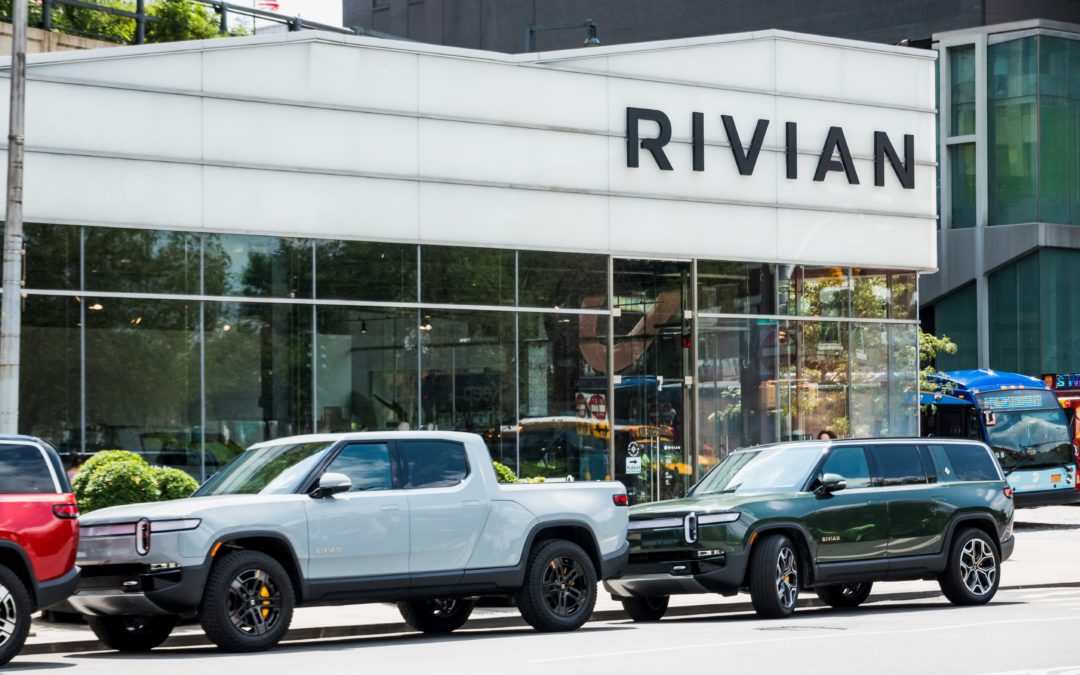
Image credit: Michael Berlfein / Shutterstock.com
Electric vehicle (EV) manufacturer Rivian has reached a critical checkpoint in its ongoing partnership with Volkswagen Group, securing a fresh $1 billion in funding through a share sale. This funding is part of a multi-billion-dollar technology collaboration between the two automakers and arrives at a moment when Rivian is facing serious challenges—especially in the form of declining sales, rising production costs, and looming policy changes that threaten to reshape the EV market in the United States.
While the billion-dollar influx offers short-term financial relief and investor confidence, it doesn’t erase the ongoing turbulence Rivian is experiencing on the operational front. The company’s sales trajectory, affected by both internal growing pains and external pressures like tariffs and uncertain EV incentives, continues to raise questions about its long-term stability.
A Deeper Look at the Investment
This new $1 billion payment is part of a larger joint venture announced in 2024 between Rivian and the German auto titan Volkswagen, which aims to eventually funnel up to $5.8 billion into Rivian’s business and tech ecosystem. The funding is designed not only to provide capital but also to help Volkswagen integrate Rivian’s advanced software and electrical vehicle architecture into its own fleet of future electric cars.
In simpler terms, Rivian is essentially becoming the back-end tech partner for Volkswagen’s upcoming EV lineup, providing expertise in digital vehicle design, system software, and modular electronics—areas where legacy carmakers often lag behind newer startups.
Volkswagen’s first $1 billion was delivered last year in the form of a convertible note, a type of debt that can later be turned into equity. The latest funding installment, however, comes through a direct share purchase, giving Volkswagen more direct ownership and aligning its future with Rivian’s success.
Sales Struggles Highlight Growing Pains
Despite this financial lifeline, Rivian’s core business—selling electric vehicles—is underperforming. The company recently revealed it delivered 10,661 vehicles during the second quarter of 2025. Although that number reflects an improvement over Q1’s 8,640 deliveries, it represents a worrying 23% drop when compared to the same quarter in 2024.
These delivery numbers are below market expectations and signal a decline in consumer traction or logistical execution—or both. For a company that’s still trying to scale and achieve profitability, such drops raise red flags. Furthermore, the numbers highlight a bigger issue: Rivian’s growth may have plateaued at a time when competitors are scaling aggressively.
The company has now revised its 2025 full-year target downward. It expects to deliver between 40,000 and 46,000 vehicles by the end of the year. Even at the optimistic high end of that estimate, Rivian would still fall short of its total deliveries from both 2023 and 2024. This implies a possible downward trend rather than one of expansion—an issue that could jeopardize investor confidence and future fundraising potential.
Cost Reductions: Progress With a Cavea
Rivian’s ability to achieve its second-ever gross profit in the first quarter of 2025 played a crucial role in unlocking this new round of funding from Volkswagen. Gross profit, in basic terms, means the company made more on the sale of its vehicles than it spent directly producing them—excluding overhead and administrative costs.
This milestone was achieved thanks to a two-year effort by Rivian’s engineering and manufacturing teams to simplify the production process of its flagship vehicles—the R1S SUV and R1T pickup truck. The redesign of these models allowed Rivian to reduce material costs, streamline the assembly line, and boost production efficiency. The results were vehicles that were cheaper to build and easier to scale—though Rivian is still operating at a net loss when all business expenses are factored in.
In an industry where capital efficiency is king and profit margins are tight, these changes represent real progress. But for Rivian, which has historically burned through billions in its bid to challenge Tesla, they are only part of a much larger puzzle.
The Tariff Troubles: A New Threat Looms
Compounding Rivian’s internal struggles is a major external threat: rising trade tensions under the administration of President Donald Trump. The return of aggressive protectionist trade policies, especially concerning China, is dramatically increasing the cost of key EV components—batteries, semiconductors, and rare-earth metals—that Rivian and other EV makers depend on.
Trump’s administration has pushed for steep tariffs on imported parts, and Rivian has already responded by lowering its annual delivery guidance due to the anticipated rise in production costs. These changes are forcing Rivian to reconsider sourcing strategies and domestic manufacturing options—moves that, while strategic, could take years to fully implement and may disrupt short-term momentum.
EV Tax Credit in Jeopardy
Another major hurdle Rivian may soon face is the potential elimination of the federal EV tax credit. A sweeping legislative package dubbed “One Big Beautiful Bill” is currently making its way through Congress. If passed in its current form, this bill would eliminate the $7,500 federal tax credit for new electric vehicles as early as September 2025.
This tax credit has been instrumental in making EVs more affordable and accelerating their adoption in the United States. Without it, the price gap between EVs and traditional gas-powered vehicles could widen, making Rivian’s relatively expensive vehicles even harder to sell to budget-conscious consumers.
Losing this incentive would particularly hurt Rivian’s upcoming R2 SUV, which is being designed as a more affordable, mass-market option. The R2 is expected to be priced starting in the $40,000 range and is central to Rivian’s plan to transition from a niche premium automaker into a mainstream EV brand.
Volkswagen’s Bet on Rivian: A Strategic Alignment
The Volkswagen-Rivian alliance is more than just a capital deal—it’s a sign of evolving industry dynamics. Traditional automakers like Volkswagen are racing to modernize their vehicles and technology stacks, and partnerships with nimble EV startups are a shortcut to that transformation.
Volkswagen stands to gain Rivian’s cutting-edge software infrastructure and scalable EV architecture, which could be deployed across various VW brands like Audi, Porsche, and Skoda in the future. For Rivian, this alliance not only brings cash but also global validation, helping to position it as more than just a flashy startup.
The hope is that Rivian’s tech-first approach—often compared to Tesla’s—will now power vehicles at a far greater scale, thanks to Volkswagen’s manufacturing and distribution muscle. This symbiosis could, in theory, allow Rivian to focus on what it does best: innovation and software.
R2: Rivian’s High-Stakes Futur
Set to debut in 2026, the R2 SUV is Rivian’s most ambitious and critical product to date. Unlike the rugged R1T and R1S, which are targeted at premium adventure consumers, the R2 is being developed for the broader, price-sensitive mainstream market.
The success of the R2 could determine Rivian’s future. If well-executed, it could unlock tens of thousands of new customers, significantly boost revenue, and establish Rivian as a lasting name in the automotive industry. But delays, rising costs, or loss of consumer incentives could derail this plan, making 2025 and 2026 do-or-die years for the company.
Rivian will also need to invest heavily in production capacity, marketing, and customer service infrastructure to support the R2 launch—all while managing current financial and political challenges.
Conclusion: The Crossroads Ahead
Rivian finds itself at a defining moment. The $1 billion injection from Volkswagen is a lifeline, but it also raises the stakes. It shows that powerful players in the automotive world still believe in Rivian’s technology and potential. Yet belief alone is not enough. Execution—on production, cost-efficiency, and consumer adoption—will determine whether Rivian sinks or swims.
The company must now navigate a maze of economic, political, and market pressures. From tightening tariffs and rising costs to policy rollbacks and falling deliveries, Rivian faces a complex path forward. And yet, with the R2 on the horizon and Volkswagen in its corner, the possibility of a breakthrough remains.
Rivian’s story is far from over—but the next chapter will demand precision, resilience, and flawless execution.
by Jonathan P-Wright | Jul 4, 2025 | Latest, Tech News |
Image credit: WD Stock Photos / Shutterstock.com
Microsoft, one of the most influential players in the global tech landscape, has announced it will be laying off approximately 9,000 employees, a figure that represents less than four percent of its global workforce. This decision, first reported by CNBC, comes at a time when the company is continuing to post strong financial results. In its most recent quarterly earnings report, Microsoft reported an 18 percent year-over-year increase in net income, which brought the total to $25.8 billion. Despite this financial strength, the company is proceeding with a strategic reduction in its employee count—a move that has raised both concern and curiosity across the tech industry.
The decision to reduce headcount is not an isolated action, nor is it the first time the company has done so in 2025. Microsoft has already undergone several rounds of layoffs earlier in the year, signaling that this is part of a larger, deliberate restructuring effort. According to company insiders and industry analysts, these changes are being driven by a need to simplify the organizational hierarchy, reduce unnecessary layers of management, and reallocate resources toward areas with higher growth potential and future impact.
While the news of layoffs is always difficult for the individuals affected, the reasoning behind Microsoft’s decision appears to be rooted in a long-term strategic vision rather than any immediate financial strain. In fact, Microsoft’s continued profitability makes this move all the more noteworthy. It suggests that the company is not reacting to crisis but rather proactively adapting to new operational demands and economic realities. It reflects a broader trend within the tech sector: even thriving giants are now rethinking how they are structured, how they manage talent, and how they sustain innovation in a more volatile global economy.
The early years of the 2020s, particularly during the COVID-19 pandemic, saw explosive growth in the tech sector. Companies rapidly expanded their teams to keep up with the surge in digital transformation, remote work, and cloud adoption. But as the world gradually emerged from the pandemic and macroeconomic conditions became more unpredictable, the industry’s mindset began to shift. The focus moved from aggressive hiring and expansion to efficiency, consolidation, and strategic clarity. For Microsoft, this change in mindset meant critically evaluating how the company operates, communicates, and delivers value across its vast and diverse business units.
Like many of its counterparts—Amazon, Meta, Google, and Salesforce among them—Microsoft is responding to these changing times by taking a hard look at its organizational model. The reduction in staff, while painful for those directly impacted, is aimed at trimming internal complexity. The company believes that too many layers of management can slow down decision-making, create bottlenecks in execution, and ultimately dilute the speed and agility needed to innovate. Streamlining operations, in Microsoft’s view, is essential not just to remain competitive, but to lead the next wave of technological advancement.
CEO Satya Nadella has been a strong advocate for fostering a “growth mindset” within the company—one that embraces change, learns quickly, and adapts rapidly to shifting market demands. Under his leadership, Microsoft has not only revitalized its brand but has also become more aggressive in seizing new opportunities. The layoffs, when viewed through this lens, are not about downsizing for the sake of cost-cutting, but rather about refining the internal engine that drives Microsoft’s innovation and market leadership.
At the same time as it reduces its workforce in certain areas, Microsoft is doubling down on key strategic priorities that it believes will define the next era of technology. One of the most prominent among these is artificial intelligence. Through its high-profile partnership with OpenAI, Microsoft is embedding AI across its product ecosystem—from integrating AI features in Microsoft Office to transforming how developers use the Azure cloud platform. The company sees AI not as a trend, but as a fundamental shift in how software is created, delivered, and consumed.
Cloud computing is another area where Microsoft continues to invest heavily. Azure, its flagship cloud platform, remains a cornerstone of the company’s growth strategy. With businesses increasingly moving their operations to the cloud, demand for Azure’s services—spanning AI, security, storage, and analytics—remains high. Microsoft’s ability to serve these enterprises at scale is a competitive advantage, and the company is committed to enhancing that edge.
Microsoft is also pushing forward in the gaming and entertainment space. The company’s acquisition of Activision Blizzard, though still subject to regulatory approval in some regions, is a bold move that reflects its ambitions to shape the future of interactive media. If completed, this acquisition would mark one of the largest in tech history and position Microsoft as a dominant force not just in consoles, but in mobile gaming, streaming, and virtual experiences.
Taken together, these moves show that Microsoft is not retreating from the future—it is repositioning itself for it. The layoffs, while significant in number, represent a reallocation of energy, capital, and talent. The company is shedding what it sees as excess baggage in order to become more focused, more agile, and more strategically aligned with its future goals.
Still, the impact on employees cannot be ignored. Job loss is more than a statistic—it is a deeply personal event that affects individuals, families, and communities. Microsoft has stated that it will provide support for those affected, including severance pay, job placement services, and continued health benefits for a limited period. Yet, the emotional and psychological toll of such disruptions often lingers beyond the logistics of transition. For employees who had been a part of Microsoft’s journey—some for years, others perhaps just beginning their careers—the experience is undeniably difficult.
Inside the company, morale and internal communication will play a crucial role in the coming months. Even those who remain may feel a sense of uncertainty or survivor’s guilt. Leadership must work hard to reinforce a sense of purpose, stability, and direction. Clarity around the company’s vision, transparency about why these changes are being made, and active efforts to engage and motivate remaining employees will be key to maintaining a healthy and productive culture.
From an investor’s perspective, Microsoft’s move may be interpreted as a responsible and forward-thinking adjustment. The company is clearly not in financial distress, which makes its decision all the more calculated. The stock market often rewards companies that demonstrate operational discipline and a willingness to evolve before problems emerge. In that sense, Microsoft may be reinforcing its reputation as a company that doesn’t just react to trends—it shapes them.
The broader message here is that we are witnessing a fundamental transformation in how large tech companies think about growth. No longer is success measured by how many people you employ or how many departments you can build. Today, success is increasingly defined by focus, clarity, speed, and strategic vision. Microsoft’s layoffs are a reflection of this new reality.
In the coming years, the ability to adapt will likely determine which companies thrive and which fall behind. Microsoft seems to understand this. It is shedding layers, tightening its focus, and aligning its resources around the technologies and markets that will matter most in the next decade.
While painful in the short term, this realignment could ultimately strengthen Microsoft’s ability to compete, innovate, and lead in a world where the pace of change shows no sign of slowing. And for others in the tech world, the message is clear: evolution is no longer optional—it is essential.

RECENT COMMENTS