by Jonathan P-Wright | Jun 6, 2025 | Latest, Music News, New Music Alert, Social Justice |
Image credit: Georgios Serafeim / Shutterstock.com
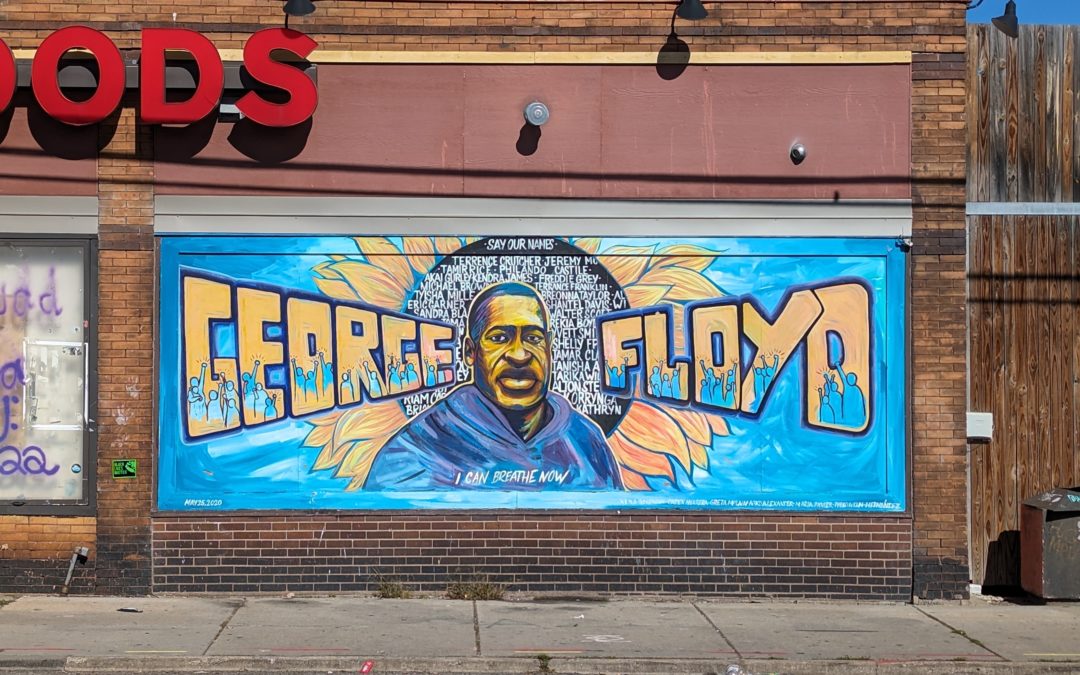
George Floyd’s family, civil rights activists, lawmakers, and local community members gathered in Houston to mark the fifth anniversary of his death — an event that profoundly changed the world’s perception of racial injustice and police accountability. The memorial served not only as a tribute to Floyd’s life but also as a powerful reminder that the fight for justice is far from over.
Held at Cuney Homes in Houston’s Third Ward — the very neighborhood where George Floyd grew up — the event became a sacred ground of remembrance, healing, and a renewed call to action. It drew prominent voices in the civil rights movement, including Reverend Al Sharpton, attorney Ben Crump, and Congresswoman Nikema Williams, along with Floyd’s siblings and members of the community who came to honor his legacy.
A Day of Reflection in Floyd’s Childhood Neighborhood
Floyd’s brother, Philonise Floyd, addressed the crowd at Cuney Homes with a message rooted in purpose and persistence. “We’re fighting for a purpose, and we’re not going anywhere,” he declared. For the Floyd family, the loss has not dulled with time — it has become fuel for advocacy, for pushing a global movement forward with the memory of George Floyd at its heart.
Before the public gathering, the family held a private memorial, reflecting in silence before joining Houston residents for an emotionally charged afternoon of speeches, poetry, gospel performances, and tributes. One especially poignant moment came when Floyd’s sister LaTonya sang the O’Jays’ “Family Reunion,” a soulful tribute to the strength found in unity. Her voice filled the space with sorrow, love, and resilience, embodying the emotional core of the day.
This was not just a family remembering their loved one — this was a community revisiting trauma and trying, together, to reshape it into lasting change.
Reverend Al Sharpton: “George Floyd Was Our Emmett Till”
Reverend Al Sharpton, a long-time advocate for civil rights, stood at the memorial to remind those gathered that Floyd’s murder was not an isolated incident. He described it as a modern echo of the 1955 lynching of Emmett Till — a tragedy that became a catalyst for the Civil Rights Movement. Sharpton drew a direct line between these two pivotal events, underscoring the painful continuity of racial violence across American history.
Sharpton spoke about how attorney Ben Crump flew to Minneapolis in 2020, right in the middle of the pandemic, to stand with the Floyd family and support peaceful protests. “I promised them we’d be there to the end,” he said. That promise, five years later, still stands.
Throughout his speech, Sharpton emphasized that while Derek Chauvin’s conviction brought a sense of accountability, it was far from justice. True justice, he insisted, can only come through transformation of the systems that allowed Floyd’s death to happen in the first place.
A Movement Under Threat: Leaders Criticize Reversal of Reforms
One of the most pressing concerns voiced during the memorial was the rollback of police reform measures, particularly under the Trump administration. Speakers criticized the federal government’s reversal of consent decrees in cities like Minneapolis and Louisville — a decision they saw as undermining the progress made in the wake of Floyd’s death.
Sharpton didn’t mince words: “To announce this rollback on the anniversary of George Floyd’s death is like spitting on his grave.” His outrage echoed that of many who believe that despite five years of protest and dialogue, meaningful reform is being systematically eroded.
Congresswoman Nikema Williams, present at the memorial, expressed her unwavering support for the George Floyd Justice in Policing Act — a bill that seeks to address excessive force, eliminate chokeholds, limit no-knock warrants, and establish national police oversight. Despite being introduced shortly after Floyd’s death, the legislation remains stuck in Congress.
“I’m here to do my part,” Williams affirmed. “I’ll never turn my back on this family or the movement their pain helped launch.” Her words reinforced the urgency of legislative change and the frustration felt by so many waiting for the system to catch up with the people.
Carrying the Flame: From One Life, a Worldwide Movement
Although George Floyd’s name became a rallying cry for justice, the Floyd family and speakers at the event were quick to remind attendees that his story is part of a much broader pattern. They remembered Ahmaud Arbery, Breonna Taylor, and countless others whose names have become symbols in the ongoing battle for racial equity and police accountability.
“George was the spark that lit the flame,” a relative said. “But the fire is bigger than one person.” This sentiment resonated deeply throughout the event, as attendees acknowledged that Floyd’s death catalyzed one of the largest protest movements in modern history — but also that the movement must continue, especially as resistance to reform grows.
Attorney Ben Crump praised the Floyd family for their unwavering resolve. “They turned grief into purpose,” he said. “History will remember these moments — how we stood not only for George Floyd, but for generations to come.”
Crump noted that while the emotional toll on the family has been immense, their courage has turned tragedy into a force for global awareness. Their willingness to speak, to show up, and to advocate has made it impossible for the world to look away.
Conclusion: Five Years Later, the Fight Continues
The memorial in Houston was not a moment of closure — it was a reaffirmation of purpose. While five years have passed since George Floyd died beneath the knee of a police officer, the systemic issues that led to his murder persist. The anniversary served as both a painful reminder and a hopeful rally — proof that although justice remains incomplete, the demand for it has not faded.
The Floyd family’s message was clear: remembering George is not enough. Honoring him requires continued action — in legislation, in communities, and in the hearts of people around the world. As the crowd dispersed from Cuney Homes that day, they left with a renewed commitment: that George Floyd’s name will not be forgotten, and his legacy will not be in vain.

by Jonathan P-Wright | Jun 6, 2025 | Latest, Social Justice |
Image Photo by Tingey Injury Law Firm on Unsplash
An 81-year-old woman in Ocala, Florida, is facing battery charges after a shocking incident involving the use of bear mace on two young Black children and their mother. Ada Anderson, the accused, was arrested on May 30 after allegedly spraying the highly potent chemical substance at her neighbors while yelling racial slurs.
April Morant, the children’s mother, moved into the neighborhood in Marion County in November with hopes of building a peaceful life for her family. But, according to her, their new neighbor Anderson was hostile from the very beginning. What began as verbal hostility escalated into a frightening act of aggression when Morant’s children—ages six and three—were playing with bubbles in their front yard.
Morant recalled the traumatic moment during an interview with WESH-2 News. “She approached the fence with something in her hand. I didn’t know what it was—my first thought was a gun,” Morant said. “Then she sprayed it. My kids were screaming. It got in their eyes, on their faces… it was horrifying.”
Bear mace is designed to stop charging wild animals like bears. It’s several times more powerful than standard pepper spray, and can cause intense pain, breathing difficulty, and even long-term respiratory damage—especially dangerous for children.
Racial Slurs and Ongoing Harassment
What makes the incident even more disturbing is the presence of explicit racial hatred. Morant shared video footage taken just after the attack that shows Anderson on her porch, glaring at her neighbor’s home. In another clip, she can be heard shouting the n-word and telling Morant and her family, “You’re not welcome in this neighborhood.”
These comments, coupled with the attack, led many—including Morant—to believe the event was racially motivated. “This wasn’t just a random act,” she said. “She used a weapon and screamed racial slurs. It was targeted hate.”
Despite the seriousness of the situation, Anderson was only charged with three counts of battery. Morant and many in the community feel this doesn’t reflect the true nature of the crime. “They didn’t charge her with anything related to hate,” she said. “This wasn’t just battery. She attacked children while yelling slurs.”
Morant also revealed that this wasn’t her first encounter with Anderson’s aggression. “I’ve called the police on her before,” she posted on Facebook. “But nothing ever came of it. I told them she was a danger. It took her attacking my babies for them to finally arrest her.”
Fear, Trauma, and the Need to Escape
The emotional and psychological toll of the incident has been overwhelming for Morant and her children. What should be their safe space—home—has now become a place of fear. The children are afraid to play outside, and Morant lives in constant dread of what could happen once Anderson is released.
“She’s 81, but that doesn’t mean she’s not dangerous,” Morant said. “Age doesn’t excuse hate or violence. What if next time it’s worse?”
Morant worries that Anderson, upon release, will return to her back porch and continue her intimidation. Given the ongoing threat, she’s launched a GoFundMe campaign to raise $15,000 to relocate her family to a safer neighborhood.
The fundraiser’s description reads:
“Imagine your children screaming in pain because someone hates the color of their skin. Imagine the fear of knowing that person lives next door. We can’t stay here. I don’t want to wait for things to get even worse.”
The fundraiser has begun to gain traction, with support coming in from people who were moved by Morant’s story and the injustice she and her children have faced. Many believe she deserves the chance to raise her kids in a place free of fear, hostility, and racism.
Justice and Accountability in Question
The case has sparked widespread debate about how authorities handle racially motivated attacks—especially when the perpetrators are elderly or white. Many in the community are frustrated that Anderson wasn’t charged with a hate crime, even though the evidence seems clear.
“Hate doesn’t retire with age,” said one local activist. “What happened to this family is clearly fueled by racism, yet the system is hesitant to call it what it is.”
Under Florida law, crimes that are proven to be motivated by bias can be classified as hate crimes and carry harsher penalties. But in practice, these charges are rarely pursued—often due to the additional burden of proof or the perceived leniency given to elderly offenders.
“There’s a pattern of minimizing these attacks when they come from older white individuals,” the activist continued. “But racism is racism. And the victims, especially children, are the ones who suffer.”
Morant has been vocal about her desire for true accountability—not just for herself, but for the example it sets. “What message are we sending if someone can attack Black kids and walk away with a slap on the wrist?” she asked. “We teach our children to be kind, to respect others. But who’s teaching these adults that racism has consequences?”
Final Thoughts: A Family’s Plea for Peace
For April Morant and her children, the road to healing will be long. Their sense of security has been shattered, and the trauma of the event continues to ripple through their daily lives. But Morant remains determined to protect her children, and to move them somewhere they can simply exist without being targeted.
“I don’t want revenge,” she said. “I just want safety. I want peace. I want my girls to know they belong.”
As the legal process unfolds, the question remains: Will the system acknowledge the racial hatred behind the attack? Or will it continue to treat this as a minor altercation, ignoring the deeper wounds it represents?
In the meantime, Morant hopes her story can inspire awareness, action, and support. “We need to speak up. We need to stand together. No family should ever feel unsafe because of the color of their skin.

by Jonathan P-Wright | May 30, 2025 | Latest, Music News, New Music Alert |
Image credit: Jgphotographydetroit / Shutterstock.com
Awrd season has become an almost year-round affair for Kendrick Lamar. The celebrated rapper, known for his sharp lyricism and thought-provoking storytelling, continues to dominate the music awards landscape. Most recently, the 2025 BET Awards nominations were revealed on Thursday, May 8, and true to form, Kendrick Lamar once again led the pack with a staggering 10 nominations. This feat is a testament to his enduring impact on hip-hop and contemporary music as a whole.
Kendrick’s reign at the awards shows has become something of a routine in recent years. Before this, he led the nominations at the 66th Grammy Awards, the music industry’s most prestigious event, and is also a frontrunner at the upcoming 51st American Music Awards (AMAs). Yet, what sets the BET Awards apart this year is the broader recognition of his body of work. While his diss track “Not Like Us” — a powerful and confrontational song that sparked major conversation — remains a significant factor in his continued success, his nominations at the BET Awards go well beyond that single release. They reflect a multifaceted appreciation for his artistry, both as a solo performer and as a collaborator.
Central to his nominations is his latest album, GNX. The album is nominated for Album of the Year, a category that is notoriously competitive. His main competitors include none other than Beyoncé, with her highly praised project COWBOY CARTER, Drake and PARTYNEXTDOOR’s collaborative album Some Sexy Songs 4 U, and Doechii’s highly anticipated debut Alligator Bites Never Heal. Each of these albums has made waves in their own right, pushing creative boundaries and resonating deeply with audiences. This sets the stage for a truly thrilling contest where any one of these artists could walk away with the top prize.
In the realm of collaborations, Lamar’s presence is particularly dominant. He is nominated for three separate songs in the Best Collaboration category. These tracks include “luther” featuring SZA, a moody and soulful number that has been praised for its chemistry and lyrical depth; “Like That” by Future and Metro Boomin, which showcases Kendrick’s ability to seamlessly blend with other top artists and producers; and “30 For 30,” another collaboration with a close TDE (Top Dawg Entertainment) associate. Notably, “luther” and “Like That” also appear in the Viewer’s Choice Award category, which reflects fan enthusiasm and the cultural impact of these songs. Alongside them is “Not Like Us,” demonstrating that Lamar’s diss track is still very much in the conversation with fans and critics alike.
The influence of “Not Like Us” extends beyond audio recognition; the music video, directed by the renowned Drake, is also nominated for Video of the Year. This visual component is crucial, as it amplifies the song’s message and artistic impact. The nomination also shines a spotlight on Lamar’s role behind the camera, with both he and his frequent creative partner Dave Free earning nods for Video Director of the Year. This highlights Kendrick’s growing presence not just as a performer but as a visionary who shapes the aesthetic and narrative of his work.
Rounding out his impressive slate of nominations is the Best Male Hip Hop Artist category. This recognition is emblematic of Lamar’s consistent excellence and influence within the hip-hop genre. He’s not just nominated for isolated pieces of work; he is celebrated for his overall contributions to music throughout the year.
Given all this, the question naturally arises: is there anyone who can stop Kendrick Lamar’s award show streak in 2025? The short answer is that it seems unlikely—unless Lamar himself opts to step back from releasing new music this year. The anticipation for a deluxe version of GNX remains high, and fans are eager for any new content from the artist. His ability to maintain such a strong presence across multiple major awards demonstrates not only his talent but also his strategic approach to his career.
Other artists are certainly in the mix and deserve mention. Drake, for example, is preparing for his next solo project and remains a formidable competitor. His influence and track record of success mean that he is always a threat in any award category. Doechii is another rising star, with her debut album generating significant buzz. She represents the new wave of talent that could shake up the status quo. However, despite these challengers, Lamar’s established legacy and current momentum give him a considerable edge.
Beyond the nominations and potential wins, Kendrick Lamar’s career trajectory offers a glimpse into what it takes to stay relevant and influential in the modern music industry. His ability to evolve artistically while maintaining authenticity resonates deeply with fans and critics. He’s not just chasing awards for the sake of accolades; his work often carries social and cultural commentary that adds layers of meaning to his art.
The BET Awards nominations underscore the respect and admiration Lamar commands from his peers and the industry. Leading the nominations in such a prestigious event that celebrates Black excellence in entertainment is no small feat. It cements his status as one of the most important voices in hip-hop and modern music.
Looking ahead, the landscape of music awards is always evolving. New artists will emerge, and established ones will innovate. But as of now, Kendrick Lamar’s streak seems poised to continue. His commitment to quality, willingness to collaborate with a diverse range of artists, and ability to connect with audiences through both his music and visuals place him in a league of his own.
For fans, the upcoming BET Awards and other ceremonies will be exciting to watch. Will Lamar continue his dominance, or will fresh talent rise to challenge his throne? Only time will tell, but for now, Kendrick Lamar remains the benchmark by which excellence is measured.

by Laghe Andrews | May 30, 2025 | Latest, Music News, New Music Alert |
Image credit: Featureflash Photo Agency / Shutterstock.com
The film Sinners has rapidly become more than just a movie—it’s a cultural moment. Its mix of vampire mythology intertwined with profound themes of racial reckoning has drawn extensive attention, but perhaps the most powerful element lies in its music. At its core, Sinners pulses with the spirit of the Delta Blues, a genre whose influence extends far beyond the American South and reverberates worldwide.
The standout musical piece in the film is undoubtedly “I Lied to You,” delivered with raw emotional power by actor and musician Miles Caton, who plays Sammie “Preacher Boy” Moore in the movie. This soulful track was written by the legendary Raphael Saadiq during a studio session alongside Oscar-winning composer Ludwig Göransson—known for his work on director Ryan Coogler’s Black Panther films. Saadiq brings to the table a career that spans almost 40 years, including three Grammy Awards and a legacy of collaborations with artists like Beyoncé on “COWBOY CARTER” and Solange on her critically acclaimed album A Seat at the Table.
Though Saadiq is widely celebrated for his deep roots in R&B, his connection to the music of Sinners goes beyond genre—it touches on his own story. In a Billboard interview published on May 2, Saadiq revealed that he shares a similar background to Sammie, the film’s complex character. Discussing the tension between Sammie’s secular music passion and his church upbringing, Saadiq explained, “That really resonated with me because that’s exactly how I grew up. Playing R&B music, I was told it was the devil’s music, so I completely understood where Sammie was coming from.”
This personal tie to the story allowed Saadiq to bring an authenticity to the songwriting process. He also noted how the project reconnected him with his Baptist roots, particularly the vocal traditions of his childhood church: “Even the humming on the track—I pulled that from Union Baptist Church. It’s a type of devotional singing that’s deeply ingrained in me.”
The Power of Miles Caton’s Voice
When Saadiq composed “I Lied to You,” he had not yet heard Miles Caton sing it. “That voice is something else,” he said. “I wrote the song imagining how I would sing the blues, but when I finally heard Miles sing it, I was blown away.”
Despite Saadiq’s own musical prowess, he felt the song belonged solely to Miles Caton’s voice. Even though there was an offer for Saadiq to release his own demo alongside the film’s soundtrack, he declined, preferring listeners to experience the track exclusively through Miles’s powerful performance. “The movie is so incredible that when people go to streaming platforms, they should only hear Miles. His voice is incredible,” Saadiq emphasized.
For Saadiq, this wasn’t simply an act of humility; it was a recognition that Miles’s voice perfectly embodied the emotional truth of Sammie’s character and the film’s themes.
A Hook Born from Real Life
The phrase “I Lied to You” is far from a random lyric. It originated in Saadiq’s own experiences. Reflecting on his youth, Saadiq recalled a moment when he was struggling to tell his girlfriend the truth about a difficult situation. Instead, he told her, “You know what would make a great blues line? ‘They say the truth hurts, so I lied to you.’”
That line lingered in his mind for years as a powerful blues hook. “I’ve always had blues ideas,” Saadiq admitted. “I’d often come up with blues hooks because they’re some of the best hooks in music.”
For the film, Saadiq initially believed that Sammie was lying to his father, which inspired the song’s title and lyrics. However, as the character developed, it became clear that Sammie was actually trying to tell the truth, even if it wasn’t fully accepted. This emotional complexity added layers of meaning to the song and resonated deeply with Saadiq’s own reflections on truth and deception.
Collaboration with Ludwig Göransson and the Birth of the Track
The creative synergy between Raphael Saadiq and Ludwig Göransson was critical in bringing “I Lied to You” to life. Göransson’s background in cinematic scoring and Saadiq’s mastery of rhythm and blues fused to create a track that was both haunting and cinematic. This collaboration enhanced the film’s emotional landscape, anchoring key scenes with music that felt timeless and authentic.
Experiencing the Song in the Film’s Premier
Saadiq first heard the full version of “I Lied to You” performed by Miles Caton at the Sinners premiere in Oakland, California, on April 16, 2024. Watching the song come alive on the big screen, amidst the movie’s powerful narrative, was a moving moment for Saadiq. Two days later, the film was released worldwide in theaters, including IMAX formats, and quickly garnered box office success. By early May, the film had grossed over $185 million, according to The Numbers, proving both commercial and critical acclaim.
The Delta Blues: Music as Cultural Legacy
The choice to center Sinners’ soundtrack around Delta Blues is a deliberate and meaningful one. Blues music originated from the deep South of the United States and is a genre that has long communicated the pain, resilience, and spirit of African American communities. It is often considered the foundation of much of American music today—from jazz and rock to R&B and hip-hop.
By placing blues music front and center, Sinners pays homage to this rich cultural legacy and reclaims it within a modern narrative. This musical choice creates a bridge between the struggles of the past and present, weaving history into the film’s contemporary themes of identity, power, and redemption.
Raphael Saadiq’s Artistic Journey and Personal Connection
Raphael Saadiq’s career has been marked by his ability to navigate various musical styles with authenticity. Whether producing smooth R&B or venturing into soulful gospel and blues, Saadiq’s work always reflects deep emotional honesty.
In Sinners, his songwriting reconnects him to a foundational part of his own life—his church upbringing. He described how the devotional humming in the track reminded him of singing in church as a child, a spiritual practice that left a lasting imprint on his musical sensibility.
Moreover, Saadiq confessed he had always admired the blues but doubted his own ability to sing it authentically. “I’ve had blues ideas for years, but I never thought I had the voice for it,” he said. The chance to write for Sammie and hear Miles Caton bring that voice to life fulfilled a personal and artistic desire for Saadiq.
The Emotional Core of “I Lied to You”
At its heart, “I Lied to You” is a song about the complicated nature of truth. The title suggests deceit, but the deeper story involves the pain and vulnerability that comes with honesty, especially when it challenges relationships and expectations.
This tension aligns with the film’s larger themes of identity and conflict—Sammie’s struggle to reconcile his secular music passion with his religious roots mirrors broader societal struggles around cultural and racial identity.
Saadiq’s lyricism captures this perfectly, creating a song that feels both personal and universal. Listeners don’t just hear a character’s confession—they hear echoes of their own experiences with love, fear, and self-expression.
Conclusion: A Song That Transcends the Screen
The creation of “I Lied to You” for Sinners is a remarkable example of how music can elevate storytelling. Through Raphael Saadiq’s masterful songwriting and Miles Caton’s unforgettable voice, the track transcends its role as a film song and becomes a powerful expression of cultural memory and emotional truth.
In connecting his own history with the blues and gospel traditions of his youth, Saadiq crafted more than just a soundtrack. He contributed a living piece of art that honors the blues’ enduring legacy—its capacity to tell stories of hardship, redemption, and hope.
As Sinners continues to captivate audiences worldwide, the haunting refrain of “I Lied to You” stands as a reminder that music isn’t just entertainment—it’s a vital thread that binds us to our history, our emotions, and each other.

by Jonathan P-Wright | May 30, 2025 | Latest, Music News, New Music Alert |
Image credit: Jamie Lamor Thompson / Shutterstock.com
In a compelling fusion of music and cinema, Grammy-winning artist 2 Chainz presents “Red Clay,” a short film that delves into the multifaceted essence of Atlanta. Set in 2003, the narrative centers on Nook, a teenager striving to keep his family intact amidst his mother’s struggles with addiction and the perils of street life. The film captures a city at a crossroads, highlighting the aftermath of the Olympic-era transformations, the influence of groups like BMF, and the emergence of trap music as a defining cultural force.
“Red Clay” is more than a cinematic endeavor; it’s a personal reflection of 2 Chainz’s own experiences growing up in Atlanta. Through Nook’s journey, the film explores themes of resilience, loyalty, and the pursuit of hope in an environment fraught with challenges. The narrative invites viewers to witness the complexities of urban life and the indomitable spirit of those who navigate it daily.
The Soundtrack: Echoes of a City’s Heartbeat
Complementing the film is a meticulously curated soundtrack that encapsulates the soul of Atlanta. The lead single, “The ATL Experience,” features a collaboration between 2 Chainz and The Isley Brothers, blending soulful melodies with contemporary rap to narrate stories of trust, betrayal, and survival. The track’s poignant lyrics and evocative rhythms serve as a testament to the city’s vibrant yet tumultuous landscape.IMDb+2Wikipedia+2Shockya+2
The accompanying music video, shot in East Atlanta, showcases iconic local landmarks, grounding the narrative in real-world settings. This visual journey through familiar streets and establishments reinforces the deep connection between the music, the film, and the community it represents. The collaboration between 2 Chainz and The Isley Brothers bridges generational gaps, uniting past and present to celebrate Atlanta’s rich musical heritage.
Christian Nolan Jones: Crafting Stories That Resonate
At the helm of “Red Clay” is director Christian Nolan Jones, an Atlanta native whose storytelling prowess brings authenticity and depth to the film. A graduate of Howard University and NYU’s Tisch School of the Arts, Jones has a track record of creating narratives that explore the human condition. His previous works, such as “Glitter Ain’t Gold,” have garnered critical acclaim for their insightful portrayal of coming-of-age experiences.
Jones’s direction in “Red Clay” ensures that the film transcends traditional storytelling, offering a nuanced exploration of identity, community, and personal growth. His commitment to highlighting underrepresented voices and experiences adds a layer of depth to the narrative, making it resonate with a diverse audience. Through his lens, “Red Clay” becomes a powerful medium for cultural expression and social commentary.
Community Engagement and the Road Ahead
“Red Clay” made its debut during a discussion panel at the Atlanta Film Festival, where 2 Chainz, Jones, and cast members engaged with audiences about the film’s themes and inspirations. The event highlighted the importance of storytelling in fostering community dialogue and understanding. While the film is currently being submitted to additional festivals, plans for a wider public release are anticipated, allowing broader audiences to experience this compelling portrayal of Atlanta’s evolution.
Through “Red Clay,” 2 Chainz not only showcases his multifaceted talents but also contributes to the cultural tapestry of Atlanta. The film stands as a testament to the city’s enduring spirit and the power of storytelling in capturing the essence of a community’s journey. As audiences await its wider release, “Red Clay” promises to leave a lasting impact, inspiring conversations and reflections on the complexities of urban life and the resilience of the human spirit.


RECENT COMMENTS