
by Harris | Jul 11, 2025 | Latest |
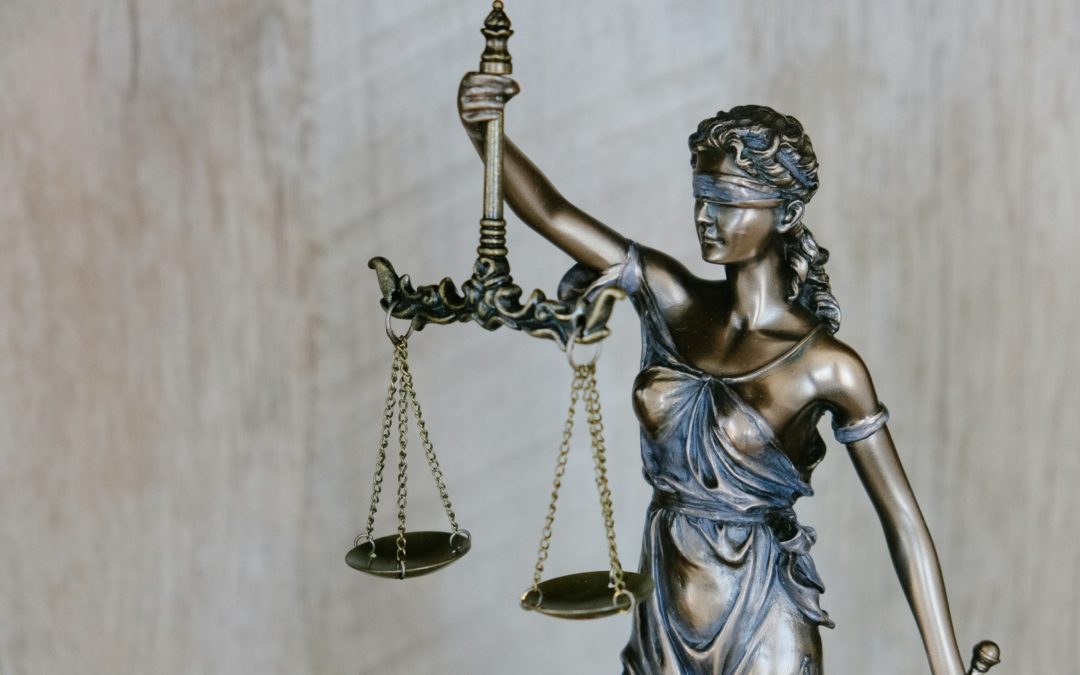
Photo by Michael Förtsch on Unsplash
More than two years have passed since Tyre Nichols was fatally assaulted by Memphis police officers, yet the pain surrounding his death feels as raw as ever—especially after the shocking verdict that acquitted three of the men involved. What many saw as an opportunity for justice instead became a painful reminder of how rarely accountability follows police brutality in the United States.
The acquittals of officers Tadarrius Bean, Demetrius Haley, and Justin Smith stunned the nation. Despite extensive and disturbing video evidence, a state jury found all three not guilty on charges of second-degree murder, aggravated assault, and official misconduct. The decision once again cast a glaring spotlight on the systemic challenges of prosecuting police violence—and the emotional toll it continues to inflict on victims’ families and communities.
The Night That Changed Everything
On January 7, 2023, Tyre Nichols—a 29-year-old Black man, father, photographer, and FedEx worker—was pulled over during what police claimed was a routine traffic stop in Memphis, Tennessee. That stop quickly spiraled into something far more sinister.
Officers from the Memphis Police Department’s now-disbanded SCORPION unit dragged Nichols from his car. He was pepper-sprayed, hit with a stun gun, and chased on foot when he tried to escape. When they caught him, five officers took turns beating him, even as he was restrained. Punches rained down. A baton struck him multiple times. He was kicked in the head while defenseless and screaming for his mother.
This horrific encounter—captured in detail by body-worn cameras and surveillance footage from a nearby pole—would ultimately lead to Nichols’ death three days later, from blunt force trauma and internal injuries.
Graphic Evidence, No Conviction
For many, the most haunting aspect of this tragedy is that the public watched it happen—after the fact, yes, but without ambiguity. The video footage, which sparked nationwide protests when it was released, shows not only the beating but also the callous aftermath. Nichols is left slumped against a car, clearly in distress. The officers laugh, exchange fist bumps, and offer no medical aid.
Yet, during the trial, defense attorneys successfully argued that their clients were simply following police procedures or attempting to subdue a suspect they claimed was resisting arrest. Much of the blame was directed at another officer, Emmitt Martin, who had taken a plea deal and was not on trial.
Among the most damning revelations was that Officer Demetrius Haley had taken a photo of Nichols after the beating—bruised, unconscious, bloodied—and shared that image with multiple people, including acquaintances. That act of casual cruelty symbolized the dehumanization at the heart of this tragedy.
But even this, along with the 20-minute delay in providing medical attention, was not enough to persuade the jury.
Public Reaction and Family Grief
The reaction to the verdict was swift and furious. Shelby County District Attorney Steve Mulroy voiced the frustration felt by many: “We all saw the videos. We know what happened. It’s hard to understand how a jury could find no guilt at all.”
Outside the National Civil Rights Museum, Nichols’ mother and stepfather gave heart-wrenching speeches. His mother said the verdict felt like she had lost her son all over again. His stepfather called it a “travesty of justice,” urging Americans not to grow numb to these failures.
The Congressional Black Caucus issued a powerful statement condemning the verdicts as “a shock to our collective conscience,” while activist Bernice King called for federal authorities to step in, stating that the acquittals reflect a system that was never built to protect Black lives.
A Pattern That Refuses to Break
The Tyre Nichols case is not an isolated incident—it joins a growing, painful list of cases where police officers walk free despite public outrage and overwhelming video evidence. Names like Rodney King, Eric Garner, Breonna Taylor, George Floyd, and Elijah McClain remain seared in public memory for similar reasons.
What unites these cases is not only the violence itself, but the consistent failure of institutions to deliver justice afterward. Legal protections like qualified immunity, strong police union influence, and culturally ingrained biases all make convictions incredibly difficult. Even in the face of bodycam footage and independent autopsies, juries often hesitate to convict officers—especially when the defense leans on split-second decision narratives and “resisting arrest” arguments.
Systemic Failures Go Beyond Individual Officers
Many people noted that all five officers involved in Nichols’ death were Black—prompting some to question if race played the same role it has in other cases of police violence. But experts and activists argue that focusing solely on the race of the officers misses the larger point: policing as a system disproportionately harms Black Americans regardless of who is enforcing it.
This is not about individual bigotry; it’s about a policing structure rooted in control, aggression, and systemic disregard for Black bodies. Training often emphasizes dominance and “compliance” over de-escalation and empathy. Oversight mechanisms are often weak, internal reviews biased, and punishment rare.
Even the SCORPION unit itself—a now-disbanded elite squad meant to tackle violent crime—was criticized from the start for its aggressive tactics and lack of transparency. Critics had warned that such units often go rogue, operating like paramilitary squads within city neighborhoods already over-policed and under-resourced.
Federal Charges Offer a Slim Hope
While the state trial ended in acquittals, federal charges still stand against all five former officers. These include civil rights violations and obstruction of justice—crimes that carry serious penalties. Sentencing is expected later this year.
Additionally, Nichols’ family has filed a $550 million civil lawsuit against the City of Memphis, the Memphis Police Department, and key officials, including the former police chief. The lawsuit claims that the SCORPION unit’s creation, leadership, and oversight failures directly contributed to Nichols’ death.
Some activists see this legal action as a potential tool to force reform. While no amount of money can bring back a life, large settlements often pressure cities to change hiring practices, restructure police units, and implement oversight reforms.
A National Crisis Demands National Reform
The broader crisis is undeniable. Reform advocates have been pushing for:
- Ending qualified immunity, which shields officers from personal liability.
- Independent prosecutors in all police-involved deaths to prevent conflict of interest.
- Stronger federal legislation, such as the stalled George Floyd Justice in Policing Act.
- Community review boards with real power—not just advisory roles.
Yet progress has been frustratingly slow. The political will fades with each news cycle. Police unions lobby hard against reforms. And without sustained public pressure, the status quo remains intact.
But families like the Nichols’, and a new generation of activists, refuse to let the conversation die. They continue to push—not only for accountability in this case but for transformation of the very system that made it possible.
Humanizing Tyre Nichols
Amid the legal arguments and political debates, it’s crucial to remember who Tyre Nichols was. He wasn’t just a symbol—he was a person.
He loved skateboarding and photography. He worked hard and was described by those who knew him as gentle, creative, and thoughtful. He often took photos of sunsets and landscapes around Memphis. He had plans, dreams, and relationships. That night, he was just trying to make it home.
His life was not taken by fate or error—it was taken by a system that chooses force over humanity and silence over accountability.
Conclusion: A Reckoning Still Needed
The acquittals in the Tyre Nichols case illustrate how far we still have to go. Even in an era where body cameras and cell phone footage expose the truth, the institutions responsible for justice too often fall short.
But public memory is long, and the push for reform has not disappeared. It has simply entered a new chapter—one driven by renewed urgency, growing awareness, and the voices of those who refuse to accept injustice as inevitable.
Tyre Nichols’ name now lives among others we remember not just for how they died, but for how they’ve inspired a movement that will not rest until the system changes.
by Jonathan P-Wright | Jun 13, 2025 | Latest, Music News, New Music Alert |
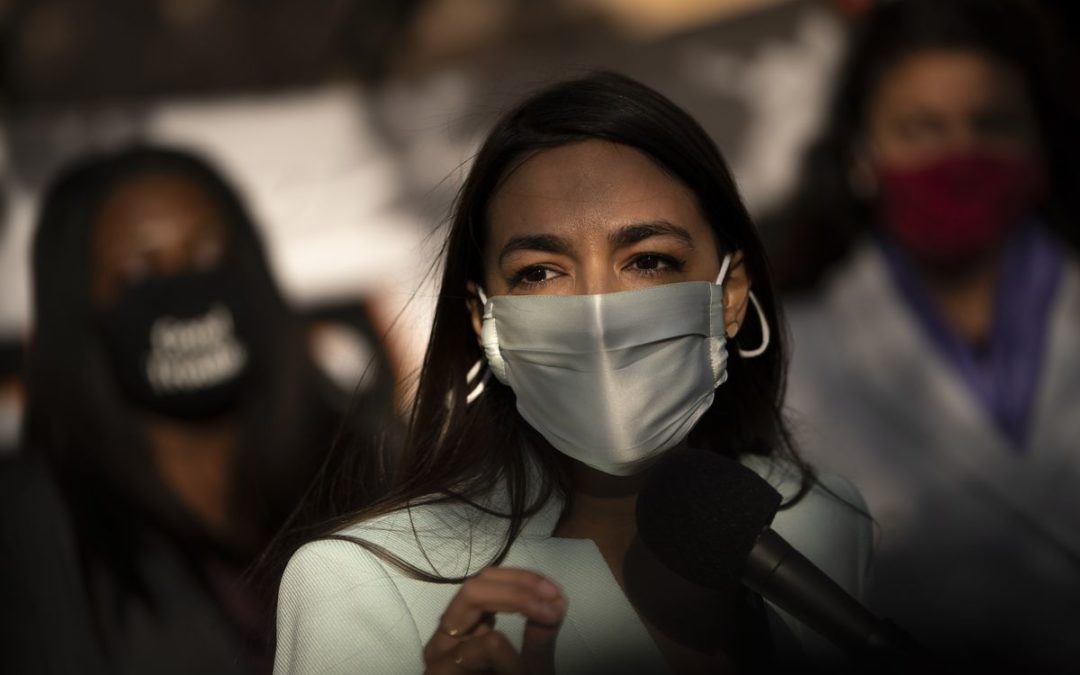
Photo by Tingey Injury Law Firm on Unsplash
In the unfolding legal case against music mogul Sean “Diddy” Combs, an anonymous former assistant—testifying under the pseudonym “Mia”—completed her third and final day on the witness stand this past Monday. Her testimony was marked by harrowing allegations of abuse, coercion, and manipulation. Through unwavering conviction, she strongly denied any financial motivation for coming forward, rejecting the defense’s suggestion that she was pursuing a payout under the guise of the #MeToo movement.
Mia’s testimony is part of a larger racketeering and sex trafficking case that has rocked the entertainment industry and placed one of its most powerful figures under intense legal scrutiny. While the accusations are serious and deeply personal, the defense—led by attorney Brian Steel—has painted a vastly different picture: one in which Mia is allegedly leveraging the cultural climate for personal gain.
A Long and Exhaustive Cross-Examination
Brian Steel’s cross-examination began last Friday and stretched well into Monday, occupying the better part of the court’s time. His strategy was aggressive and methodical: painting Mia as inconsistent, emotionally manipulative, and possibly financially motivated.
A central tactic involved showcasing a series of social media posts and private messages Mia sent to Combs following her departure from his employment in early 2017. These messages included warm holiday greetings, expressions of love and condolences following the deaths of close people in Combs’ life—including his long-time partner Kim Porter and mentor Andre Harrell—and celebratory messages on his birthday.
Steel repeatedly contrasted the affectionate and sympathetic tone of these messages with the allegations Mia has made in court: repeated sexual assaults, emotional abuse, physical violence, and exploitative work conditions that deprived her of sleep for days at a time.
He raised doubts about why there were no contemporaneous records of the alleged abuse—no photographs, no diary entries, no formal complaints.
“Didn’t you have time to write something down? Notes about how he sexually assaulted you?” Steel pressed.
“I did not and I could not,” Mia answered, her voice low but steady.
Money Motive or Survival Instinct?
Perhaps the most pointed line of questioning came when Steel pushed Mia about her decision to hire a lawyer. His tone sharpened noticeably as he probed whether her intention was to sue Combs in civil court. Mia denied any such plans repeatedly.
Steel escalated the accusation: “Isn’t it true that you sought a lawyer because you wanted to sue Mr. Combs for money?”
“No,” Mia replied firmly.
The line of questioning took a darker turn when Steel asked, “And that you joined the #MeToo money grab against Sean Combs—is that true?”
This question was immediately objected to by the prosecution, and Judge Madison Smyser sustained the objection.
This phrase—“#MeToo money grab”—echoes a broader cultural debate about the legitimacy of victims’ claims in high-profile abuse cases. For Mia, however, the suggestion that her motives were opportunistic seemed to strike a deeply personal chord. Her testimony had consistently emphasized psychological manipulation, fear, and a deeply imbalanced power dynamic rather than any intent to profit.
Surveillance, Control, and Intimidation
On Monday, new allegations surfaced that added another disturbing layer to the case. Steel questioned Mia about her personal relationship with Cassie Ventura—Combs’ former partner and another alleged victim in the case. Mia and Ventura are known to be close, but Steel sought to understand why Mia never discussed Combs’ alleged abuse with her friend.
Mia explained that she was afraid—deeply afraid.
“[Combs] has stolen my phone many times,” she testified. “He’s stolen Cassie’s phone many times. He’s put tracking devices on her car. I’m not sure what he is capable of.”
This testimony painted a picture not just of violence and manipulation, but of near-total surveillance and control. Mia suggested that even in private, she feared being monitored—underscoring the toxic, high-pressure environment she claims she endured.
Her rationale for not coming forward earlier was consistent: she didn’t believe anyone would support her.
“I was completely entrenched in his world,” she explained. “Now I’m surrounded by the support I need, and I’ve seen other worlds that aren’t like that.”
A Climate of Silence
Throughout her testimony, Mia emphasized how isolated she felt while working under Combs. She described a climate in which abuse was normalized, and speaking out was both futile and dangerous.
“If I had told anyone, I wouldn’t be believed. I would be wiped out. I’d be fired, abused, and painted as a crazy person,” she said.
Mia described feeling “brainwashed” during her time with Combs—a term she elaborated on at Steel’s request.
“To be brainwashed meant living in an environment where the highs were euphoric and the lows were devastating,” she said. “It created confusion in my ability to trust myself. When Puff was violent and I reacted, I was punished—making me feel like I was the one in the wrong. I would then try harder to get back into his good graces. Everyone around him still praised him, and the public loved him. So I started to question my own sanity.”
Her words reflected the psychological toll of prolonged emotional manipulation, describing Combs as the sole authority figure in her life at the time.
“I was always constantly seeking his approval,” she said.
Demeanor and Doubt
At one point during the trial, Steel introduced a video clip from 2013 in which Mia had compiled birthday greetings for Diddy, including her own exuberant performance. The defense argued that the cheerful, animated version of Mia in the video contradicted the subdued, nervous demeanor she had displayed on the witness stand.
Steel implied that Mia’s quiet voice and downcast eyes during her testimony might be performative—another effort to manipulate public perception.
But trauma experts have long asserted that victims of abuse may exhibit a wide range of emotional expressions, often fluctuating between high-functioning behavior and periods of emotional shutdown. What appears as inconsistency to some may in fact be symptomatic of deeper psychological harm.
The Final Word
In her final moments on the witness stand, Mia addressed why she had chosen to testify publicly about deeply traumatic events.
“Talking about the sexual assaults is the hardest thing I’ve ever had to do,” she said. “But if I don’t speak up, I can’t look my niece or my goddaughter in the eye and tell them to stand up for themselves if they’re ever in this position.”
Her closing words weren’t just about Sean Combs. They were about the generations of women who grow up under the threat of exploitation by powerful men, and the immense courage it takes to confront that power, even years later, even with no certainty of vindication.
Final Thoughts
This case is about more than Sean “Diddy” Combs. It’s about power, silence, fear, and the mechanisms—legal, psychological, and cultural—that protect abusers and punish victims. Mia’s testimony is a raw and haunting glimpse into what it means to live under total domination, where even private conversations feel dangerous, and speaking out seems unthinkable.
Whether the jury believes her or not, Mia’s stand is emblematic of a wider reckoning taking place in industries where fame and fortune have long shielded predatory behavior. As the case continues, her words will likely remain a focal point for both the prosecution and the public, symbolizing the personal cost of coming forward—and the strength it demands.



RECENT COMMENTS