by Laghe Andrews | Sep 21, 2023 | Latest |
Image credit: Kathy Hutchins / Shutterstock.com
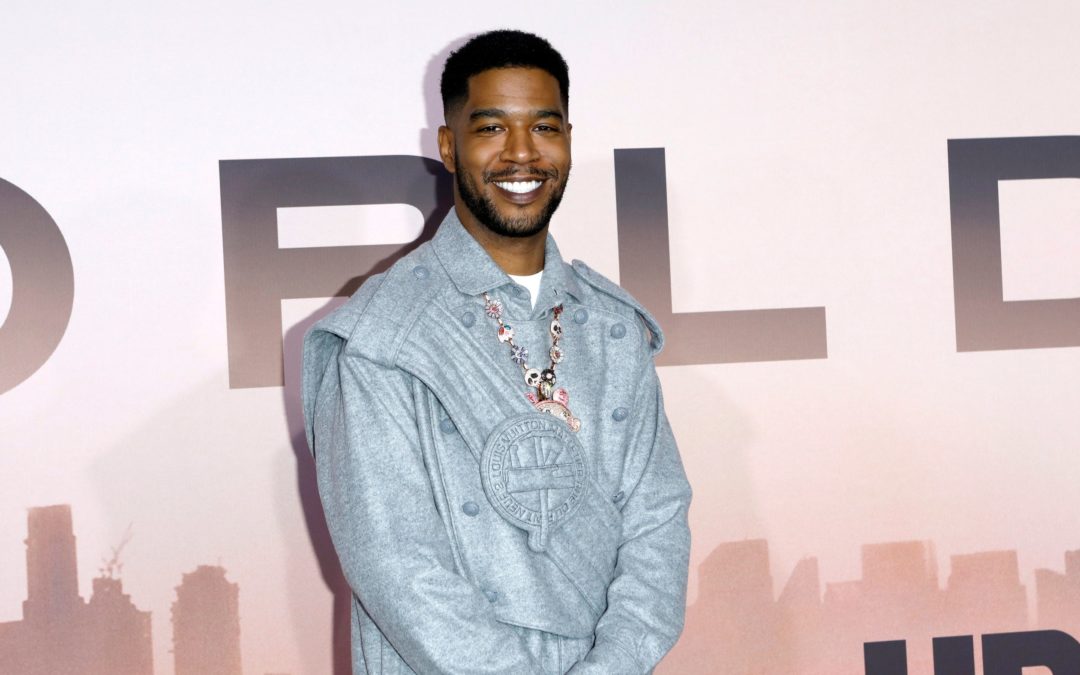
Kid Cudi, the acclaimed rapper and actor, recently found himself amidst a swirl of rumors suggesting a potential fallout with fellow actor Timothée Chalamet. The speculation, which took the internet by storm, was quickly addressed by Cudi himself, dismissing these rumors as baseless and urging his fans not to fall prey to online gossip.
Setting the Context: The Kid Cudi and Timothée Chalamet Connection
The connection between Kid Cudi and Timothée Chalamet goes back a few years, marked by mutual admiration and professional collaborations. The two have been seen together at various events and their camaraderie is well-documented. However, recently, an unverified rumor about an alleged falling out between the two started making the rounds on social media, specifically on the popular platform TikTok.
The Rumor: A Social Media Storm
The rumor about the supposed “falling out” between Kid Cudi and Timothée Chalamet started circulating on TikTok, a popular social media platform known for its viral content. A tweet from a fan, which was a quote-tweet of a 2021 picture of Cudi and Chalamet, added fuel to the fire. The fan expressed their devastation upon hearing the rumor, leading to the rapid spread of this speculation.
Kid Cudi’s Response: Debunking the Rumor
Reacting swiftly to the spiraling rumors, Kid Cudi took to Twitter to clear the air. In his tweet, Cudi dismissed the rumors, stating that he had spoken to Chalamet just a few weeks ago. He affirmed that their relationship remains unscathed and urged his fans to not believe the online gossip.
“What da hell,” Cudi said. “I literally just shouted him out in Most Aint Dennis. I spoke to him a few weeks ago. Timmy is my brother til the end of time and beyond I will always ALWAYS love him. We are good. Trust me. Idk where this is comin from but please dont believe the gossip online yall.”
The “Most Ain’t Dennis” Reference
In his tweet, Kid Cudi made a reference to his song “Most Ain’t Dennis” from his Insano album. This mention is significant because he shouts out Timothée Chalamet in the song, making it clear that he holds no animosity towards the actor.
The Chalamet-Jenner Connection: A Possible Trigger
The rumors about the fallout seemed to gain momentum around the same time as reports of a budding romance between Timothée Chalamet and Kylie Jenner. This connection is noteworthy because Kylie Jenner shares two children with Travis Scott, a frequent collaborator of Kid Cudi. While there is no official confirmation of this connection leading to the rumors, the timing of these events is intriguing.
The Professional Bond: A History of Collaboration
Beyond their personal camaraderie, Kid Cudi and Timothée Chalamet also share a professional bond. Chalamet lent his voice to Kid Cudi’s Netflix special Entergalactic, and they appeared together in the comedy Don’t Look Up for Netflix. These collaborations serve as a testament to their professional respect and mutual admiration.
The Future: Upcoming Projects
Despite the rumor mill, both Kid Cudi and Timothée Chalamet have a busy schedule lined up. Kid Cudi has his project Insano slated for release in 2024, along with a number of film roles, including in Brittany Snow’s directorial debut Parachute. On the other hand, Chalamet will next be seen in the prequel to Willy Wonka and the Chocolate Factory, titled Wonka, set to release in December.
Conclusion: The Strength of Friendship
In the face of rumors and speculation, the bond between Kid Cudi and Timothée Chalamet remains strong. Their swift and clear response to the rumors underscores their respect for each other and their commitment to their friendship. As fans, it is crucial to respect their privacy and not contribute to baseless speculations.
At the end of the day, the relationship between Kid Cudi and Timothée Chalamet is their own. As fans, we should respect their words and take them at face value. So, let’s focus on their work and their contributions to the music and film industry, rather than on unfounded rumors.

by Enaysha Thompson | Sep 12, 2023 | Business News, Latest, Tech News |
Image Credit: Photo by Roberto Nickson on Unsplash
The autonomous driving scene in Europe is about to get shaken up. Deeproute.ai, an autonomous driving startup headquartered in Shenzhen, China, has plans to set up an operations center in Germany by 2024. The company, which has received over $350 million in funding and employs more than 500 employees worldwide, is the latest Chinese mobility upstart to establish a physical presence in Germany, home to some of the world’s largest automakers.
The move marks a significant step in the company’s global expansion strategy, which aims to collaborate with more local automakers and support OEM partners on smart driving mass production.
Unveiling The Plan
The announcement came during the International Motor Show Germany in Munich, where several Chinese mobility players marked their presence. The company has also revealed its plans to roll out its production-ready autonomous driving solution in Germany next year, with other European markets to follow.
Tech Behind The Wheel: Drive 3.0
The solution, dubbed Drive 3.0, works without HD maps and includes features like valet park assist. With a competitive hardware price of $2,000, the system is quite compelling. This affordability is largely thanks to Deeproute’s collaboration with its competitively priced Chinese lidar suppliers. Powering the system is Nvidia’s Drive Orin system-on-a-chip.
The Operations Center: A Mystery Unfolding
Details about the operations center remain sparse at this point. Deeproute has shared that it plans to hire a business development team in Germany, but the specifics about the operations center’s roles and responsibilities, as well as its geographical location, are yet to be disclosed.
Learning From History: Momenta’s Foresight
It’s worth noting that Deeproute is not the first Chinese autonomous driving company to establish a base in Germany. Suzhou-based competitor Momenta had the foresight to open an office in Stuttgart two years ago. This strategic move arguably paved the way for Momenta to foster closer relationships with its investor Mercedes-Benz, as well as other European OEMs.
Nio’s Footprint in Germany: A Case Study
Nio, another Chinese premium electric vehicle startup, already has a 1,500-sqm innovation center in Berlin and a design facility in Munich. In addition to these, it also runs a “Nio House,” a stylish members’ club and showroom in the German capital.
Deeproute’s Strategic Shift: From Robotaxi to Production-Ready Car
Like many ambitious Chinese AV startups, Deeproute initially focused on Level 4 driverless technologies to power robotaxis. However, over time, the company shifted its focus to less advanced driving solutions for auto partners, which could generate immediate cash flow. A representative from the company explained that they have been working with OEMs on mass production since last year, which prompted the shift in focus.
Deeproute’s Expanding Customer Base
As of the end of 2022, Deeproute’s services had provided over 800,000 passenger rides, most of which were executed by its robotaxis in major Chinese cities. With its impending expansion into Germany, the company hopes to grow its OEM customer base, which already includes Seres and Geely. A local business development team will be instrumental in connecting with more local automakers.
The Road Ahead: More Chinese Companies to Follow?
With Deeproute’s planned expansion, it’s possible that more Chinese robotaxi companies will consider venturing into Germany. If successful, Deeproute could potentially pave the way for other companies to follow suit, further solidifying China’s presence in the global autonomous driving landscape.

by Diontae Bussey | Sep 12, 2023 | Business News, Latest, Tech News |
The opioid crisis has been a perplexing issue, baffling scientists for nearly two decades as they have strived to comprehend the ever-changing societal and systemic reasons that induce people to misuse opioids and to pinpoint prospective overdose danger zones.
These painstaking and frequently imperfect endeavors unfold as healthcare providers endeavor to deliver secure, efficient therapy, and other resources to those grappling with addiction.
As both scientists and healthcare providers scrutinize the expansive and enduring influence of the opioid crisis, they are now inquisitively investigating AI (Artificial Intelligence) and pondering, Could AI be the key to ending the opioid crisis?
Tech Adoption in Healthcare: A Slow Process
Healthcare is not a sector known for swiftly adopting new trends; it’s notoriously slow in testing and incorporating novel technology. This hesitance has its repercussions. One study implies that the industry forfeits over $8.3 billion annually because of its reluctance or failure to adopt technology such as sophisticated electronic health records.
Public health scientists and biomedical engineers have been discreetly fostering an AI-driven revolution in medicine, with addiction prevention and treatment being the latest beneficiaries.
However, the costs of the opioid crisis extend beyond financial losses. Since 1999, over 1 million people have perished due to drug-related overdoses. In 2021, 106,699 drug overdose deaths were recorded in America, marking one of the highest per capita volumes in the nation’s history. Approximately 75% of all these overdoses were linked to opioid use, which includes prescribed analgesics such as Vicodin and Percocet, along with illicit drugs like heroin.
Despite the Centers for Disease Control and Prevention and the National Institutes of Health investing billions of dollars into outreach, education, and prescription monitoring programs, the crisis has stubbornly persisted.
The Opioid Crisis: The Human Cost
For the past decade, I have been conducting research on the opioid crisis in rural and urban communities across America, including New York City and rural southern Illinois.
Most of my peers concur, albeit reluctantly, that there’s a considerable amount of speculation involved in pinpointing the complex risks faced by drug users. Which drugs will they acquire? Will they inject, snort, or smoke them? Who, if anyone, will they use around, in case they overdose and require assistance?
But that’s not all. Practitioners also regularly grapple with inconsistent federal and state guidelines on effective treatments for opioid use disorder, like suboxone. They also find themselves playing catch-up with increasingly unpredictable drug supplies contaminated with affordable, synthetic opioids like fentanyl, which is largely responsible for recent surges in opioid-related overdose deaths.
While AI advancements like ChatGPT have captured most of the public’s imagination, public health researchers and biomedical engineers have been quietly brewing an AI-infused revolution in medicine, with addiction prevention and treatment being the newest recipients.
AI Innovations in Opioid Crisis Management
Innovations in this space primarily utilize machine learning to identify individuals who may be at risk of developing opioid use disorder, disengaging from treatment, and relapse. For instance, researchers from the Georgia Institute of Technology recently developed machine-learning techniques to effectively identify individuals on Reddit who were at risk of fentanyl misuse, while other researchers developed a tool for locating misinformation about treatments for opioid use disorder, both of which could allow peers and advocates to intervene with education.
Other AI-powered programs, such as Sobergrid, are developing the capacity to detect when individuals are at risk of relapsing — for example, based on their proximity to bars — then connecting them to a recovery counselor.
The most impactful advancements relate to the reduction of overdoses, often triggered by drug mixing. At Purdue University, researchers have developed and piloted a wearable device that can detect signs of overdose and automatically inject an individual with naloxone, an overdose-reversing agent. Another significant development has been the creation of tools to detect hazardous contaminants in drug supplies, which could drastically reduce fentanyl-driven overdoses.
The Potential Pitfalls of AI in Opioid Crisis Management
Despite the immense potential, there are concerns — could facial recognition technology be used to locate people who appear intoxicated, leading to discrimination and abuse? Uber has already taken a step in developing this kind of capacity in 2008, attempting to patent a technology that would detect a drunk passenger.
And what about dis/misinformation, a problem already plaguing chatbots? Might malicious parties embed incorrect information into chatbots to mislead drug users about risks?
The Fine Balance
Since Fritz Lang’s seminal silent film “Metropolis” in 1927, the public has been fascinated by the idea of new, humanlike technology making lives easier and richer. From Stanley Kubrick’s “2001: A Space Odyssey” in 1968 to films like “I, Robot” and “Minority Report” in the early 2000s, though, these hopeful visions have slowly morphed into a kind of existential dread.
It will be up to not just researchers and clinicians, but also patients and the broader public to keep AI honest and prevent humanity’s biggest challenges, like the opioid crisis, from becoming insurmountable ones.

by Jonathan P-Wright | Sep 8, 2023 | Business News, Latest |
The United States, a global economic titan, seems to be treading water in the vast ocean of cryptocurrency regulations. Despite the tumultuous year for the crypto industry, marked by scam incidents, company collapses, and layoffs, it’s far from its end. However, the narrative that the US government could potentially obliterate the crypto industry persists, fueled by the media and public opinion. This narrative is not only misleading but also detrimental to the progress of blockchain technology in the country.
The Misconception: Crypto’s Apocalypse
The crypto industry’s recent turmoil has been largely attributed to its own failures. Major industry players had initially pledged self-regulation, but the actions of a handful of bad actors over the past year have extinguished any possibility of such a system. The remaining legitimate crypto companies, despite their resilience and continued operation, are often viewed with skepticism and doubt, likened to the living dead of the digital asset sector.
The Reality: Crypto’s Potential
Contrary to these bleak portrayals, the crypto industry is not dead nor dying. It’s merely undergoing a metamorphosis, navigating through the growing pains associated with any revolutionary technology. The potential of blockchain technology is vast, and it’s beginning to permeate various aspects of the global financial system.
Crypto is more than just a new form of currency; it’s a foundational layer for future global commerce, banking, communication, and individual ownership. This is reflected in its widespread adoption, with hundreds of millions of people worldwide using crypto for various purposes and believing in its potential.
The Regulatory Challenge: SEC’s Approach
The Securities and Exchange Commission (SEC) has been heavily criticized for its aggressive approach to crypto regulations. The SEC’s actions, heavily influenced by public opinion rather than a comprehensive understanding of blockchain technology, have been seen as overreaching and heavy-handed, stifling innovation rather than fostering it.
Despite the high stakes, with crypto becoming increasingly integrated into the global financial system, the SEC’s approach remains largely unchanged. This regulatory approach not only undermines the potential of blockchain technology but also puts the US at a disadvantage globally.
The Global Perspective: Crypto Regulations Elsewhere
Other economic powerhouses, such as the EU, UK, Japan, Singapore, UAE, and even China, have introduced or are in the process of introducing comprehensive regulatory frameworks for crypto. The absence of the US from this list is conspicuous, highlighting the country’s lag in addressing this frontier technology at a federal level.
As a result, the crypto industry is rapidly shifting offshore. According to a recent report by Electric Capital, the US’s share of the world’s open source blockchain developers dropped from 42% in 2018 to 29% in 2022.
The Implications: Economic and Technological Consequences
The lack of a fully regulated financial market for crypto in the US contradicts the global economic interdependence observed in other major economies. The risk of losing crypto to other world powers is severe. Imagine if tech giants like Google or Twitter had been founded in a country like China. The internet, as we know it today, would look drastically different.
The Solution: A Path Forward
Despite the slow progress at the federal level, there are promising signs that a clear regulatory framework is on the horizon. A recent draft bill provides a pathway for digital assets that start as securities to eventually be regulated as commodities.
The proposed framework would allow tokens offered as part of an investment contract to remain under the SEC’s purview, while those qualifying as commodities would fall under the jurisdiction of the Commodity Futures Trading Commission (CFTC). There are also ongoing discussions about the classification of an asset as a commodity if it belongs to a decentralized blockchain network.
The Recommendations: Shaping the Future of Crypto
As the US navigates its way towards a comprehensive regulatory framework for crypto, several key considerations come to the fore.
The US government should actively invest in blockchain R&D. The country has a track record of incubating world-changing technology, and this should be no different.
Policymakers should familiarize themselves with the technology. Understanding the fundamentals of the technology they’re regulating is crucial. Other governments, including the European Commission, are already doing this.
The US government should establish a sandbox to experiment with compliant and mutually beneficial ways to engage with the private sector and the technology itself.
Conclusion: The Inevitability of Crypto’s Survival
Predicting the demise of crypto is a misguided narrative. The US, with its history of embracing and regulating frontier technologies, will undoubtedly adapt to the rise of crypto. The industry will only strengthen as meaningful regulations replace the current strong-arm enforcements. The future of crypto in the US is not a question of ‘if’ but ‘when.’

by Pharron Fields | Sep 7, 2023 | Latest, Music News, New Music Alert |
As we inch towards the twilight of the summer season and prepare to embrace the crisp ambiance of fall, it is impossible to ignore the mellifluous voices that have serenaded us throughout the season. Mercury may still be in retrograde, but the musical cosmos is in perfect alignment, offering us an array of harmonious compositions that perfectly complement the changing seasons. As the sun sets on Beyoncé’s Renaissance World Tour, we find solace in the new creations by some of R&B’s most talented artists, helping us transition smoothly into the new season.
Among the myriad of voices, one stands out – Jorja Smith. Her long-awaited sophomore album’s title track has been shared, and it’s as emotion-inducing as Ama Lou and Xenia Manasseh’s debut albums. While we patiently wait for Chase Shakur’s debut LP, he ensures his fans are well-fed with the deluxe edition of his EP. Keke Wyatt is making a stealthy re-entry into music with the lead single from her first album in six years. Additionally, male crooners like Eric Roberson, Lendryx, Landon Thomas, and Beharie are guiding us down a soothing path that’s deeply essential.
Jorja Smith – “Falling or Flying”
Jorja Smith, who welcomed the summer with her singles, “Little Things” and “GO GO GO,” has now unveiled the title track from her highly-anticipated sophomore album, “Falling Or Flying.” During a conversation with Zane Lowe from Apple Music, Smith confessed that this track is currently one of her favorites, depending on her mood.
Smith elaborated, “This song always takes me on a journey, so right now it’s one of my favorites. Maybe because it’s coming out. But it’s funny though because that song started out completely different with me and the producers. It’s the first song we actually ever started together but it didn’t have the chorus before, and we moved everything over and did all sorts to it, and then we got this chorus. But the song has nothing to do with the album title. It’s just called that.”
The music video for “Falling or Flying” also marks Smith’s directorial debut. She had always dreamed of shooting a video in space, and this song gave her the perfect opportunity to fulfill that dream. She candidly mentioned that she wanted to journey into space with someone she loved and cherished, but they didn’t reciprocate her enthusiasm.
Smith’s new album is set to release on September 29, and music enthusiasts are eagerly waiting for the release.
Ama Lou – “I Came Home Late”
Ama Lou’s debut album, “I Came Home Late,” is a testament to her profound songwriting skills. With an assortment of 15 tracks, including previously released singles “Silence” and “Caught Me Running,” the album paints a vivid picture of Lou’s artistic range.
Lou began songwriting at a tender age and released her debut single, “TBC,” in 2016, which caught the attention of Drake and heavily influenced his 2018 album, “Scorpion.” She has since dropped three EPs, providing fans with a taste of her depth before unveiling “I Came Home Late.”
Chase Shakur – “It’s not you, it’s me… it’s love”
Chase Shakur continues to tantalize his fans, who are eagerly waiting for his debut album, with the release of his deluxe EP, “It’s not you, it’s me… it’s love.” The EP follows the highs and lows of a tumultuous relationship, providing an insight into the male perspective of an emotionally-charged romance. The captivating follow-up includes three new tracks: “nite,” “exit 65,” and “you’re so lovely.”
Shakur has clarified on his Instagram that “this is NOT the album,” and is looking forward to performing these tracks live on his “It’s Still Love Tour.”
K. Michelle – “Blame Yourself”
K. Michelle is gearing up for the release of her final R&B album, “I’m The Problem,” and has shared the LP’s fourth single, “Blame Yourself.” The introspective track urges women to take some accountability and introspect whether they are the problem in their relationships.
The Memphis native sings, “You’re playing the victim all because he made you look stupid/ ‘Fore you put the blame on everybody else/ Point to the mirror and blame yourself.” Her honest and heartfelt lyrics echo the album’s premise.
Back in May, K. Michelle candidly expressed on Instagram, “I am the problem. Took me so long to solve ’em.” In a recent interview with The Shade Room, she added, “I’m gon’ be the problem regardless. The industry gonna label you. It doesn’t matter. I could try to change; I could be better, [but] no matter what I do, I’m a problem because I still stand for what I stand for and I am how I am. It just is what it is.”
LAYA – “Bet That”
LAYA’s long-awaited new EP, “BET THAT,” is finally here. The seven-track project is a confident flex, proving that LAYA is in charge of her world and isn’t budging one bit on that matter. The unapologetic anthem, “F’d Up,” set the tone for the EP, and the Staten Island, N.Y. native continued that momentum with “I Ain’t Playin’,” title track, “Bet That,” and the manic yet soulful “Psycho Bitch.”
The EP succeeds her debut EP, “Um, Hello.” If you’ve been missing out on this rising star, consider this an alert to wake up.
Raiche – “Big Daddy”
Raiche’s new single, “Big Daddy,” is a breath of fresh air as she addresses an alternative perspective from records like Usher’s “Hey Daddy (Daddy’s Home).” Her soothing, distinct tone captivates listeners as she sings, “You just stepped in/ What you bout to prove/ Big daddy, come take real good care of me/ Say that’s what you can be […] You know what your baby needs/ Just come through.”
The singer, with her soulful roots and alternative pop flair, recently performed at 2023’s Atlanta Funk Fest. Since her debut single in 2018, she has amassed over 20 million international streams and has been featured in Netflix’s Self Made: Inspired by the Life of Madam C.J. Walker and on The Kelly Clarkson Show.
Beharie – “We Never Knew”
Beharie is a dream we never knew we needed. Our introduction to the Norwegian crooner is his latest single, “We Never Knew.” The idyllic production is a somber reflection on a forever love that’s now non-existent.
The singer explains, “In the heat of it all. When you lose yourself in it. How things made sense, and how the bad things were ignored. But little did we know that we would end up being strangers.”
The record stems from his in-depth exploration of varying identities as heard on his upcoming debut album, “Are You There, Boy?,” set to arrive on October 20. Of the album, he explains in a statement, “This album has given me the opportunity to delve into various aspects of my own identity, and in the process, I have explored the complexity inherent in my personality and expression.”
Eric Roberson – “I Apologize”
Eric Roberson is honoring the indie R&B movement with a series of new monthly releases. “I Apologize” is the second single of the series, inspired by what the crooner considers to be his “creative gumbo.”
Co-written and produced by Jairus Mozee, Brett “B Dubb” Baker, Rodney Jones, and Roberson, the latter explains in a statement, “The song is inspired by the creative gumbo that feeds my music. The theatrical musicality of Stevie Wonder, heartfelt word play of urban contemporary gospel group Commissioned, and the unapologetic low-end approach of A Tribe Called Quest.”
Marzz – “In The Morning”
Marzz is back! Two years after the release of their debut EP, Love Letterz, and its subsequent deluxe installment, the singer’s impassioned new single, “In The Morning,” hypnotizes us once more.
“This song represents a feeling of waiting until the morning, getting excited of the unknown,” they explained in a statement. “It’s the wishful understanding of everything within a relationship. Sometimes we need understanding about falling in love when we’re not sure.” Ultimately, Marzz hopes their music encourages listeners to “create their own narratives” but in a magical way.
Landon Thomas – “Anything”
Landon Thomas may be new to us, but R&B is embedded in his DNA. With the lead single, “Anything,” from his forthcoming album, “R U STILL MAD AT ME,” the Pittsburgh, Pa. native is making his mark as a trailblazer with his infectious melodies and unique spin on contemporary R&B.
As he sings “Do you mind/ If I slide on you/ Spend time with you tonight/ Do you mind if I chill with you/ Make it real for you,” we’re drawn into the heartwarming embrace of his sultry tone.
“Anything” irresistibly sets the tone for the LP centered about intricate feelings, relationships, and ultimately, self-discovery.
“R U STILL MAD AT ME” arrives on Sunday, September 3.
Xenia Manasseh – “Love/Hate, PT. 1”
Xenia Manasseh’s debut album, “Love/Hate, Pt. 1,” is an emotional rollercoaster focused on love’s unpredictability. The 11-track LP is for delicate yet powerful women as the Kenyan-born, Los Angeles-based singer fuses her heritage with a sorrowful, intensely honest masterpiece.
After earning songwriting credits on Teyana Taylor’s The Album and singing background vocals for Taylor, Big Sean, and Burna Boy, fans love Xenia’s universal lyricism and earnest personal reflections.
“All the songs are special to me because they all came from me, they’re all my feelings on a page or in a song and the creation of all songs is sentimental to me,” she shared in a statement of the album. “But I will single out GI’s intro that is with my grandfather, Edgar Manasseh, GI is his nickname. That was done this year and was extremely sentimental and emotional because he has influenced so much of my musical journey. I can think of days when I was growing up he would teach me how to play things on the piano and his music collection is incredible.”
The endearing Swahili song was paired with a Luka Tututu composition. The LP wraps up just as strong as it began with the emotive yet hopeful “Love/Hate.”
She explained, “‘Love/Hate’ is also one of the tracks I felt that was the song that encompassed all the feelings that are spoken about in the album–the good, the bad, and in-between. I try to remember that balance as a lifeline. I’m also a Libra which is the sign of the scale, so I try to see the world through that lens and I felt like it’s not just representative of the album but also of me. I feel like everything in the album falls under those two words. It’s like a pendulum swing–you’re in and you’re out.”
Most of all, she hopes listeners take away the understanding of love’s karmic journey while also learning that it’s just the beginning. “This is just part 1 of the album; there’s a part 2 and in all of it, just know that love always comes around and it’s how you approach it the second time that matters.”
Keke Wyatt – “Water Into Wine”
The first offering from Keke Wyatt’s new album–her first in six years–has arrived. “Water Into Wine” showcases the mother of 11’s soulful roots as she gets honest with her lover about some expectations and realities.
“I really feel good about signing with Shanachie!” the singer said of her new team in a statement. “I’m excited and finally ready. I feel like this time we will create magic together and make HISTORY!”
Shanachie General Manager, Randall Grass, chimed in, “At a time when great singers are in short supply, Keke Wyatt continually displays what real singing is all about. Her range, power and intensely felt vocals connect with her audiences on the deepest level. We loved working with her before and are very excited to work with her now to make an epic new album.”
The reality TV star assures fans that her new LP will spotlight “good ole sanging” and will be an honest look into her life as she gears up to bare it all.
Lendryx – “Forces”
Lendryx is channeling two R&B legends with his new single, “Forces.”
Produced by Dionso, OSEI, and Jproof, the slow jam oozes romantic gratification as the crooner also inquires about the tug ‘o war battle of not wanting to fall in love, but also realizing that may be out of his control.
“I don’t wanna be in love/ But you’re so tempting/ When you leave the room, it feels so empty/ I’m trying be tough/ I’m fighting forces,” he sings.
Lendryx feels the ballad is his most “dynamic vocal performance yet” and admits that he challenged himself by using Tyrese’s “Signs Of Love Makin'” and Brandy’s range as the foundational elements of his vocal execution. It follows his previous single from April, “Just My Turn.”
Shae Universe – “Passenger Princess”
Shae Universe is riding the wave of her recent single, “Passenger Princess,” with the premiere of its visual. The song’s video, starring Kojey Radical, hints at the enthralling story being told as the title card reads, “Ever wish you could go back in time?”
Viewers see Shae seated in the backseat during a late-night drive as she reflects on some lingering feelings and bittersweet memories. The song, itself, was birthed by those emotions.
“He’d sent me roses all the way from LA and I still wasn’t over everything we’d been through when I received them, so I put all my mixed emotions into this song,” the UK-bred songbird stated of the record.
“I think ‘Passenger Princess’ is a very special song because not only is the title current and relatable, but the song’s deeper message of not always knowing exactly how to navigate situations is part of being a human with feelings. A part that sometimes frustrates us but hopefully, through this song, people feel seen and confident enough to accept this grey area of life.”



RECENT COMMENTS