“I hope we continue to make Colin [Kaepernick] proud,” the Los Angeles Lakers player said. On Thursday (July 30), LeBron James and a few different players took a knee during the singing of the National Anthem.
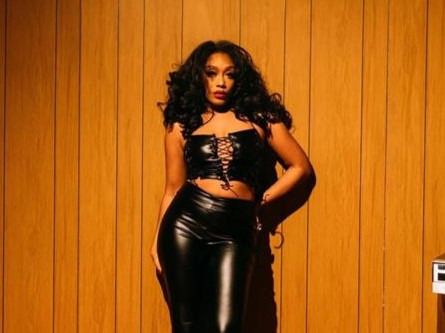
There are singers who can hold a note… and then there are artists who can hold a moment.JaQuandice is the rare kind of storyteller whose voice doesn’t just slide through the speakers — it lands in your chest like something you’ve lived before. She doesn’t sing like she’s trying to convince the world she’s special. She sings like she already knows she is, and she’s letting the world catch up at its own pace.
She’s not here to decorate the room with pretty vocals. She’s here to transform the room. The way she takes love, heartache, confusion, longing, and that quiet emotional tension people don’t know how to explain… and molds it into music is completely mind-blowing. Not because it’s dramatic. Not because it’s forced. But because it’s real — and real always feels cinematic when it’s told the right way.
And right now, JaQuandice is back with a new sound that feels like a game-changer on every level. This isn’t a rebrand. This is an elevation. A bigger atmosphere. A clearer identity. A sharper pen. A deeper presence. The kind of return that makes listeners sit up mid-scroll like, wait… who is THIS?
This is that moment.
This is that era.
This is RESULTSANDNOHYPE Magazine energy.
Atlanta Raised, Built With Discipline
Atlanta doesn’t just create artists — it creates pressure-tested greatness. It’s a city that teaches you how to move with confidence, how to stand out without yelling, how to survive the noise and still keep your signature. Atlanta shapes creators who understand that talent alone isn’t enough. You need performance. You need identity. You need stamina. You need presence. You need a message.
JaQuandice carries that Atlanta DNA in a way you can feel immediately. Born and raised in Atlanta, Georgia, she isn’t just a singer — she’s a singer-songwriter, a choreographer, and a creative director. That matters because she doesn’t think like someone who’s only focused on sound. She thinks like someone who’s building a full world around her artistry — a world where the music, the visuals, the movement, and the emotional truth all speak the same language.
That type of artistry doesn’t happen by accident. It happens when you’re committed to being more than a “song.” It happens when you understand that the culture doesn’t only listen… the culture watches. The culture feels. The culture remembers.
And JaQuandice is the kind of artist the culture remembers.
The Origin Story — Before the World Was Listening
Her musical journey began in 2010 during high school — before algorithms decided what mattered, and before “going viral” was a plan. That early start is important because it tells you this is bigger than a moment for her. She didn’t wake up one day and decide to become an artist because it looked fun. She grew inside the craft. She developed inside the discipline. She evolved through the time it takes to become undeniable.
By 2016, she was already sharpening her voice online, releasing covers on SoundCloud — including remakes of 6lack’s “PRBLMS” and 50 Cent ft. Chris Brown’s “I’m the Man.” Those choices weren’t random. They were early proof that she could step into two completely different emotional worlds and still sound authentic in both. That’s range. That’s versatility. That’s identity forming in real time.
Then in 2017, JaQuandice released her debut single “Top Back,” introducing the world to her signature blend of smooth vocals, honest lyricism, and a confident flow that made it clear she wasn’t here to be boxed into one lane. She was building something nostalgic and fresh at the same time — something that could hold R&B softness while still walking with modern-day energy.
That’s what makes her story powerful.
She didn’t skip steps.
She became the artist.
The JaQuandice Signature: 90s Soul… With Today’s Rhythm
Some artists make nostalgic music like they’re trying to cosplay an era. JaQuandice does something completely different. Her sound doesn’t feel like “throwback” — it feels like inheritance. Like she naturally carries the spirit of the golden era of ‘90s R&B in her DNA, but she’s not stuck in the past. She’s simply bringing the timeless parts forward and giving them today’s bounce, cadence, and emotional honesty.
Her tones are soft and soulful, but never weak. They feel luxurious, but still raw. The way she transitions between singing and rapping is effortless — like she speaks emotion in multiple dialects. One second she’s floating, the next second she’s telling the truth with her chest. That’s not a gimmick. That’s actual skill. And it’s rare.
This is the kind of sound that transports you. It puts you in the room with her. It makes you feel like her voice is a memory and a prophecy at the same time.
JaQuandice doesn’t just make music that sounds good.
She makes music that feels like life.
Female Empowerment Without Loudness
There’s a specific type of power JaQuandice carries — and it’s not the kind that screams. It’s the kind that stands there calmly and makes you adjust your posture. It’s the kind of feminine energy that doesn’t have to argue. It doesn’t have to prove. It simply exists as truth.
Her writing doesn’t romanticize chaos. It doesn’t worship toxicity. It doesn’t frame heartbreak as a weakness. Instead, her music sounds like a woman who has survived enough to know what she deserves — and she’s not negotiating with her own standards anymore.
She’s soft, but she’s not fragile.
She’s romantic, but she’s not naive.
She’s vulnerable, but she’s not weak.
That’s a dangerous combination — because it’s real.
“How To Love” Isn’t a Song… It’s a Standard
JaQuandice’s featured record “How To Love” doesn’t feel like a typical R&B love song. It feels like a woman standing in her truth, offering something rare… and making it clear that not everybody qualifies to receive it.
This record isn’t just about attraction. It’s about the discipline of love. It’s about patience. It’s about emotional maturity. It’s about what happens when someone is tired of guessing and finally decides to bring clarity to the room.
JaQuandice doesn’t sing this song like she’s begging someone to stay.
She sings it like she’s saying, if you’ve never had real love… I can show you what it’s supposed to be.
That is power.
That is female empowerment in music form.
Heavy Rotation: 99.7 DA HEAT MIAMI Is Spinning It 4 Times a Day
Right now, “How To Love” is in heavy rotation on99.7 DA HEAT MIAMI, playing four times a day and putting JaQuandice in front of real listeners who actually care about R&B. This isn’t a “maybe.” This is broadcast validation — the kind that separates artists who live only online from artists whose music is beginning to live in the real world.
If you’re tapped into the station ecosystem, make sure you follow the official Instagram page @997DAHEATMIAMIOFFICIAL so you can stay plugged into everything they’re pushing in real time.
JaQuandice is not just being heard.
She’s being broadcast.
Tap In With JaQuandice Now
If you love R&B that feels like a story instead of a trend, this is the exact moment to lock in withJaQuandice while the era is unfolding in real time. Stream her official catalog onApple Music and hear the evolution for yourself — because this is not a “new artist trying.” This is a storyteller arriving.
And if you want to experience the broadcast energy behind this moment, tune into99.7 DA HEAT MIAMI — where “How To Love” is currently in heavy rotation, and JaQuandice’s mix show R&B X Supreme is building a premium lane for the genre.
Final Word: This Is Not a Comeback — This Is an Arrival
JaQuandice is not chasing attention.
She’s building legacy.
She’s stepping into her full power with a sound that feels nostalgic and futuristic at the same time — soft enough to heal you, bold enough to wake you up, and honest enough to feel like your own story.
With “How To Love” spinning four times a day on99.7 DA HEAT MIAMI, and her voice becoming part of the iHeartRadio ecosystem, the message is clear: she’s not just an artist you should watch… she’s an artist you should respect.
Now streaming globally on Apple TV and Prime Video—with fresh episodes rolling onto Ray J’s reality-first TRONIX Network—the most captivating “modern-witch” reality saga on television is rewriting what spirituality, family, and Black entrepreneurship look like on screen.
A Different Kind of “Conjure”: Not Demonic—Decidedly Human, Healing, and Honest
If you come to The Conjure Family expecting horror tropes and jump scares, you’ll be disarmed in the first fifteen minutes. This reality docuseries centers matriarch Lala Inuti Ahari and her daughters—Tina, Chaela, and Eria—as they navigate real life: sisterhood fractures, romantic drama, and boardroom pressure inside a fast-growing metaphysical brand. Their “witchcraft” isn’t the sensationalized Satanic panic of old. It’s a blend of African-rooted hoodoo, ancestral reverence, ritual, therapy-adjacent introspection, and frank conversations about healing the self while building an intergenerational business.
Their operation is powered through The Conjure—a deeply curated metaphysical brand that offers candles, spells, ritual tools, spiritual coaching, and products designed to help people manifest, heal, and connect with lineage.
On screen, rituals are presented less as spectacle and more as cultural technology—tools for centering, boundary-setting, and relief from the stressors of ambition and family conflict. Viewers who’ve ever used candles, sage, prayer, or journaling to process emotions will recognize the emotional logic here. Critics have framed it as “the reality show you didn’t know you needed,” precisely because the spiritual through-line functions like group therapy: it names tension, then attempts to move through it. That’s why the series lands as psychologically therapeutic to many—cathartic, clarifying, and surprisingly intimate.
Global Distribution—And a Bold Expansion Into TRONIX
The show’s footprint is serious. The Conjure Family premiered on Apple TV with Season 1 episodes rolling out June 30, 2025, and is available on Prime Video as a full season purchase—placing the Ahari family inside two of the world’s most important streaming storefronts from day one.
And now, in a savvy move that fits the show’s reality-leaning DNA, the series has joined TRONIX Network—the reality-driven streaming platform launched by Ray J, who has invested millions to bring TRONIX to life. TRONIX positions itself as “Reality Reborn,” and its September debut of The Conjure Family extends the franchise into a platform built expressly for high-energy unscripted culture.
Why that matters: Apple TV and Prime Video give The Conjure Family global reach and credibility, while TRONIX offers cultural specificity and promotional firepower inside the exact audience that devours messy, magnetic reality storytelling. It’s the best of both worlds: blue-chip distribution and an agile, reality-native stage.
The Premise: Family First, Even When It Hurts
From the pilot, the series refuses to flatten this family into archetypes. Episode 1 frames an explosive Tina-Chaela blow-up that splits the household, while a messy ex stirs chaos and Lala’s business faces a make-or-break crossroads. It’s raw without being exploitative, and spiritual without going soft on accountability. The tension is not “who summoned a demon,” but who’s telling the truth, who is projecting pain, and what ritual—and conversation—can metabolize the moment.
Character Studies
Lala Inuti Ahari — The Spiritual CEO
Archetype: Matriarch, visionary, brand architect.
Why she resonates: Lala’s on-screen presence toggles between warm mentor and relentless operator. She is a globally respected spiritual alchemist, steering an eight-figure metaphysical brand while insisting on rigor in both ritual and business. She refuses the binary of “soft healer” vs. “hard-nosed executive.” In her hands, candles, herbs, and baths coexist with contracts, logistics, and strategic pivots.
Signature tension: Can you heal a family while scaling a company? For Lala, the answer is yes—but it costs. Her scenes often carry the emotional center of gravity: she gives language to pain, frames the ritual, then returns to the metrics. The frame never lets you forget that love and labor are both present.
Tina — Firebrand Truth-Teller
Archetype: Big energy, bigger consequences, glass-shard honesty.
Why she resonates: Tina’s temper becomes the narrative spark in the premiere, but the camera is careful: anger here is grief’s bodyguard. Tina’s rawness surfaces what others swallow, and the edit treats her volatility as unprocessed tenderness rather than villainy.
Signature tension: Self-protection vs. vulnerability. Tina’s arc asks whether radical independence can coexist with the radical interdependence a family business requires.
Chaela — The Quiet Storm
Archetype: Mirror, mediator, keeper of receipts.
Why she resonates: Chaela can read a room like a tarot spread. She is less explosive than Tina, but her words carry impact precisely because they’re measured. When she breaks, you feel it—because she’s usually holding the line. The Tina-Chaela blow-up works as a thesis scene: sisterhood is a spiritual practice.
Signature tension: The cost of being “the balanced one.” Chaela’s restraint is a survival skill; the show asks whether it’s also a cage.
Eria — The Alchemist-in-Training
Archetype: Emerging power, playful veneer over serious gifts.
Why she resonates: Eria’s curiosity and humor act as a pressure valve. She’s often the one to translate ritual into relatable language, helping broader audiences see themselves in the work. You sense a future matriarch being forged in real time—apprenticeship by fire.
What Their “Witchcraft” Actually Does On Screen
Names the wound. Arguments don’t just explode and vanish; they’re contextualized—“this is about abandonment,” “this is about respect.”
Creates ritual time. Candles, baths, prayers, and altars signify a shift from reactivity to reflection.
Builds shared language. Everyone knows the steps; that predictability becomes a nervous-system balm.
Demands accountability. Ritual isn’t a hall pass; it’s a container where apologies, boundaries, and next steps are articulated.
The Business: Metaphysical Commerce at Scale
Where most reality shows hide the P&L, The Conjure Family puts it under fluorescent lights. Lala’s company—herbs, candles, baths, services—functions as both narrative engine and pedagogical tool. We watch vendor calls, manufacturing deadlines, packaging crises, marketing decisions. This isn’t a side hustle; it’s a multi-million-dollar enterprise that sits at the intersection of wellness and culture.
Culture: Hoodoo, Respectfully Rendered
The series matters because it de-exoticizes practices that—when stripped of context—are often stigmatized. Here, rituals are framed within Southern Black traditions and diaspora memory. Core themes include matriarchal power, generational healing, and feminine leadership—an essential correction to decades of screen language that cast African-rooted practice as inherently sinister. By grounding ceremony in love, lineage, and labor, the show becomes an act of cultural literacy.
Why TRONIX Is the Perfect Second Home
TRONIX is engineered for unapologetic reality TV—and Ray J has been candid about pouring capital and sweat equity into building a platform where “explosive reality shows take center stage.” With The Conjure Family onboarding to TRONIX, expect bonus drops, cast takeovers, and fandom-driven programming that a nimble network can spin up faster than legacy streamers.
And yes, Ray J. The R&B and TV mogul’s pivot into platform ownership has been widely reported. For a series that lives at the intersection of family, faith, and friction, having a network owner who intuitively understands unscripted rhythm is a force multiplier.
Audience Impact: Why Viewers Call It Therapeutic
People don’t only watch to pick sides in a sister spat. They watch because the show models repair. It normalizes lighting a candle and calling a mediator; scheduling a bath and a budget meeting. The net effect? Fans describe feeling seen and soothed, not scared.
The Visual Language: Altars, Atlantan Glam, and Boardroom Grip
Cinematically, the show toggles between soft ritual palettes (amber candles, herb greens, bath blues) and hard-edged business lighting (glass conference rooms, warehouse fluorescents). The look tells a story: spirit and scale are co-protagonists.
The Stakes: Love, Money, Legacy
Every beat in Season 1 circles three stakes:
Love: Can a family remain intact under the pressure of honesty?
Money: Can a wellness brand scale without soul-drain?
Legacy: Can daughters inherit tools, not trauma?
The series believes the answer is yes—with ritual, boundaries, and receipts.
What Sets This Family Apart
Matriarchal governance: Decisions flow through Lala’s leadership but rely on her daughters’ agency.
Ritual as operating system: Practices are not B-roll; they’re process—as integral as inventory checks.
Commerce without apology: The family refuses the false binary of sacred vs. profitable. The shop funds the sanctuary; the sanctuary fuels the shop.
Distribution intelligence: From Apple TV prestige to Prime Video marketplace to TRONIX culture engine, they’ve architected a three-lane highway to audience.
Where to Watch (and Why to Watch Now)
Apple TV — Season 1 episodes with clean discovery and a premium environment.
Prime Video — Full season available to buy; frictionless for Amazon households.
TRONIX Network — New home for ongoing drops and unscripted-first community energy (backed by Ray J).
If you’ve ever wondered what intergenerational wealth-building looks like when it sits on an altar and an invoice, The Conjure Family is your syllabus.
Closing: Ritual Meets ROI
The Conjure Family thrives because it’s counter-programming with consequences. It lets a Black matriarchal household be fully dimensional—tender, tactical, and yes, touched by magic—without inviting the cheap mystification that has long shadowed African-rooted practices on screen. Its “witchcraft” is work: naming wounds, mending bonds, and building a company that feeds a future.
That’s not demonic. That’s discipline—and a blueprint. Watch it on Apple TV or Prime Video to meet the Aharis, then follow the conversation as new moments land on TRONIX. If you’ve ever tried to transform your life while the bills kept coming and your family text thread wouldn’t rest, this show speaks your language—holy, human, and unabashedly here.
Watch the interview here. The Breakfast Club’s latest sit-down with Dame Dash is more than a viral moment—it’s a syllabus, office hours, and a wake-up call rolled into one. In a candid, high-energy conversation, Dash rejects shallow internet narratives and lays out a mission: build a TV series that teaches financial literacy to Gen Z and emerging founders, demystifying everything from equity to bankruptcy as a strategic reset—not a scarlet letter. (YouTube)
The Courage to Host Hard Conversations
Put respect on The Breakfast Club. In an era of clickbait and culture-war bait, the show uses its platform to tackle uncomfortable but necessary money talk—credit, restructuring, and the math behind long-term ownership. Giving Dash a mic for this specific dialogue isn’t controversy; it’s public service—proof that hip-hop media can move beyond gossip to real-world game. (New York’s Power 105.1 FM)
Bankruptcy as a Business Tool, Not a Brand Killer
Dash reframes bankruptcy as part of the entrepreneur’s toolkit: a lawful, structured process to reorganize debt, protect core assets, and stabilize future growth. He’s not romanticizing struggle; he’s normalizing what major corporations do all the time—restructure, reset, and re-scale with better terms. That’s the energy he wants to beam into classrooms and living rooms via his planned TV series, with case studies that Gen Z can actually apply—budgeting, compounding, order-of-operations for debt, and the psychology of staying the course when the internet is loud. (TMZ)
From Viral Labels to Verifiable Balance Sheets
The interview cuts through “broke” labels by focusing on balance-sheet reality: assets, IP, royalties, and recurring revenue. Dash argues that valuation lives in leverage—owning your catalog, your audience data, and your distribution—not in flash-in-the-feed stunts. The future series promises teachable playbooks: negotiating from leverage, using first-party data, and building multiple revenue lanes so creators aren’t hostage to one algorithm. (YouTube)
Generational Wealth for the TikTok Generation
Dash’s north star is generational wealth: not just “getting a bag,” but keeping one—through literacy, legal structure, and discipline. He talks runway, reinvestment, and how to protect creative IP—language young founders rarely hear in school. The goal is a bingeable curriculum: engaging, street-level, and rooted in case-study clarity.
The Takeaway
This conversation isn’t about celebrity redemption arcs. It’s about equipping young builders to convert hustle into durable equity. Salute to The Breakfast Club for putting real game on the timeline—and salute to Dame Dash for turning a headline into homework that can change families.






RECENT COMMENTS