
by Jonathan P-Wright | Jul 27, 2023 | Latest, Social Justice |
Photo by Clay Banks on Unsplash
The US Education Department has launched an investigation into Harvard University’s legacy admissions practices following allegations of discrimination. The inquiry was prompted by a complaint filed by a civil rights group, raising concerns about fairness and equity in the admissions process at the prestigious Ivy League institution.
Legacy admissions refer to the practice of giving preferential treatment to the children of alumni during the college admissions process. While legacy preferences have been a longstanding tradition at many universities, they have also faced criticism for perpetuating privilege and reinforcing inequities in higher education.
Harvard University, like other institutions, has faced scrutiny over its legacy admissions policies in recent years. The civil rights group’s complaint brought attention to the potential discrimination against applicants from underrepresented and marginalized backgrounds, who may face barriers in gaining admission compared to legacy applicants.
The US Education Department’s investigation aims to determine whether Harvard’s legacy admissions practices comply with federal laws and uphold principles of equal opportunity. The examination comes in the wake of a recent ruling by the nation’s highest court, which has implications for affirmative action and diversity in college admissions.
In response to the investigation, Harvard University has taken proactive steps to review its admission policies. A spokesperson for the institution emphasized their commitment to fostering an inclusive and diverse student body, and ensuring that doors to opportunity remain open to students from all walks of life.
The scrutiny over legacy admissions reflects broader debates about access and fairness in higher education. Advocates for reform argue that such preferences can perpetuate intergenerational privilege and limit opportunities for students who do not come from legacy backgrounds.
As the investigation unfolds, the nation will closely monitor the US Education Department’s findings and potential recommendations. The outcome of this inquiry could have far-reaching implications for college admissions practices across the country, influencing how universities approach legacy preferences and their efforts to promote diversity and inclusion.
Harvard’s legacy admissions investigation is part of a larger national conversation about the role of universities in addressing structural inequalities in education. Calls for reform and greater transparency in admissions processes have amplified in recent years, urging institutions to adopt more equitable practices that promote access to higher education for all.
While the investigation focuses on Harvard’s specific practices, its outcome may serve as a catalyst for broader discussions about affirmative action, legacy preferences, and the pursuit of a more just and inclusive higher education system in the United States. The Education Department’s efforts to ensure fair admissions practices align with the nation’s ongoing commitment to fostering equal opportunities for all students, regardless of their background or familial connections.
As the inquiry progresses, it will be essential to strike a delicate balance between honoring institutional traditions and embracing progressive reforms that advance social justice in academia. The future of legacy admissions at Harvard and beyond hinges on finding common ground between tradition and transformation in the pursuit of educational excellence and inclusivity.

by Derrick T Lewis | Aug 28, 2023 | Latest, Social Justice |
More than half a century ago, the landscape of education in the United States was transformed by an audacious group known as the Little Rock Nine. These nine brave African American students challenged the status quo by integrating the racially segregated Little Rock Central High School in Arkansas. Today, their legacy continues as they stand up for the rights of students to learn comprehensive African American history.
The Legacy of the Little Rock Nine
In 1957, the courageous act of the Little Rock Nine not only disrupted segregation but also paved the way for the integration of academic settings across the country. Even in the face of adversity and discrimination, they persevered to receive the education they deserved. Their actions sparked a nationwide movement that eventually led to the desegregation of all public schools in the United States.
The Current Education Climate in Arkansas
Fast forward to the present day, the surviving members of the Little Rock Nine continue to advocate for education and social justice. However, their fight has taken on a new form. The current focus is on the state’s legislative efforts that potentially discourage students from enrolling in Advanced Placement (AP) African American Studies.
AP African American Studies under Threat
Recently, the Arkansas Department of Education made a controversial announcement that could disrupt the study of African American history in schools. They declared that students might not earn the required credit for graduation from the AP African American Studies course. Moreover, the department stated that they did not plan to cover the $100 end-of-course exam fee.
The LEARNS Act and its Implications
This shocking decision is largely attributed to Governor Sarah Huckabee Sanders’ LEARNS Act. This legislation aims to “sanitize” the curriculum of critical race theory and other teachings perceived as discriminatory based on race, ethnicity, sex, and other categories. It raises the question of whether the government is attempting to censor history and limit the education of future generations.
The Arkansas Department of Education defended their position, stating that they encourage the teaching of all American history and support rigorous courses not based on opinions or indoctrination. But the surviving members of the Little Rock Nine see the decision as an attempt to erase history.
The Voices of the Little Rock Nine
Elizabeth Eckford, one of the original nine who integrated Central High, expressed her concern over this decision. She stated that this move seemed to be serving the interests of the Republican Party, as it resonated with their supporters. Her fellow member, Terrence Roberts, echoed her sentiments, questioning whether these voices of dissent would indeed be successful in pushing back against the decision.
The Reaction from the NAACP
The state chapter of the National Association for the Advancement of Colored People (NAACP) didn’t hold back in expressing their disapproval. They criticized the decision as an attack on civil rights and the progress of students of color in Arkansas. They stated that dismissing AP African American Studies is not only a failure to provide equitable education but also shows a clear disdain for the experiences that form part of our history.
The Power of Solidarity
Despite the discouraging circumstances, there’s a silver lining. According to the Arkansas Times, at least six schools in the Little Rock School District have committed to continue offering the college-level course. This act of solidarity shows that the spirit of the Little Rock Nine lives on, inspiring educators and students to stand up for African American Studies and social justice.
The Fight Continues
The surviving members of the Little Rock Nine, along with their supporters, will continue to fight for the inclusion of comprehensive African American history in the curriculum. They understand that African American history is not separate from American history. It is a vital part of the country’s narrative and should be taught as such.
The battle for educational equity and social justice is far from over. The Little Rock Nine have shown us that change is possible, and it’s up to us to continue their legacy and stand up for what’s right.
Conclusion
From the integration of Little Rock Central High School in 1957 to advocating for AP African American Studies in Arkansas today, the Little Rock Nine remain stalwarts in the fight for educational equity. Their legacy serves as a reminder that education should encompass all aspects of history, including those that some may find uncomfortable. As we look to the future, let’s remember the courage of the Little Rock Nine and continue the fight for comprehensive and inclusive education.

by Jonathan P-Wright | Sep 6, 2024 | Latest, Music News, New Music Alert |
Legendary rapper Nas has once again proved his enduring relevance in the hip-hop realm with the release of his latest music video for the track “I Love This Feeling.” This cinematic offering serves as a testament to the artist’s unwavering presence and creative prowess, taking viewers on an immersive journey through his multifaceted world. From the opening frames that showcase his effortless command of a sleek Mercedes-Benz to the thought-provoking scenes set in a classroom, Nas commands attention with every meticulously crafted sequence.
A Masterful Blend of Lyricism and Visuals
The “I Love This Feeling” video, directed by the talented Leff, is a captivating narrative that mirrors the introspective lyrics found in the song itself. Nas’ poetic wordplay is a true embodiment of his artistic evolution, seamlessly blending his street-savvy roots with a refined, intellectual perspective. The lyrics, such as “A ghetto symphony, I’m Chief Keef Cozart mixed with Mozart, it’s ill when you get bags for your own art,” resonate with a profound depth, showcasing his ability to weave together seemingly disparate elements into a cohesive, thought-provoking tapestry.
Nas’ Enduring Presence in Hip-Hop
Since his groundbreaking debut album, “Illmatic,” hit the scene in 1994, Nas has been a force to be reckoned with in the hip-hop landscape. His unwavering dedication to his craft and his ability to adapt and evolve with the times have solidified his status as a true luminary in the genre. With each successive release, Nas has consistently pushed the boundaries of what hip-hop can achieve, cementing his place as a cultural icon and a source of inspiration for generations of artists.
The Enduring Relevance of “I Love This Feeling”
The release of “I Love This Feeling” serves as a testament to Nas’ enduring relevance and his ability to captivate audiences with his unique blend of lyricism and visual storytelling. The track, taken from his sixth joint release with producer Hit-Boy, “Magic 3,” showcases the synergy and creative chemistry that has defined their collaborative efforts.
In the first episode of their “The Final Act” series, Nas spoke candidly about his close relationship with Hit-Boy, stating, “For me, there’s an emotional moment because to complete something beyond what you thought you were even working on… We didn’t know we’d do six albums. So to be at this point, it’s satisfying, it’s gratifying, it’s a feeling of accomplishment on another level for myself as an emcee, and I’m lucky enough to work with some of the greatest producers in the world.”
Nas’ Artistic Evolution: A Journey Through Time
Nas’ artistic journey has been a remarkable one, spanning decades and encompassing a diverse range of influences and experiences. From his early days as a lyrical prodigy in the streets of Queensbridge to his current status as a revered elder statesman of hip-hop, his evolution has been a testament to his unwavering commitment to his craft.
The Illmatic Era: A Groundbreaking Debut
In 1994, the release of Nas’ debut album, “Illmatic,” shook the hip-hop world to its core. Hailed as a masterpiece by critics and fans alike, the album showcased Nas’ raw talent and his ability to paint vivid portraits of urban life with his intricate wordplay and storytelling prowess. Songs like “N.Y. State of Mind” and “The World Is Yours” became instant classics, cementing Nas’ place in the pantheon of hip-hop greats.
Crafting a Legacy: Nas’ Subsequent Albums
Following the critical and commercial success of “Illmatic,” Nas continued to push the boundaries of hip-hop with a string of influential albums. From the socially conscious themes of “It Was Written” to the introspective musings of “I Am…,” each release showcased Nas’ growth as an artist and his willingness to tackle complex issues with his trademark lyricism.
Throughout his career, Nas has collaborated with some of the most renowned producers and artists in the industry, including DJ Premier, Kanye West, and Damian Marley, among others. These collaborations have not only expanded his creative horizons but have also solidified his status as a versatile and influential force in hip-hop.
Embracing Reinvention: Nas in the Modern Era
As the hip-hop landscape has evolved, Nas has remained steadfast in his commitment to reinventing himself and staying relevant. His recent collaborations with Hit-Boy, culminating in the “Magic 3” album, showcase his ability to seamlessly blend his classic sound with contemporary production techniques and styles.
The “I Love This Feeling” video is a testament to Nas’ ability to captivate audiences across generations, blending his trademark lyricism with stunning visuals that resonate with both longtime fans and newcomers to his artistry.
The Enduring Legacy of Nas
As Nas continues to push the boundaries of hip-hop, his enduring legacy as a pioneer and innovator in the genre becomes increasingly solidified. His influence can be seen in the work of countless artists who have been inspired by his lyrical prowess, his fearless exploration of complex themes, and his unwavering commitment to his craft.
Inspiring Future Generations
Nas’ impact extends far beyond the realm of music; he has become a cultural icon and a source of inspiration for generations of young people seeking to find their voice and tell their stories. Through his art and his activism, he has championed causes ranging from social justice to education, using his platform to shed light on important issues and inspire positive change.
A Lasting Imprint on Hip-Hop Culture
As Nas continues to create and evolve, his lasting imprint on hip-hop culture becomes increasingly indelible. His music has transcended boundaries, resonating with audiences across the globe and cementing his status as a true icon of the genre.
Whether through his groundbreaking albums, his captivating music videos, or his tireless efforts to uplift and inspire others, Nas has left an indelible mark on the hip-hop landscape – a mark that will continue to inspire and influence generations of artists and fans for years to come.
by Jonathan P-Wright | Aug 23, 2024 | Latest, Music News, New Music Alert |
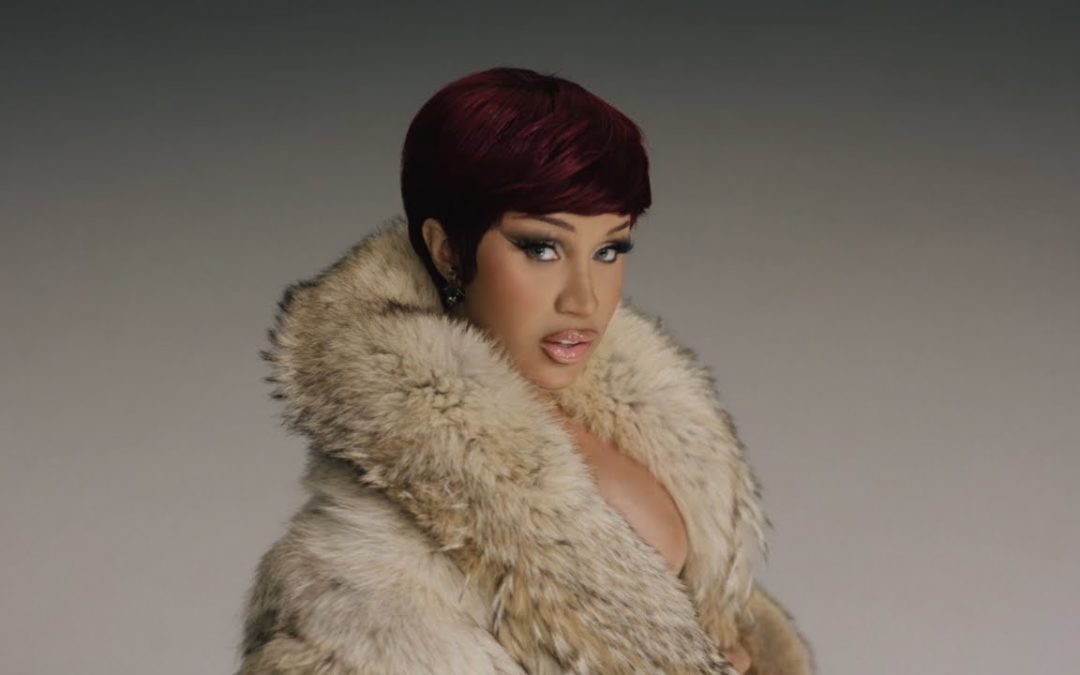
The Queen of Rap, Cardi B, has once again set the internet ablaze with the release of her latest music video, “Enough (Miami).” This hard-hitting visual masterpiece serves as a powerful statement, showcasing the artist’s unwavering confidence and uncompromising attitude towards her critics and naysayers.
The Track: A Lyrical Onslaught
Produced by the dynamic trio of DJ SwanQo, OG Parker, and Romano, “Enough (Miami)” is a lyrical onslaught, a no-holds-barred message to anyone who dares to underestimate the Bronx-born rapper. With her signature brazen flow and razor-sharp wordplay, Cardi B delivers a scathing rebuke to her detractors, leaving no room for doubt about her prowess and dominance in the rap game.
The Video: A Visually Stunning Showcase
Directed by the talented Patience Harding, the “Enough (Miami)” music video is a visually stunning showcase of Cardi B’s undeniable star power. Set against the backdrop of a sleek, minimalist room, the clip allows the rapper’s magnetic presence and fashion-forward ensembles to take center stage.
With each outfit change, Cardi B exudes an aura of unapologetic swagger, commanding the viewer’s attention with her fierce expressions and bold poses. The video’s simplicity is a testament to the artist’s ability to captivate audiences with her sheer charisma and undeniable talent.
A Triumphant Return to the Spotlight
The release of “Enough (Miami)” marks a triumphant return to the spotlight for Cardi B, who has been relatively quiet on the music front in recent years. In an interview with Big Boy, the rapper candidly admitted that she had been grappling with self-doubt and overthinking, which had hindered her ability to release new material.
However, with the unwavering support of her husband, Offset, Cardi B found the courage to overcome her fears and embrace the present moment. “‘You just need to do things. You need to stop overthinking everything, just go and do it,'” she recalled Offset’s wise words, which served as a catalyst for her creative resurgence.
Invasion of Privacy: A Groundbreaking Debut
While “Enough (Miami)” represents a new chapter in Cardi B’s musical journey, it’s impossible to overlook her groundbreaking debut album, “Invasion of Privacy.” Released in 2018, the critically acclaimed LP debuted at number one on the Billboard 200 chart and went on to achieve a rare quadruple platinum certification.
This remarkable achievement solidified Cardi B’s status as a force to be reckoned with in the music industry, and her ability to captivate audiences with her raw, authentic storytelling and undeniable talent.
The Cardi B Effect: Inspiring Fearlessness and Authenticity
Beyond her musical accomplishments, Cardi B’s impact extends far beyond the realm of hip-hop. Her uncompromising authenticity and fearless approach to life have inspired countless individuals to embrace their true selves and pursue their dreams with unwavering determination.
Through her music, her candid interviews, and her unapologetic social media presence, Cardi B has become a beacon of empowerment, encouraging her fans to unapologetically embrace their individuality and never settle for anything less than their wildest ambitions.
The Cardi B Brand: A Celebration of Nonconformity
The Cardi B brand is a celebration of nonconformity, a defiant rejection of societal norms and expectations. With her unique blend of raw talent, unfiltered honesty, and undeniable charisma, the rapper has carved out a space for herself in the industry that is entirely her own.
Her music videos, live performances, and public persona are all extensions of this brand, inviting audiences to experience the world through her unapologetic lens and embrace the freedom that comes with unapologetic self-expression.
Cardi B’s Influence on Fashion and Style
Cardi B’s influence extends far beyond the realm of music, as she has also become a style icon in her own right. Her bold fashion choices and fearless approach to personal expression have inspired countless individuals to embrace their unique sense of style and reject societal norms.
From her iconic red carpet looks to her street-style ensembles, Cardi B has consistently pushed the boundaries of fashion, blending high-end luxury with urban flair and creating a signature aesthetic that is both aspirational and relatable.
Cardi B’s Impact on Popular Culture
It’s impossible to overstate Cardi B’s impact on popular culture. Her rise to fame has been nothing short of meteoric, and her influence has permeated every aspect of mainstream media, from television and film to social media and beyond.
Whether she’s making a cameo appearance on a hit TV show or setting social media ablaze with one of her signature viral moments, Cardi B’s presence is undeniable, and her impact on popular culture is likely to endure for years to come.
Cardi B’s Philanthropic Efforts
While her music and public persona have garnered her immense fame and success, Cardi B has also used her platform to make a positive impact on the world around her. Through her philanthropic efforts and activism, she has advocated for various causes, including education, healthcare, and social justice.
From donating to charities and supporting grassroots organizations to using her voice to raise awareness about important issues, Cardi B has demonstrated a commitment to giving back and making a difference in the lives of others.

by Jonathan P-Wright | Jun 26, 2024 | Business News, Latest, Music News |
Photo by Alexander Shatov on Unsplash
In a perplexing turn of events, the music streaming behemoth Spotify recently raised the prices of its Premium Individual and Premium Family subscription plans. This move, which saw a $1 increase for the Individual plan and a $3 hike for the Family plan, was met with considerable backlash from users who felt blindsided by the sudden price surge.
However, the real point of contention arose when Spotify bundled its audiobook service with these premium plans, a feature that many subscribers deemed unnecessary and unwanted. This decision was particularly contentious because it allowed Spotify to classify its offerings as a bundled service, thereby qualifying for lower royalty rates payable to artists and music publishers.
According to industry estimates, this strategic maneuver could potentially result in a staggering $150 million reduction in royalty payments to musicians, a prospect that understandably ruffled feathers within the creative community.
Spotify’s Unexpected Reversal: Introducing the Basic Individual Plan
In a surprising turn of events, Spotify has now announced the introduction of a new Basic Individual plan, effectively reversing its controversial decision to bundle audiobooks with premium subscriptions. This new plan, priced at $1 lower than the Premium Individual plan, offers users the core music streaming experience without the added audiobook feature.
By unbundling audiobooks from its premium offerings, Spotify has effectively addressed two critical concerns: firstly, it has alleviated the frustration of users who felt compelled to pay for a service they had no intention of using; secondly, it has potentially mitigated the risk of reduced royalty payments to artists and music publishers.
A Win-Win Scenario for Users and Artists?
This strategic move by Spotify appears to be a calculated effort to appease both its user base and the creative community. By offering a more affordable option for music streaming without the audiobook component, Spotify has effectively acknowledged the concerns of subscribers who felt shortchanged by the previous pricing structure.
Moreover, by separating audiobooks from its core music streaming service, Spotify has potentially averted a substantial reduction in royalty payments to artists and music publishers. This decision could be viewed as a olive branch extended to the creative community, acknowledging their legitimate concerns over fair compensation for their work.
Spotify’s Evolving Business Strategy: Adapting to Market Demands
Spotify’s recent actions underscore the company’s willingness to adapt its business strategy in response to market demands and user feedback. By introducing the Basic Individual plan, Spotify has demonstrated its ability to course-correct and address the concerns of its stakeholders, be they subscribers or content creators.
This agility and responsiveness could prove to be a significant competitive advantage for Spotify in the highly saturated and fiercely competitive music streaming market. By actively listening to its user base and addressing their pain points, Spotify has the potential to foster greater brand loyalty and customer retention.
The Balancing Act: Satisfying Users and Artists Simultaneously
While Spotify’s latest move appears to be a positive step towards reconciling the interests of its users and the creative community, the company must tread carefully to maintain this delicate balance. As a platform that relies heavily on both its subscriber base and the content provided by artists, Spotify must continually strive to satisfy the needs and expectations of both parties.
One potential challenge lies in the realm of pricing and revenue generation. While the introduction of the Basic Individual plan may appease users seeking a more affordable option, Spotify must ensure that its revenue streams remain robust enough to sustain its operations and fairly compensate artists for their work.
Exploring Alternative Revenue Streams: Advertising and Partnerships
To address this challenge, Spotify may need to explore alternative revenue streams beyond subscription fees. One potential avenue could be the strategic integration of advertising within its platform, a model that has proven successful for many digital content providers.
Additionally, Spotify could pursue strategic partnerships and collaborations with various industries, such as fitness, gaming, or even the automotive sector. By leveraging its vast user base and data insights, Spotify could potentially unlock new revenue opportunities while enhancing the overall user experience.
The Audiobook Conundrum: A Separate Service or Integration?
While Spotify’s decision to unbundle audiobooks from its premium subscriptions has addressed immediate concerns, the company must carefully consider its long-term strategy for this segment. Audiobooks represent a rapidly growing market, and Spotify’s foray into this domain could potentially open up new revenue streams and expand its user base.
One approach could be to offer audiobooks as a separate, standalone service, allowing users to subscribe specifically to this offering without being tied to the music streaming plans. Alternatively, Spotify could explore innovative ways to integrate audiobooks seamlessly into its existing platform, perhaps through curated playlists or personalized recommendations.
Exploring Global Expansion: Tailoring Strategies for International Markets
As Spotify continues to expand its global footprint, it must also consider the nuances and preferences of diverse international markets. While the Basic Individual plan may resonate with users in certain regions, other markets may have different pricing sensitivities and content preferences.
To effectively cater to these varying demands, Spotify may need to tailor its pricing strategies, content offerings, and marketing approaches to align with the unique cultural and economic landscapes of each region. This could involve forging strategic partnerships with local content providers, leveraging localized marketing campaigns, and potentially offering region-specific subscription tiers or bundled offerings.
The Role of Data Analytics: Driving Personalization and Targeted Offerings
In today’s data-driven landscape, Spotify’s ability to leverage its vast trove of user data could prove to be a significant competitive advantage. By harnessing the power of advanced analytics and machine learning algorithms, Spotify can gain deep insights into user preferences, listening habits, and content consumption patterns.
Armed with these insights, Spotify can deliver highly personalized content recommendations, curated playlists, and targeted promotional offers, enhancing the overall user experience and driving engagement. Additionally, this data-driven approach could inform Spotify’s content acquisition strategies, allowing the company to invest in the genres, artists, and content formats that resonate most with its user base.
Embracing Innovation: Exploring Emerging Technologies and Trends
In the rapidly evolving digital landscape, Spotify must remain at the forefront of innovation, continuously exploring emerging technologies and trends that could shape the future of music streaming and content consumption.
This could involve leveraging technologies such as augmented reality (AR) or virtual reality (VR) to create immersive music experiences, or exploring the integration of voice-enabled assistants for seamless music discovery and playback. Additionally, Spotify could investigate the potential of blockchain technology to revolutionize the way artists are compensated for their work, fostering greater transparency and fairness in the music industry.
Fostering a Collaborative Ecosystem: Empowering Artists and Content Creators
Ultimately, Spotify’s success is inextricably linked to the success of the artists and content creators whose work forms the foundation of its platform. To foster a thriving and sustainable ecosystem, Spotify must actively engage with and empower these creative individuals.
This could involve initiatives such as providing artists with robust analytics and insights into their audience engagement, facilitating direct fan-artist interactions, or offering educational resources and tools to help artists navigate the complexities of the music industry. By positioning itself as a true partner to the creative community, Spotify can cultivate a collaborative and mutually beneficial relationship, driving innovation and fostering a vibrant music culture.
Conclusion: Navigating the Future of Music Streaming
Spotify’s recent moves underscore the company’s commitment to adapting to the evolving needs and preferences of its users and content creators. By introducing the Basic Individual plan and addressing concerns over audiobook bundling, Spotify has demonstrated its willingness to listen and respond to feedback.
However, this is merely the beginning of a longer journey. As the music streaming landscape continues to evolve, Spotify must remain agile, innovative, and responsive to emerging trends and technologies. By fostering a collaborative ecosystem, embracing data-driven insights, and exploring alternative revenue streams, Spotify can navigate the challenges and opportunities that lie ahead, solidifying its position as a leading force in the music streaming industry.


RECENT COMMENTS