by Jonathan P-Wright | Jun 26, 2024 | Business News, Latest, Music News |
Photo by Alexander Shatov on Unsplash
In a perplexing turn of events, the music streaming behemoth Spotify recently raised the prices of its Premium Individual and Premium Family subscription plans. This move, which saw a $1 increase for the Individual plan and a $3 hike for the Family plan, was met with considerable backlash from users who felt blindsided by the sudden price surge.
However, the real point of contention arose when Spotify bundled its audiobook service with these premium plans, a feature that many subscribers deemed unnecessary and unwanted. This decision was particularly contentious because it allowed Spotify to classify its offerings as a bundled service, thereby qualifying for lower royalty rates payable to artists and music publishers.
According to industry estimates, this strategic maneuver could potentially result in a staggering $150 million reduction in royalty payments to musicians, a prospect that understandably ruffled feathers within the creative community.
Spotify’s Unexpected Reversal: Introducing the Basic Individual Plan
In a surprising turn of events, Spotify has now announced the introduction of a new Basic Individual plan, effectively reversing its controversial decision to bundle audiobooks with premium subscriptions. This new plan, priced at $1 lower than the Premium Individual plan, offers users the core music streaming experience without the added audiobook feature.
By unbundling audiobooks from its premium offerings, Spotify has effectively addressed two critical concerns: firstly, it has alleviated the frustration of users who felt compelled to pay for a service they had no intention of using; secondly, it has potentially mitigated the risk of reduced royalty payments to artists and music publishers.
A Win-Win Scenario for Users and Artists?
This strategic move by Spotify appears to be a calculated effort to appease both its user base and the creative community. By offering a more affordable option for music streaming without the audiobook component, Spotify has effectively acknowledged the concerns of subscribers who felt shortchanged by the previous pricing structure.
Moreover, by separating audiobooks from its core music streaming service, Spotify has potentially averted a substantial reduction in royalty payments to artists and music publishers. This decision could be viewed as a olive branch extended to the creative community, acknowledging their legitimate concerns over fair compensation for their work.
Spotify’s Evolving Business Strategy: Adapting to Market Demands
Spotify’s recent actions underscore the company’s willingness to adapt its business strategy in response to market demands and user feedback. By introducing the Basic Individual plan, Spotify has demonstrated its ability to course-correct and address the concerns of its stakeholders, be they subscribers or content creators.
This agility and responsiveness could prove to be a significant competitive advantage for Spotify in the highly saturated and fiercely competitive music streaming market. By actively listening to its user base and addressing their pain points, Spotify has the potential to foster greater brand loyalty and customer retention.
The Balancing Act: Satisfying Users and Artists Simultaneously
While Spotify’s latest move appears to be a positive step towards reconciling the interests of its users and the creative community, the company must tread carefully to maintain this delicate balance. As a platform that relies heavily on both its subscriber base and the content provided by artists, Spotify must continually strive to satisfy the needs and expectations of both parties.
One potential challenge lies in the realm of pricing and revenue generation. While the introduction of the Basic Individual plan may appease users seeking a more affordable option, Spotify must ensure that its revenue streams remain robust enough to sustain its operations and fairly compensate artists for their work.
Exploring Alternative Revenue Streams: Advertising and Partnerships
To address this challenge, Spotify may need to explore alternative revenue streams beyond subscription fees. One potential avenue could be the strategic integration of advertising within its platform, a model that has proven successful for many digital content providers.
Additionally, Spotify could pursue strategic partnerships and collaborations with various industries, such as fitness, gaming, or even the automotive sector. By leveraging its vast user base and data insights, Spotify could potentially unlock new revenue opportunities while enhancing the overall user experience.
The Audiobook Conundrum: A Separate Service or Integration?
While Spotify’s decision to unbundle audiobooks from its premium subscriptions has addressed immediate concerns, the company must carefully consider its long-term strategy for this segment. Audiobooks represent a rapidly growing market, and Spotify’s foray into this domain could potentially open up new revenue streams and expand its user base.
One approach could be to offer audiobooks as a separate, standalone service, allowing users to subscribe specifically to this offering without being tied to the music streaming plans. Alternatively, Spotify could explore innovative ways to integrate audiobooks seamlessly into its existing platform, perhaps through curated playlists or personalized recommendations.
Exploring Global Expansion: Tailoring Strategies for International Markets
As Spotify continues to expand its global footprint, it must also consider the nuances and preferences of diverse international markets. While the Basic Individual plan may resonate with users in certain regions, other markets may have different pricing sensitivities and content preferences.
To effectively cater to these varying demands, Spotify may need to tailor its pricing strategies, content offerings, and marketing approaches to align with the unique cultural and economic landscapes of each region. This could involve forging strategic partnerships with local content providers, leveraging localized marketing campaigns, and potentially offering region-specific subscription tiers or bundled offerings.
The Role of Data Analytics: Driving Personalization and Targeted Offerings
In today’s data-driven landscape, Spotify’s ability to leverage its vast trove of user data could prove to be a significant competitive advantage. By harnessing the power of advanced analytics and machine learning algorithms, Spotify can gain deep insights into user preferences, listening habits, and content consumption patterns.
Armed with these insights, Spotify can deliver highly personalized content recommendations, curated playlists, and targeted promotional offers, enhancing the overall user experience and driving engagement. Additionally, this data-driven approach could inform Spotify’s content acquisition strategies, allowing the company to invest in the genres, artists, and content formats that resonate most with its user base.
Embracing Innovation: Exploring Emerging Technologies and Trends
In the rapidly evolving digital landscape, Spotify must remain at the forefront of innovation, continuously exploring emerging technologies and trends that could shape the future of music streaming and content consumption.
This could involve leveraging technologies such as augmented reality (AR) or virtual reality (VR) to create immersive music experiences, or exploring the integration of voice-enabled assistants for seamless music discovery and playback. Additionally, Spotify could investigate the potential of blockchain technology to revolutionize the way artists are compensated for their work, fostering greater transparency and fairness in the music industry.
Fostering a Collaborative Ecosystem: Empowering Artists and Content Creators
Ultimately, Spotify’s success is inextricably linked to the success of the artists and content creators whose work forms the foundation of its platform. To foster a thriving and sustainable ecosystem, Spotify must actively engage with and empower these creative individuals.
This could involve initiatives such as providing artists with robust analytics and insights into their audience engagement, facilitating direct fan-artist interactions, or offering educational resources and tools to help artists navigate the complexities of the music industry. By positioning itself as a true partner to the creative community, Spotify can cultivate a collaborative and mutually beneficial relationship, driving innovation and fostering a vibrant music culture.
Conclusion: Navigating the Future of Music Streaming
Spotify’s recent moves underscore the company’s commitment to adapting to the evolving needs and preferences of its users and content creators. By introducing the Basic Individual plan and addressing concerns over audiobook bundling, Spotify has demonstrated its willingness to listen and respond to feedback.
However, this is merely the beginning of a longer journey. As the music streaming landscape continues to evolve, Spotify must remain agile, innovative, and responsive to emerging trends and technologies. By fostering a collaborative ecosystem, embracing data-driven insights, and exploring alternative revenue streams, Spotify can navigate the challenges and opportunities that lie ahead, solidifying its position as a leading force in the music streaming industry.

by Tanyette McCoy Davis | Aug 24, 2021 | Business News, Latest, Music News |
It is a well-known fact that although platforms such as Spotify, Apple Music and Amazon Music enjoy millions of listeners, they are not as generous with their payments to artists. However, recent research has uncovered an unexpected and shocking fact, which further explores how terrible the situation is. When it comes to payments per stream, Peloton managed to beat every other platform.
Recently, it was revealed by The Trichordist in “Streaming Price Bible” that according to the numbers from 2019, music rights holders were offered just 0.35 cents per stream by Spotify. On the other hand, Apple Music offered 0.68 cents per stream and Tidal paid 0.88 cents per stream. Finally, the least amount was paid by YouTube- 0.15 cents per stream. Interestingly, the amount paid by Peloton is much higher, at 3.1 cents per stream.
It is undoubtedly surprising that a fitness company is offering better compensation for artists when compared to streaming services. This disparity is better explained by Slate. The higher compensation rate of Peloton can be attributed to the fact that songs are played consistently during classes, and thus, the company needed to seek public performance rights coupled with publishing rights.
In essence, when specific units of music, such as vinyl or digital files are produced, mechanical royalties must be paid. Any third-party entity that records, manufactures, and distributes copyrighted music is paid, and the artists receive funds eventually. In simple terms, performance royalties are paid when artists perform live, either in movies, TV shows, or when streamed in a public setting. When it comes to Spotify and other on-demand streaming services, wherein users who don’t possess specific recording copies of a song, still can play the song when desired, and make both mechanical royalty payments and performance royalty payments to the artists. Peloton pays performance royalties for the songs it streams, and thus, it broadcasts itself as a music broadcaster resembling a radio. It’s possible for users to search for songs or playlists featuring a certain artist, but the entire experience is determined by the instructors – not you.
Yet, the fact that streaming services are able to pay artists fractions of pennies per stream remains a sore point; let’s hope they follow Peloton’s lead and offer better rates soon.
This article was penned by Jonathan P. Wright. Jonathan is a freelance writer for multiple mainstream publications and CVO of RADIOPUSHERS. You can read more of his work by clicking here.

by Fabiola Noel | Jun 5, 2021 | Business News, Latest, Music News |
Consequently, artists whose rights were lost as youth could enjoy the fruits of their own labor later in life.
Canadian copyright laws should be amended, according to Drake.
Canadian artists Drake and Shania Twain sound the alarm as they join the Songwriters Association of Canada in calling for a change in Canada’s copyright law to give greater power to artists and songwriters.
To be able to regain ownership of their copyrights, they propose creators and their families be allowed to do so 25 years after the transfer, rather than after the creator’s death, as stipulated in the country’s copyright law.
Artists and songwriters are pressed into signing away their rights early in their careers. By doing so, they deny themselves, their families, and their children the chance to reap fair rewards later in life for their creative pursuits.
Moreover, the report reports that copyright laws in the U.S. have been revised to allow creators to terminate and re-claim their rights once 35 years has passed since the transfer, while the European Union is currently considering rules to ensure similar fairness.
To ensure fair protection of Canadian creators, Canada should follow the example of Europe and the United States, the letter says. Creators are better able to contribute to the revitalization of cultural and economic development in Canada with rights reversion.
Furthermore, the letter highlights recent amendments to US and several European countries’ copyright laws that have ensured fairness between creators and labels. Canada should “follow European and American models for protecting Canadian artists and creators,” the letter states.
Keeping with the latest reports of Lil Wayne‘s sale of Young Money’s entire catalog to Universal Music Group, the court documents cite the deal as worth more than $100 million. All of Drake’s albums released before 2018 – Thank Me Later, Take Care, Nothing Was The Same, Views, and Scorpio – were released under Wayne’s record label. Recent projects of his have appeared under October’s Very Own.
This article was penned by Jonathan P. Wright. Jonathan is a freelance writer for multiple mainstream publications and CVO of RADIOPUSHERS. You can read more of his work by clicking here.

by Jonathan P-Wright | Nov 11, 2024 | Latest, Music News, New Music Alert |
Photo by Marcela Laskoski on Unsplash
Ab-Soul, the lyrical mastermind behind tracks that make your brain cells do backflips, decided it was high time to clear the air about his relationship with J. Cole. And boy, did he deliver! In an era where social media can turn a molehill into a mountain faster than you can say “retweet,” Ab-Soul’s straightforward approach is like a breath of fresh air in a room full of smoke and mirrors.
Now, you might be wondering, “What’s all the fuss about?” Well, buckle up, buttercup, because we’re about to take a wild ride through the twists and turns of this hip-hop saga. From collaborative tracks that never saw the light of day to surprise features that had fans losing their minds, we’re going to unpack it all. And trust me, by the time we’re done, you’ll have a front-row seat to one of the most intriguing stories in recent hip-hop history.
So, whether you’re a die-hard Ab-Soul stan, a J. Cole aficionado, or just someone who loves a good story, stick around. We’re about to delve into a tale of friendship, respect, and the complex web of relationships that make the hip-hop world go round. Get ready to have your perceptions challenged, your assumptions shattered, and your mind blown. This isn’t just another rap beef story – it’s a masterclass in how real G’s handle their business.
The Genesis of the Rumors
Let’s rewind the tape and set the scene for this epic tale. Picture this: the hip-hop world is buzzing like a beehive that’s been poked with a stick. Rumors are flying faster than Eminem’s rap speed, and at the center of it all? Our man Ab-Soul and the one and only J. Cole.
It all started with a track – isn’t that how these things always kick off? Ab-Soul dropped a banger called “Squeeze 1st 2,” and suddenly, everyone and their grandma was playing detective. You see, in this track, Ab-Soul spits some fire that had folks raising their eyebrows higher than a Botox addict. He rapped, “Metasota warned me they wanna war / But actually they forfeiting.” Now, to the untrained ear, this might sound like just another dope line. But in the hyper-analytical world of hip-hop, where fans dissect every syllable like it’s a frog in a high school biology class, this was seen as a potential shot at J. Cole.
Why, you ask? Well, buckle up, because this is where it gets juicy. This track dropped on the same day that J. Cole released “Port Antonio,” a song where Cole addressed his decision to bow out of the ongoing beef between Drake and Kendrick Lamar. Coincidence? In the hip-hop world, there’s no such thing, baby!
The timing was too perfect, too synchronized. It was like watching two trains heading towards each other on the same track. Fans and critics alike started connecting dots that may or may not have been there. Was Ab-Soul calling out Cole for “forfeiting” the beef? Was this a subliminal diss wrapped in wordplay?
The internet, being the internet, went wild. Twitter threads longer than a CVS receipt started popping up, breaking down every word, every pause, every breath in Ab-Soul’s track. YouTube videos with titles like “AB-SOUL DESTROYS J. COLE?!” racked up views faster than you can say “clickbait.”
But here’s the kicker – in the world of hip-hop, perception is often reality. It doesn’t matter if Ab-Soul meant to diss Cole or not. Once the rumor mill starts churning, it’s harder to stop than a runaway freight train. The narrative was set: Ab-Soul vs. J. Cole, the battle no one saw coming.
And so, the stage was set for one of the most intriguing stories in recent hip-hop memory. Two respected lyricists, both known for their intricate wordplay and deep cuts, seemingly at odds. It was like watching two chess grandmasters square off – you knew the moves were coming, but you couldn’t quite figure out what they’d be.
But as we’ll soon see, in the world of hip-hop, things are rarely as they seem. This story was about to take more twists and turns than a roller coaster designed by M.C. Escher. So strap in, because we’re just getting started on this wild ride through the complex, fascinating, and often misunderstood world of hip-hop relationships.
Ab-Soul’s Clarification
Now, let’s cut to the chase and dive into the meat of this story – Ab-Soul’s much-needed clarification. In an interview that had hip-hop heads glued to their screens like it was the season finale of their favorite Netflix show, Ab-Soul decided to set the record straight. And boy, did he deliver!
First things first, Ab-Soul came out swinging with a statement that hit harder than a Mike Tyson right hook: “Cole is the homie for real, that’s what I want to make very clear to the whole world.” Boom! Just like that, he took all those rumors and speculation and dropkicked them into next week. It was like watching a master magician reveal the trick behind the illusion – suddenly, all those conspiracy theories about a beef between Ab-Soul and J. Cole started to look as flimsy as a house of cards in a hurricane.
But Ab-Soul didn’t stop there. Oh no, he was on a roll, and he wasn’t about to let this opportunity slip through his fingers like a greased-up football. He went on to explain that in the world of hip-hop, words like “friend” and “homie” get thrown around more loosely than spare change at a wishing well. But when it comes to J. Cole? Ab-Soul made it crystal clear that this wasn’t just some surface-level, industry schmoozing type of friendship. This was the real deal, the kind of bond that survives the fickle tides of the music industry.
Now, you might be thinking, “Okay, but what about that track? What about ‘Squeeze 1st 2’?” Well, hold onto your hats, because Ab-Soul had an explanation for that too. He revealed that the track wasn’t some calculated diss aimed at J. Cole. In fact, it wasn’t even about Cole at all. It was just Ab-Soul doing what Ab-Soul does best – spitting fire lyrics that make you think, that make you rewind and listen again, trying to unpack all the layers of meaning.
But here’s where it gets really interesting. Ab-Soul didn’t just deny the beef – he went a step further and opened up about his actual relationship with J. Cole. He talked about collaborations that were in the works, about mutual respect, about the admiration he has for Cole’s skills on the mic. It was like watching someone peel back the curtain on a world that most of us only get glimpses of through social media and carefully crafted public personas.
In essence, Ab-Soul’s clarification wasn’t just about squashing rumors. It was a masterclass in how to handle misunderstandings in the public eye. No drama, no Twitter rants, no subliminal disses. Just straight talk, respect, and a reminder that in the world of hip-hop, things aren’t always what they seem.
So there you have it, folks. The great Ab-Soul vs. J. Cole beef of 2023 – a beef that never was. It’s a reminder that in this age of hot takes and instant reactions, sometimes it pays to sit back, take a breath, and wait for the full story. Because as Ab-Soul showed us, the truth is often far more interesting – and far more positive – than the rumors.
The “FOMF” Collaboration That Never Was
Alright, let’s dive into the juicy details of a collaboration that could have been but never quite materialized. We’re talking about the track “FOMF” from Ab-Soul’s 2022 album “Herbert.” Now, this isn’t just any old track we’re discussing – this is the one that almost featured the lyrical prowess of J. Cole himself. Yeah, you heard that right. J. Cole was supposed to be on this joint, and the fact that it didn’t happen is a story in itself.
Picture this: Ab-Soul, the master wordsmith, crafting what would become “FOMF.” He’s in the studio, laying down verses that would make even the most seasoned English professor’s head spin. And in his mind, he’s hearing J. Cole’s voice, imagining how the North Carolina rapper would complement his own intricate wordplay. It’s a hip-hop dream team in the making.
Now, here’s where it gets interesting. Ab-Soul reveals that he actually played the album for Cole. Not just a track or two, but the whole damn thing. And guess what? Cole picked “FOMF” as the one he wanted to jump on. It’s like watching two chess grandmasters recognizing each other’s genius moves. Cole heard something in that track that spoke to him, that ignited that creative spark.
But here’s the kicker – it never happened. The collaboration that hip-hop heads would have sold their left sneaker for just… didn’t materialize. Ab-Soul, in his characteristically candid manner, admits, “I bugged him about it!” You can almost picture it – Ab-Soul blowing up Cole’s phone, sending carrier pigeons, maybe even considering smoke signals. All in the name of getting that verse.
So what happened? Well, that’s the million-dollar question, isn’t it? In the world of hip-hop, where schedules are as packed as a Tokyo subway during rush hour, and creative inspiration can be as fleeting as a summer romance, sometimes things just don’t line up. Maybe Cole got busy with his own projects. Maybe the timing wasn’t right. Or maybe, just maybe, the hip-hop gods decided to save this collaboration for another day, another track.
But here’s the beautiful thing about Ab-Soul’s revelation – there’s no bitterness, no resentment. Instead, there’s understanding and respect. Ab-Soul doesn’t throw Cole under the bus or make excuses. He simply acknowledges that sometimes, in this crazy world of music, things don’t always go as planned.
And let’s be real for a second – how many of us can say we’ve had J. Cole pick our track as the one he wants to feature on? That alone is a badge of honor, a testament to Ab-Soul’s skill as a lyricist and producer. It’s like getting a nod of approval from the hip-hop equivalent of a Jedi Master.
So while we may never get to hear what “FOMF” would have sounded like with J. Cole’s verse, we’re left with something perhaps even more valuable – a glimpse into the behind-the-scenes world of hip-hop collaborations. It’s a world of mutual respect, of artistic recognition, and yes, sometimes of missed connections.
The Kendrick Lamar Connection
If you thought this tale couldn’t get any more star-studded, think again. We’re about to dive into how K-Dot himself fits into this intricate web of hip-hop relationships.
First off, let’s set the scene. Ab-Soul and Kendrick Lamar go way back. We’re talking shared-a-pack-of-Ramen-noodles-in-the-studio kind of back. These two have been friends and collaborators for years, part of the same TDE (Top Dawg Entertainment) family that’s been pumping out hits faster than a factory on overdrive. So when Ab-Soul says he sent “Pi” to Kendrick, it’s not just some random act of music sharing. It’s like showing your older brother your report card – you’re looking for that nod of approval, that “yeah, you did good, kid” moment.
And guess what? Kendrick didn’t just nod – he full-on co-signed the track. Now, for those of you who might not be hip to the lingo, a co-sign in the hip-hop world is like getting a five-star review from Gordon Ramsay. It’s the ultimate seal of approval, the hip-hop equivalent of a papal blessing. When Kendrick Lamar co-signs your track, you know you’ve cooked up something special.
As we wrap up this deep dive into the Ab-Soul and J. Cole saga, it’s clear that we’ve witnessed something truly special in the world of hip-hop. This isn’t just a story about two artists clearing up a misunderstanding – it’s a testament to the evolving nature of hip-hop culture and the power of mutual respect and clear communication.
by Jonathan P-Wright | Nov 11, 2024 | Latest, Music News, New Music Alert |
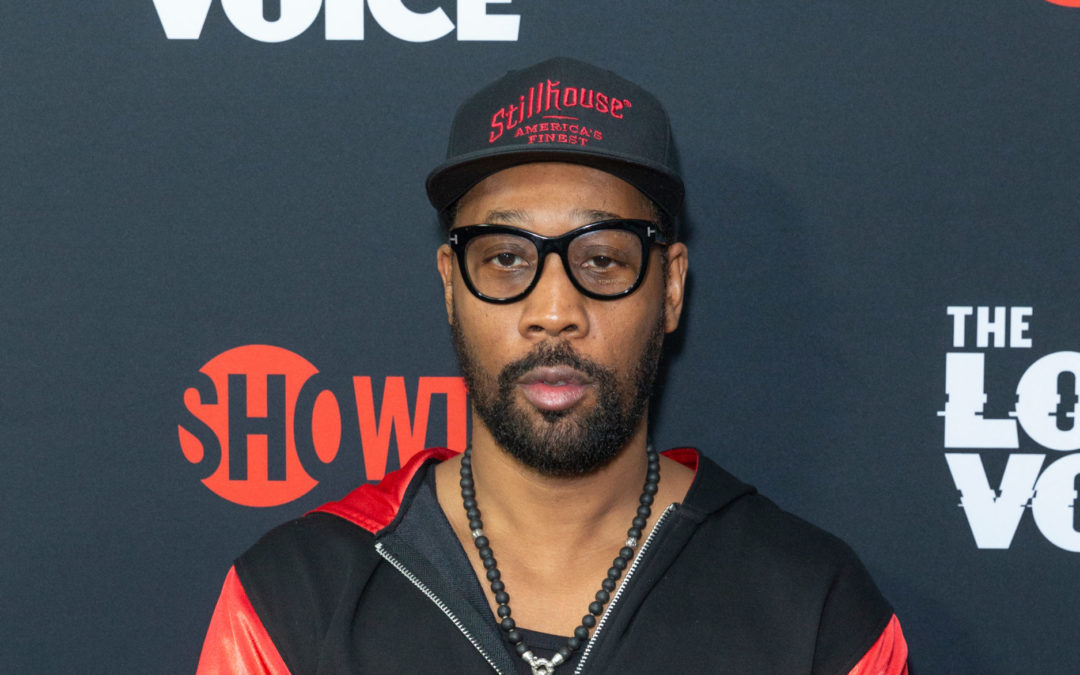
Image credit: lev radin / Shutterstock.com
In the ever-shifting landscape of hip-hop, few figures stand as tall as RZA, the mastermind behind the legendary Wu-Tang Clan. Since the group’s inception in 1992, RZA has been at the forefront of musical innovation, pushing boundaries and redefining what it means to be an artist in the rap game. As the genre continues to evolve and new challenges emerge, RZA remains a beacon of creativity and wisdom, his words as potent and rhythmic as ever.
The hip-hop scene has undergone seismic shifts since RZA first burst onto the stage, transforming not just the music industry but the cultural fabric of New York City itself. Yet, in the face of these changes and the looming specter of artificial intelligence in music creation, RZA’s faith in the raw, unfiltered creativity of human artists remains unshaken. His journey from rap pioneer to classical composer is a testament to his versatility and unwavering commitment to artistic growth.
As we delve into the mind of this hip-hop luminary, we’ll explore his thoughts on the current state of the genre, his foray into classical music, and his perspective on the future of creativity in an increasingly digital world. RZA’s insights offer a unique glimpse into the heart of hip-hop, as seen through the eyes of one of its most influential architects.
The Evolution of a Hip-Hop Maestro
RZA’s journey from the streets of Staten Island to the pinnacle of hip-hop royalty is a story of relentless creativity and innovation. As the chief architect of Wu-Tang Clan’s sound, he played a pivotal role in shaping the course of rap music in the 1990s and beyond.
From Beats to Batons
At the age of 55, RZA has taken on a new challenge that showcases his musical versatility. Moving beyond the realm of rap production, he has embraced the role of orchestrator in the most literal sense. His latest project, “A Ballet Through Mud,” marks his debut in the world of classical music.
This ambitious album features 11 tracks that tell RZA’s life story not through rhymes, but through the rich, emotive tones of orchestral instruments. Working closely with the Colorado Symphony, RZA has crafted a sonic landscape that blends the raw energy of his hip-hop roots with the refined elegance of classical composition.
The Creative Process Behind “A Ballet Through Mud”
The creation of “A Ballet Through Mud” was no small feat. RZA describes it as one of the most time-consuming projects of his career, second only to the production of Wu-Tang Clan’s seminal album “Enter the Wu-Tang (36 Chambers).” The sheer scale of the undertaking, from composing for a 60-piece orchestra to navigating the intricacies of classical recording sessions, presented a new set of challenges for the veteran producer.
RZA’s approach to this album was driven purely by artistic vision, with no expectations for commercial success. This freedom allowed him to explore new musical territories and push his creative boundaries in ways he hadn’t since the early days of Wu-Tang.
The Intersection of Hip-Hop and Classical Music
RZA’s venture into classical music raises interesting questions about the relationship between different musical genres. By bridging the gap between hip-hop and classical composition, he demonstrates the universal language of music and the potential for cross-genre pollination.
This fusion of styles not only showcases RZA’s versatility as an artist but also challenges preconceptions about the limitations of hip-hop artists. It serves as a powerful reminder that creativity knows no bounds and that true artists can transcend the confines of any single genre.
RZA on the Current State of Hip-Hop
As a veteran of the hip-hop scene, RZA offers valuable insights into the genre’s current state and its potential future directions. His perspective is shaped by decades of experience and a deep understanding of hip-hop’s roots and evolution.
The Rise of Women in Hip-Hop
One of the most significant developments in recent years, according to RZA, is the increasing prominence of women in hip-hop. He expresses enthusiasm for this trend, noting the diverse voices and perspectives that female artists bring to the genre.
However, RZA also offers a word of caution. Drawing from the lessons of his own generation, he hopes that these rising stars will avoid some of the pitfalls that male artists fell into, particularly the tendency to prioritize style over substance. He emphasizes the importance of maintaining a balance between artistic expression and meaningful content.
The Changing Sound of New York Hip-Hop
As a New York native and a key figure in the city’s hip-hop scene, RZA has a unique perspective on how the sound of New York rap has evolved over the years. He notes that while the city may have moved away from its original, distinctive sound, this evolution is a natural part of the genre’s growth.
RZA points out that as hip-hop has become a global phenomenon, influences from different regions and styles have blended together. This cross-pollination has led to a more diverse and eclectic sound, even in New York, the birthplace of hip-hop.
The Impact of Technology on Hip-Hop Production
The advent of new technologies has dramatically changed the landscape of music production, and hip-hop is no exception. RZA reflects on how these changes have affected the creative process and the sound of contemporary hip-hop.
While acknowledging the benefits of technological advancements, RZA also emphasizes the importance of maintaining the human element in music creation. He believes that the spontaneity and unpredictability of human creativity are what give hip-hop its unique energy and appeal.
RZA’s Thoughts on AI in Music
As artificial intelligence continues to make inroads into various creative fields, including music, RZA offers his perspective on this emerging technology and its potential impact on hip-hop.
The Limits of AI Creativity
Despite the rapid advancements in AI technology, RZA remains skeptical about its ability to truly replicate human creativity. He argues that the spontaneous nature of human thought and expression is something that AI, at least in its current form, cannot fully emulate.
RZA’s view is that while AI might be able to generate content based on existing patterns and data, it lacks the ability to produce truly original, groundbreaking ideas. He believes that the unpredictable, often chaotic process of human creativity is what gives birth to revolutionary artistic expressions.
AI as a Tool, Not a Replacement
Rather than viewing AI as a threat to human artists, RZA sees it as a potential tool that can be harnessed and transformed by creative individuals. He suggests that even if AI-generated content becomes more prevalent, innovative artists will find ways to use this technology to push the boundaries of their craft.
This perspective aligns with hip-hop’s long-standing tradition of sampling and recontextualizing existing material. Just as hip-hop artists have taken snippets of old records and transformed them into something new and exciting, RZA believes that future artists might do the same with AI-generated content.
The Human Element in Music
At the core of RZA’s thoughts on AI in music is a firm belief in the irreplaceable value of human experience and emotion in artistic expression. He argues that the power of music lies not just in its technical execution, but in its ability to convey genuine human experiences and emotions.
This human element, according to RZA, is what allows music to connect with listeners on a deep, emotional level. It’s the raw, unfiltered expression of human creativity that he believes will always set human-made music apart from AI-generated content.
RZA emphasizes the importance of finding a balance between pushing the boundaries of hip-hop and preserving its core elements. He notes that while sonic innovation is thriving, with producers and artists experimenting with new sounds and styles, there’s a need to maintain the substance and messaging that has always been at the heart of hip-hop.
This balance, according to RZA, is crucial for ensuring that hip-hop remains a powerful form of expression and communication, rather than becoming solely focused on style over substance.
As we reflect on RZA’s journey from hip-hop pioneer to classical composer, it’s clear that his influence on the music world extends far beyond his work with Wu-Tang Clan. His willingness to push boundaries, explore new territories, and maintain a commitment to artistic integrity serves as an inspiration to both established and emerging artists.

RECENT COMMENTS