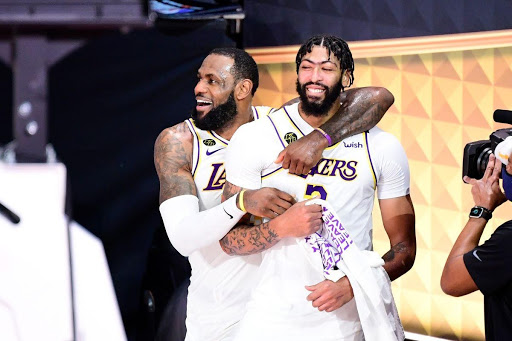
LeBron James and LA Lakers win 2020 NBA Championship
In the 2020 NBA playoffs, Los Angeles Lakers won their Game six on Sunday, with a score of 106-93 to become this year’s NBA Champions.

Photo Credit: Photo by Frank Albrecht on Uns
In a powerful and long-awaited moment for motorsports and diversity in American racing, Bubba Wallace etched his name into history books by becoming the first Black driver to win the prestigious Brickyard 400, one of NASCAR’s most iconic crown jewel races. This monumental victory not only marked a personal milestone for Wallace but also a turning point in the narrative of diversity and inclusion in a sport that has long battled its cultural legacy.
The win came at Indianapolis Motor Speedway, widely regarded as one of the most hallowed grounds in racing. With blistering speed and razor-sharp precision, Wallace clinched the victory by just 0.222 seconds ahead of 2023’s defending champion, Kyle Larson, denying him the opportunity to become just the fourth driver in NASCAR history to win the Brickyard in back-to-back years.
For Wallace, this wasn’t just a win—it was a release, a declaration, and a rebuke to every doubt ever cast on his talent.
“That adrenaline rush is crazy,” Wallace said post-race, still catching his breath after a tense and physically draining event. “I’m worn out. Unbelievable. To win here at the Brickyard, knowing how big this race is, knowing all the noise that’s going on in the background—to set that all aside is a testament to these people here on this 23 team.”
This triumph at the Brickyard ended a 100-race winless streak for Wallace, whose last victory came in 2022 at Kansas Speedway. Before that, he claimed his first Cup Series win at Talladega Superspeedway in 2021—an emotionally charged victory that came amid ongoing national conversations about race, representation, and identity.
Unlike those earlier wins, which were heavily symbolic, this Brickyard victory felt deeply competitive and clean. It was not won on the back of weather-shortened conditions or accidents; this was a pure driver’s race—strategic, aggressive, and hard-fought to the last turn.
Wallace races for 23XI Racing, a team co-founded by NBA legend Michael Jordan and veteran NASCAR driver Denny Hamlin. He drives the No. 23 Chumba Casino Toyota, a nod to Jordan’s legendary basketball jersey number and a symbol of ambition for the team itself.
From the outset, the mission of 23XI Racing was to break boundaries—on the track and off it. Jordan’s involvement in NASCAR, historically perceived as a predominantly white Southern sport, added much-needed attention and funding to efforts pushing for a more inclusive culture.
Jordan has long emphasized that he didn’t enter NASCAR for tokenism—but for winning. And with Wallace’s win, that goal is being realized.
The race was tightly contested, but the final laps were a mental chess match. Kyle Larson, known for his dominance on various track types, was breathing down Wallace’s neck in the closing laps. Every fraction of a second mattered.
Behind Wallace, the final standings included some of the sport’s top-tier talents. Kyle Larson took second place. Wallace’s team co-owner and driver Denny Hamlin crossed the line in third, proving once again his enduring form. Ryan Preece and Brad Keselowski secured fourth and fifth, respectively.
The rest of the top 10 featured Todd Gilliland, Ryan Blaney, Christopher Bell, Alex Bowman, and Carson Hocevar, showing the depth and competition that made the Brickyard 400 such a spectacle this year.
To understand the weight of Wallace’s win, one must understand the stature of the Brickyard 400. It’s one of NASCAR’s four crown jewel races, alongside:
These events aren’t just races—they’re legacy-makers.
Winning any one of them ensures your name is forever remembered in NASCAR lore. And for a Black driver to accomplish this, given the sport’s checkered history on diversity, it cannot be overstated: this is seismic.
The magnitude of Wallace’s win is especially potent when viewed against the backdrop of Wendell Scott, the first Black driver to win a race in the NASCAR Grand National Series—way back in 1963. However, Scott was not awarded the trophy in person that day due to racist fears of crowd reactions. It wasn’t until 2021, nearly 60 years later, that his family was given the trophy posthumously.
Bubba Wallace has often paid homage to Scott, saying that without him, his own career wouldn’t have been possible. And with this Brickyard victory, Wallace builds upon that legacy—not just filling the shoes of pioneers but shattering ceilings they could only dream of.
Wallace’s win speaks to more than just motorsport fans. It resonates across broader cultural and generational divides. He is a symbol of:
He’s taken bold stances—such as advocating for the removal of Confederate flags at NASCAR events and speaking openly about racial inequality—which earned him both praise and scorn. But with this win, he lets performance speak louder than politics.
Following the race, drivers and racing legends took to social media and post-race interviews to applaud Wallace’s performance.
Hamlin, his co-owner and a fierce competitor, was proud—despite finishing behind his own driver.
“I couldn’t be more thrilled for Bubba and this team,” Hamlin said. “This was one of the most complete races he’s driven. He earned every bit of this one.”
Even Kyle Larson, always a competitor and once the center of his own controversy over racial remarks in 2020, offered his congratulations.
“He drove a great race. Clean and fast. That’s what it’s about,” Larson said in a brief statement.
The next NASCAR Cup Series race is scheduled for August 3rd in Iowa, where Wallace will look to continue this momentum. With a playoff spot now secured, he has the chance to shift focus from survival to dominance.
This win might just be the fuel that pushes Wallace deeper into the postseason, maybe even toward a championship. And that, in itself, would be another history-making moment.
In a sport often criticized for being slow to evolve, Bubba Wallace’s victory at the Brickyard 400 is more than just a milestone—it’s a message.
It tells every underdog that perseverance pays off.
It tells every doubter that talent transcends background.
It tells every young fan watching from the sidelines—especially those who look like Bubba—that the racetrack has room for them too.
As he stood on Victory Lane, the iconic bricks of the Indianapolis Motor Speedway beneath his feet, Wallace wasn’t just a winner. He was a symbol of change, of hope, of earned triumph in a world that still doesn’t hand those things out freely.
Photo by freestocks on Unsplash
Tonight, history unfolds in the heart of New York City. At the legendary Madison Square Garden, an arena that has witnessed countless iconic moments, women’s boxing claims the main stage in a way never seen before. Netflix is broadcasting the world’s first all-women’s professional boxing card, elevating the sport’s female athletes to global superstars and putting women’s boxing at the center of the combat sports universe. The night’s headline clash—Katie Taylor versus Amanda Serrano III—marks not just a high-stakes sporting contest, but the crest of a wave that is redefining what’s possible for women in boxing.
This event is much more than another set of title fights. It’s a seismic cultural shift for boxing—a sport long dominated by men, where women have had to fight, both literally and metaphorically, for every inch of recognition and opportunity. With five championship bouts and an astonishing 21 world titles up for grabs, tonight’s card is easily the most significant gathering of women’s boxing talent ever assembled.
Never before have so many decorated champions shared a single event, and never before have the stakes been higher for the visibility and legitimacy of women’s boxing. By streaming this historic event live to a worldwide audience, Netflix has effectively declared that women’s fights are every bit as thrilling, marketable, and worthy of investment as their male counterparts.
At the core of this event is the electrifying trilogy match between Ireland’s beloved Katie Taylor and Puerto Rico’s legendary Amanda Serrano. For Serrano, this fight is about more than just seeking retribution for two razor-close, contentious defeats. “I’m chasing legacy,” Serrano declared in a recent interview. She has already achieved what no other Puerto Rican boxer has—male or female—by becoming undisputed world champion. But her motivation now is to keep blazing a trail, to keep earning respect and changing the game for women in the sport.
Despite two losses to Taylor—both surrounded by controversy over scoring and officiating—Serrano is steadfast in her belief that she deserved better. “If Katie beat me clearly, I’d say hats off to her. But I just don’t feel it, my fans don’t feel it, my team doesn’t feel it,” she explained, referencing the broader sentiment that has fueled this highly anticipated third bout.
Her commitment is not just mental—it’s intensely physical. For this fight, Serrano has had to move up in weight, battling the discomfort of fighting at 140 pounds instead of her natural 134. She describes gaining weight as even harder than shedding it, which is rare for most fighters. She’s invested in an expanded coaching team, including a nutritionist and running coach, all in an effort to maximize her conditioning and skill for the biggest night of her career.
Serrano’s last bout with Taylor was marred by more than close scoring; it involved physical adversity that would have broken many fighters. She recalled suffering a deep headbutt cut that briefly blinded her, saying, “I saw black for a second.” Beyond her opponent, she has often felt she’s up against judges and referees as well, making her call for a “fair fight” not just a slogan, but a necessity.
But Serrano’s advocacy stretches beyond her own experience. She’s been a fierce proponent of extending women’s world title fights to 12 three-minute rounds—the men’s standard—believing that this change would allow women’s skill, endurance, and finishing power to truly shine. “I believe if I had that extra minute, I can definitely hurt her and finish her,” she argues. It’s a powerful statement about the potential of women’s boxing and the outdated limitations still imposed on the sport.
While Taylor and Serrano command the main event, the undercard is a showcase for the next wave of elite talent. Alycia “The Bomb” Baumgardner, the reigning undisputed super featherweight champion, faces Spain’s Jennifer Miranda in a bout expected to be explosive. Baumgardner’s confidence and charisma, both in and out of the ring, represent a new era where women fighters are not just respected but celebrated and marketed as main attractions.
Meanwhile, Shadasia “The Sweet Terminator” Green brings her own story of overcoming adversity. As the first world champion from Jake Paul’s Most Valuable Promotions (MVP), Green seeks to unify the super-middleweight division. Coming from Paterson, New Jersey—a city more often associated with struggle than triumph—Green sees herself as a role model for her community. She was once a top basketball prospect, but after criticism from a coach, she switched to boxing and has flourished ever since. Her story illustrates how the sport is evolving, welcoming athletes from diverse backgrounds and offering them a platform for greatness.
What makes this card even more culturally significant is the prominence of Black women as headline fighters and promotional faces. It’s a shift from the past, reflecting broader changes in both sport and society. These athletes are no longer relegated to the margins; they are front and center, challenging stereotypes and expanding the sport’s reach.
Adding to the event’s gravitas is the participation of Laila Ali, herself a former world champion and daughter of the legendary Muhammad Ali, as part of the commentary team. Her presence underlines the legacy and growing tradition of women’s boxing, as well as the inspiration provided to future generations. Baumgardner put it succinctly: “These young girls are looking at us. They want to know how to be us, or how to be better.”
Women’s boxing has long lagged behind men’s in financial reward. Serrano’s own journey testifies to that, having once earned as little as $4,000 for world title fights. The turning point came with her partnership with MVP and the influence of YouTuber-turned-boxer Jake Paul, who used his platform to raise the profile and the paychecks of women fighters. Now, the purses reach into the millions, and the Netflix event is both a financial and symbolic milestone.
Serrano explained, “That’s the difference with Jake Paul and these women. Now that people see Katie and me making millions, my fanbase growing, and us making noise, now they want to come along.” For Serrano, an Afro-Latina fighter with a lifetime MVP contract, the money is important—but the recognition and opportunities are priceless. “Netflix believed in me and Katie so much that they gave us our own card, with all women. They believe in us women, and that really touches me.”
The impact of tonight’s event stretches far beyond the headline names. Fighters like Ramla Ali and Shurretta Metcalf embody what this moment means to so many others. Ali, a Somali refugee who became a global symbol for perseverance, fights not just for herself, but for those who feel powerless. “Every time I go into the ring, I need to make it mean something. I feel like I have a responsibility to fight for people that don’t feel they can fight for themselves,” she said.
Metcalf echoes a similar sentiment: “I’m fighting for the girls who look like me, who come from nothing like me. It doesn’t matter your age or where you’re from. It just matters how you finish.” These stories, broadcast to millions around the globe, will inspire new generations and reinforce the idea that boxing belongs to everyone, regardless of background.
Tonight is a turning point, not just for boxing, but for sports culture as a whole. For decades, women’s fights were often buried on undercards or ignored by mainstream media. Now, with the world watching via Netflix, women’s boxing commands the spotlight, the money, and—most importantly—the respect it has always deserved.
The fighters entering the ring tonight are doing more than just battling for belts. They are breaking new ground, knocking down barriers, and redefining what is possible for women in sports. Their victories, struggles, and stories will reverberate beyond the ropes, encouraging girls everywhere to step up, dream big, and claim their place at the top.
As the final bell sounds, regardless of who leaves with the championship belts, one thing is certain: the future of women’s boxing—and perhaps women’s sports as a whole—just got a lot brighter.
Photo by digitale.de on Unsplash
Milwaukee Bucks’ star point guard Damian Lillard, widely recognized as one of the most dynamic and consistent players in the NBA, has been sidelined indefinitely after being diagnosed with deep vein thrombosis (DVT) in his right calf. The 34-year-old athlete, who has been a pivotal player for the Bucks since joining the team in late 2023, will now have to shift his focus from the court to his health and recovery as he navigates this serious medical condition.
Lillard’s condition was confirmed by the Milwaukee Bucks organization on Tuesday, with the team announcing that their medical staff discovered a blood clot in his calf. As a result, Lillard has been placed on blood-thinning medication to stabilize the clot and prevent further complications.
Deep vein thrombosis is a condition that occurs when a blood clot forms in a deep vein, usually in the legs, but it can also develop in other areas, such as the arms or pelvis. DVT is considered a serious medical condition because if a clot breaks loose, it can travel to the lungs, leading to a pulmonary embolism, which can be life-threatening.
For professional athletes, the risk factors for developing DVT can include:
Lillard has since addressed the news in a statement given to his close friend and NBA insider Chris Haynes, expressing both disappointment and gratitude.
“It’s unfortunate that something outside of my control would come up,” Lillard said. “Along with the Bucks’ medical staff, our priorities are to protect my health and safety. As much as I love basketball, I need to be there for my kids and my family.”
Despite his love for the game, Lillard has made it clear that his well-being and his family’s well-being take precedence over basketball. He further expressed his gratitude to the Bucks organization for their swift and proactive response to his medical emergency.
“I’m grateful the Bucks acted quickly on this,” Lillard stated. “They have been supportive and proactive throughout this process. I look forward to moving past this and continuing my career.”
His words reflect both frustration and hope, as he acknowledges the uncertainty of the situation but remains optimistic about his recovery and future return to the court.
Milwaukee Bucks general manager Jon Horst also released a statement, emphasizing the team’s commitment to Lillard’s health and recovery.
“Damian’s health is our number one priority,” Horst said. “We will support him as he moves through this weekly process of strict criteria to ensure that it is safe for him to return to play. Doctors have indicated that his situation is very unlikely to occur again.”
Horst also expressed relief that the medical team identified and treated the clot quickly, which is crucial in preventing further complications.
“We are thankful that this was identified and medicated quickly, which helps with the recovery,” he added.
Lillard will undergo regular testing and will be closely monitored to ensure that his condition remains stable before any decisions are made regarding his return to play.
Lillard’s indefinite absence poses a significant challenge for the Milwaukee Bucks, who rely heavily on his playmaking abilities and scoring prowess. Since his arrival in late 2023, he has become a key figure in the team’s offensive strategies.
Before his diagnosis, Lillard had been averaging impressive numbers, making him an essential player in the Bucks’ pursuit of another NBA championship. His absence will likely shift responsibilities onto teammates like Giannis Antetokounmpo and Khris Middleton, who will need to step up in his absence.
Additionally, the Bucks coaching staff will have to adjust their strategies, possibly relying more on their bench players to compensate for Lillard’s lost minutes. Young guards like Malik Beasley and Patrick Beverley may see increased roles in the coming games
Image provided by: @iamkingkeese Instagram
What happens when an entrepreneur and an artist sets out to redefine the boundaries of their influence and impact? Enter King Keese, a figure who embodies the ethos of transformation and change, characteristics essential to what he aptly describes as “Championship DNA.” This concept isn’t just about personal triumph; it’s about evolving into the best version of oneself and achieving what was once thought impossible. King Keese is living proof that with a broad perspective and audacity, anything is attainable.
Known for his resilience and visionary outlook, King Keese has expanded his reach beyond the music industry with ventures like ‘The Destination’s Journey Podcast.’ In collaboration with MUSICHYPEBEAST, this innovative platform targets forward-thinking entrepreneurs, aspiring artists, women-owned businesses, and college students. It includes a mix of live interviews, events, and visual documentaries that challenge traditional perspectives on entrepreneurship and innovation. But beyond content, it strives to build a profound and diverse digital footprint globally. Isn’t it remarkable how creativity fosters such powerful narratives when paired with intent?
King Keese’s podcast endeavors reflect his commitment to authenticity and bold journalism—traits that resonate deeply within Generation Z’s cultural landscape. This commitment is not just about King Keese as the host and creator; it’s about igniting a movement that empowers others to break molds and challenge the status quo. By doing so, the podcast informs and inspires, asking its audience to reconsider what is possible.
Yet, this isn’t merely about professional milestones. King Keese’s life story is rich with personal growth, resilience, and fulfillment lessons, forever tied to his music and brand. His discography, marked by timeless appeal, weaves narratives of self-awareness and courage, urging listeners to embrace their full potential.
Through his ventures, King Keese demonstrates a fearless pursuit of dreams, showing that the true essence of transformation lies in tapping into our innate abilities. It’s a journey of change and evolution that any listener—be it a visionary entrepreneur, a college student on the cusp of innovation, or an aspirant in the thriving space of music—can relate to and learn from.
King Keese’s story doesn’t just revolutionize music and entrepreneurship; it expands our understanding of what’s possible when one dares to live authentically and on their terms. It’s a testament to how genuine expression can lead to remarkable change and influence across generations.
RECENT COMMENTS